
elections

Home-Stretch Election Rallies

Go Vote Button
It’s the home stretch. Candidates and volunteers are working overtime to get people out to vote on Tuesday, November 4. As part of that effort, prominent politicians are canvassing the country to assist candidates running for the US Senate, the US House of Representatives, and state Governorships.
Pennsylvania
In my home state of Pennsylvania, President Barack Obama came to Philadelphia to stump for Tom Wolf (D) on Sunday November 2. He is running for Pennsylvania Governor to replace the current Tea Party Governor Tom Corbett (R). I’m so looking forward to a victory tomorrow for Tom Wolf (see some of the reasons why here). It will be a win for the environment, for women, LGBTQIA people, low-income individuals who can’t access healthcare, and for better jobs and wages for everyone in the state.
New Hampshire
In New Hampshire the fight is not to replace a right-wing slate of elected officials, but to retain and reelect the four progressive women leading that state – Governor Maggie Hassan, Senator Jeanne Shaheen, Representative Ann McLane Kuster (NH-2), and Representative Carol Shea-Porter (NH-1). New Hampshire is the only state in the nation to have women in 100% of the top leadership positions in the state. And prominent female politicians have come to the state to stump for them. On October 25, it was Senator Elizabeth Warren (D-MA) stumping for her colleague Senator Jeanne Shaheen. And on Sunday, November 2, while President Obama was stumping for Tom Wolf, Former Secretary of State, Senator, and First Lady Hillary Rodham Clinton came to Nashua, NH to support these four women’s reelection efforts.
I was there at both events. I blogged about the Warren event last week. Today, here’s the Clinton event.

NH Gov. Maggie Hassan and Sen. Jeanne Shaheen with Hillary Rodham Clinton
About 1000 people gathered at Nashua Community College in Nashua, NH. The lineup of speakers was quite interesting. Except for State Democratic Chair Ray Buckley, every speaker was a woman – something I’ve never seen in a political event or rally before. Here are the speakers in order of their appearance:
Senator Jeanne Shaheen’s granddaughters singing the Star Spangled Banner

Caraline and Elle Shaheen singing The Star Spangled Banner
Chair Ray Buckley calling on the NH electorate to not only vote for the Democrats at the top of the ticket, but to also vote for the Democrats all the way down the ballot.

NH Democratic Party Chair Raymond Buckley
He gave a rousing speech on the problems that NH had when Republican Bill O’Brian was leading the General Assembly and how the mostly female Democratic leadership turned the state around through bipartisan cooperation once the Republican party became the minority party two years ago. Here’s that speech:
Then the line-up of female political leaders began. Each talked about why NH is doing better now, how their bipartisan efforts have improved the economy of New Hampshire, and what has been protected in the state for women’s reproductive justice and pay equity, children’s and adults’ public and college education, marriage equality, access to health care for all and job restoration. Here are those speakers:
House Speaker Terri Norelli
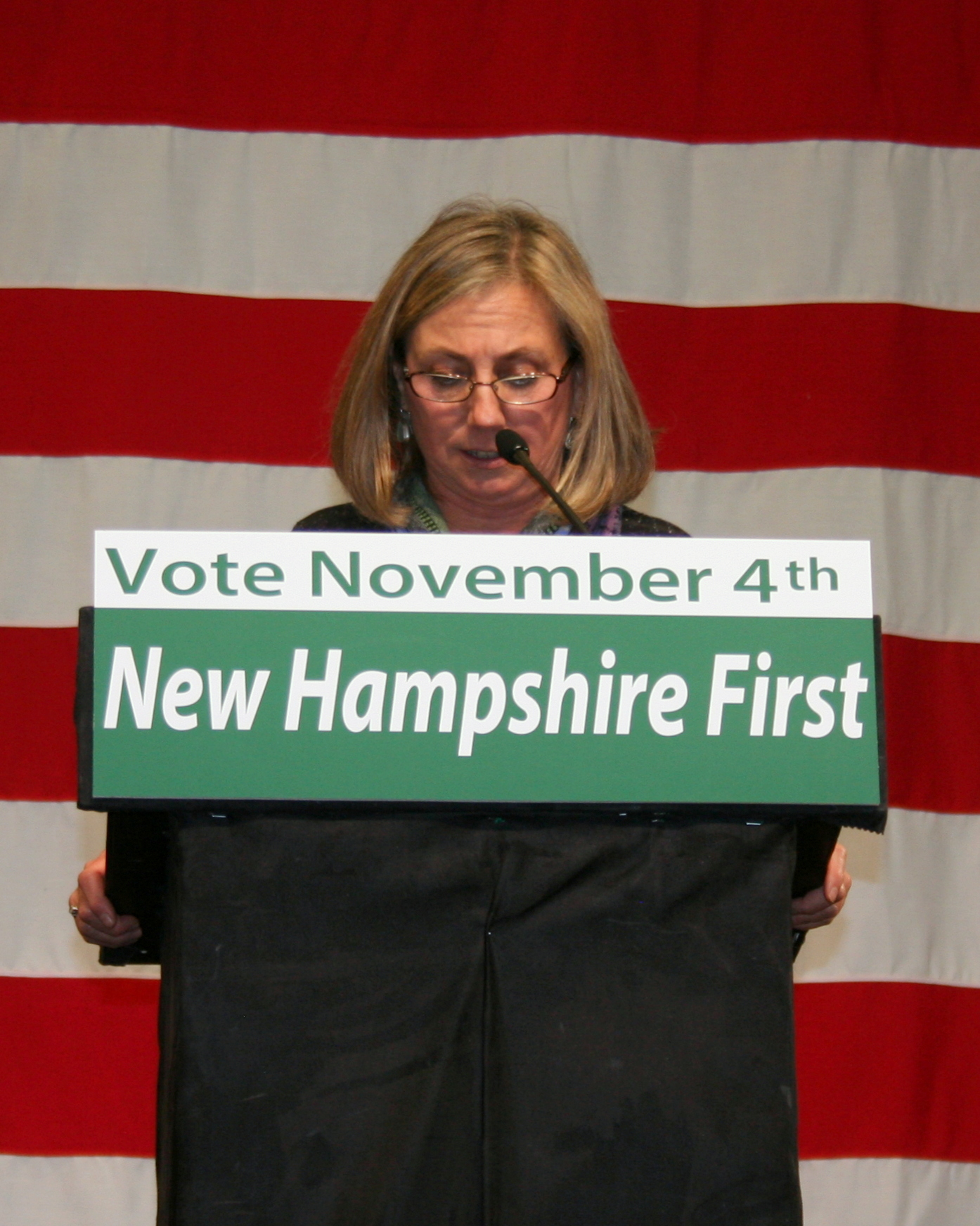
NH House Speaker Terri Norelli
State Senator Peggy Gilmour

NH State Sen Peggy Gilmour
State Senator Peggy Laskey

NH State Senator Bette Laskey
Executive Council Member Debora Pignatelli
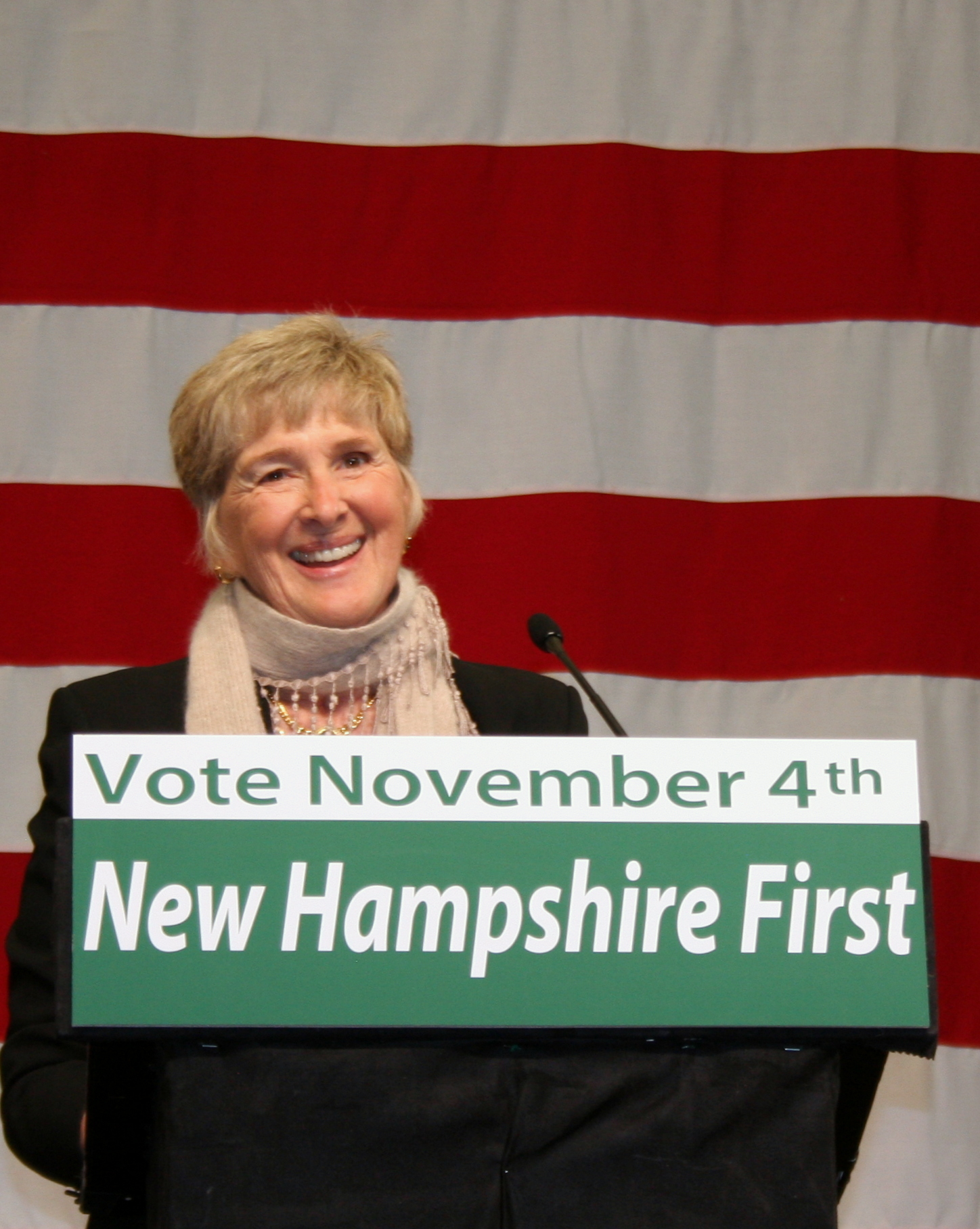
NH Executive Council Member Debora Pignatelli
And then the headliners:
US Representative Ann McLane Kuster

US Rep. Ann McLane Kuster (NH-2)

NH Governor Maggie Hassan
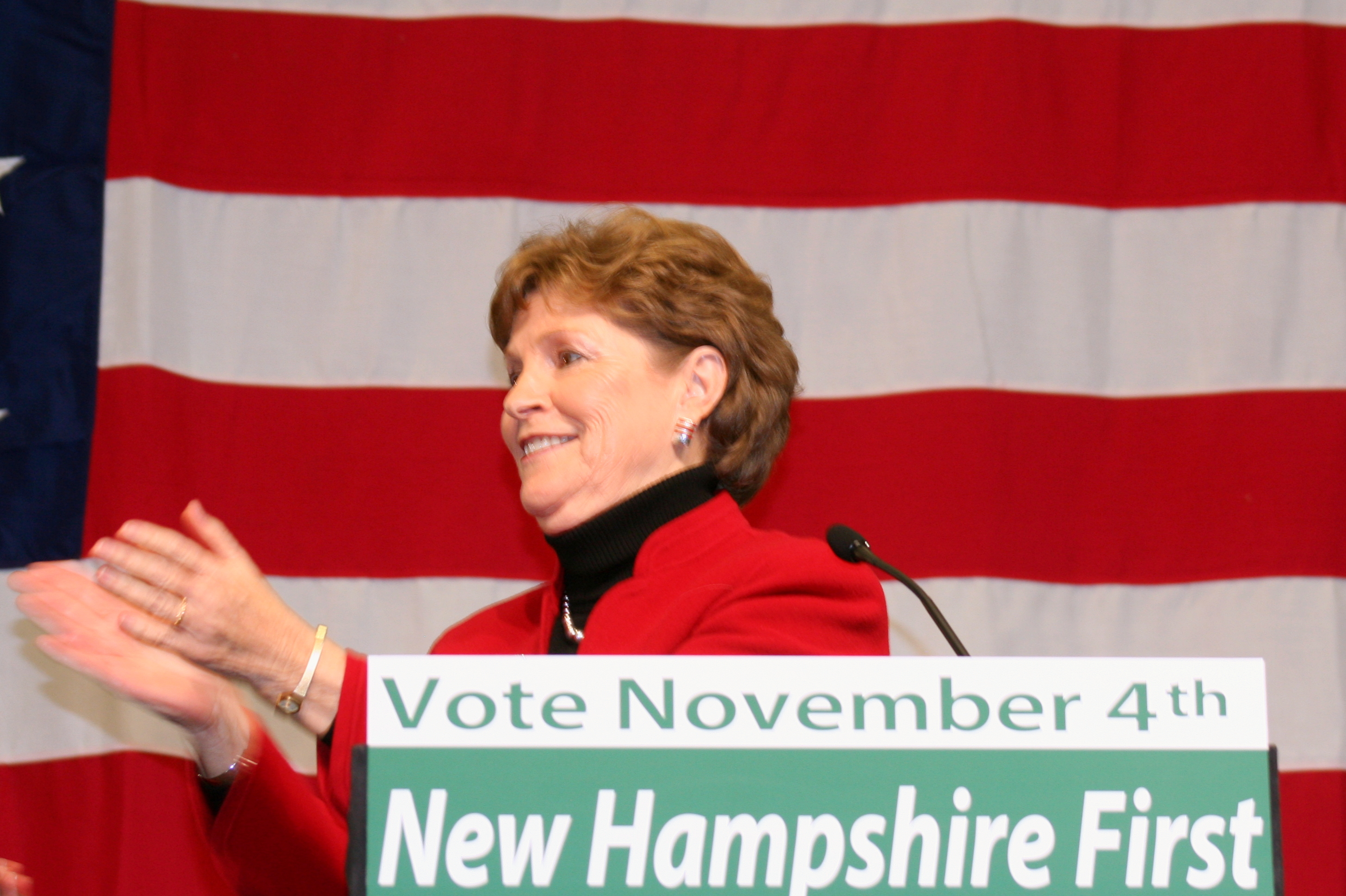
US Senator Jeanne Shaheen (NH)
And finally, Hillary Rodham Clinton!
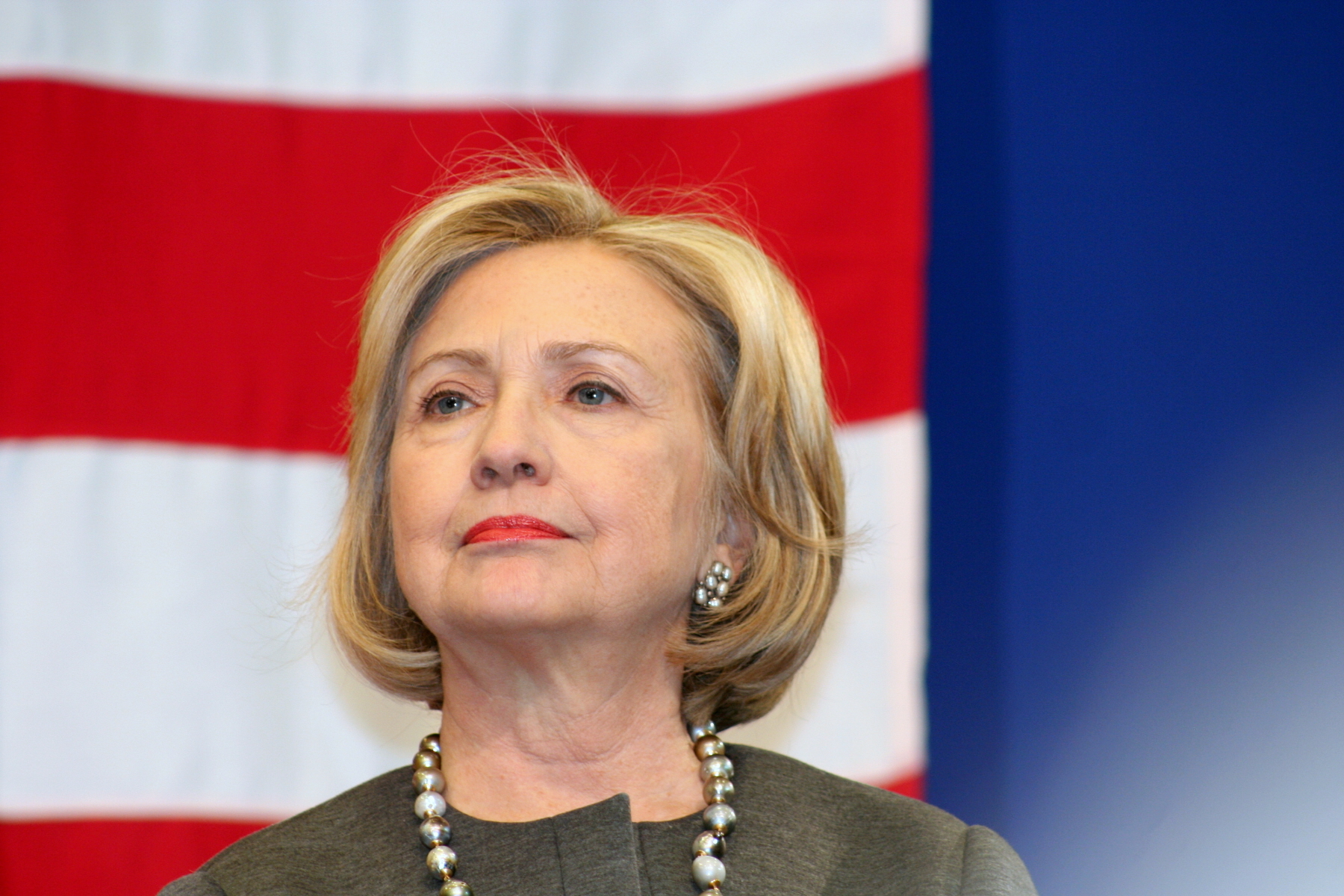
Hillary Rodham Clinton
In introducing Hillary, Senator Shaheen put forth this zinger that brought a roar from the crowd:
“She traveled 956,000 miles as Secretary of State – that’s nearly as many miles as Scott Brown traveled looking for a Senate seat to buy.”
Due to the low battery on my video camera, I was not able to record the speeches of the keynote speakers. After the video camera died, Hillary focused on women’s and family issues. Since I could no longer videotape the event, I took a few notes. Here’s some of Ms. Clinton’s additional remarks:
“Women are not just half the population.”
“Women’s rights are on the front line of rights around the world.”
“Equal pay is not just a women’s issue. It is a family issue.”
“Fear is the last resort of those who have run out of hope.”
“If you vote, you can elect these women who will lead New Hampshire and the rest of the country [for the better good of all].”
In addition, the Manchester Ink Link compiled several quotes from Hassan, Shaheen, and Clinton. You can see them here.
You Gotta Vote!
So no matter where you are – in Pennsylvania, in New Hampshire, or anywhere else in the country – consider the impact of who your next Governor or US Senator or US Congressperson may be. Do not vote based on fear. Vote for the candidates who will protect middle-class income, education for all, access to healthcare, marriage equality, the environment, and reproductive justice.
GET OUT AND VOTE on Tuesday, November 4, 2014. You can find out where and how to vote in your state here (courtesy of the League of Women Voters). Thanks.

Collage of pictures taken during the Hassan/Shaheen/Clinton rally in Nashua, NH on Nov. 2, 2014
Share this:

Elizabeth Warren Stumps for Jeanne Shaheen

Senator Elizabeth Warren stumping for Senator Jeanne Shaheen
The National NOW PAC sent three NOW activists up to New Hampshire to work on the campaigns of the three Congressional candidates that they have endorsed for the 2014 elections. We have been embedded within the New Hampshire Democratic Party’s coordinated campaign as an in-donation to their campaigns for reelection. The three are all women and all are up for reelection. They are Senator Jeanne Shaheen and Representatives Ann Kuster and Carol Shea-Porter.
Senator Shaheen is in a tight race with carpet-bagging former Massachusetts Senator Scott Brown. After losing his reelection race for the US Senate in Massachusetts, he “moved” to his vacation home in New Hampshire and is now running against Senator Shaheen for her Senate seat.
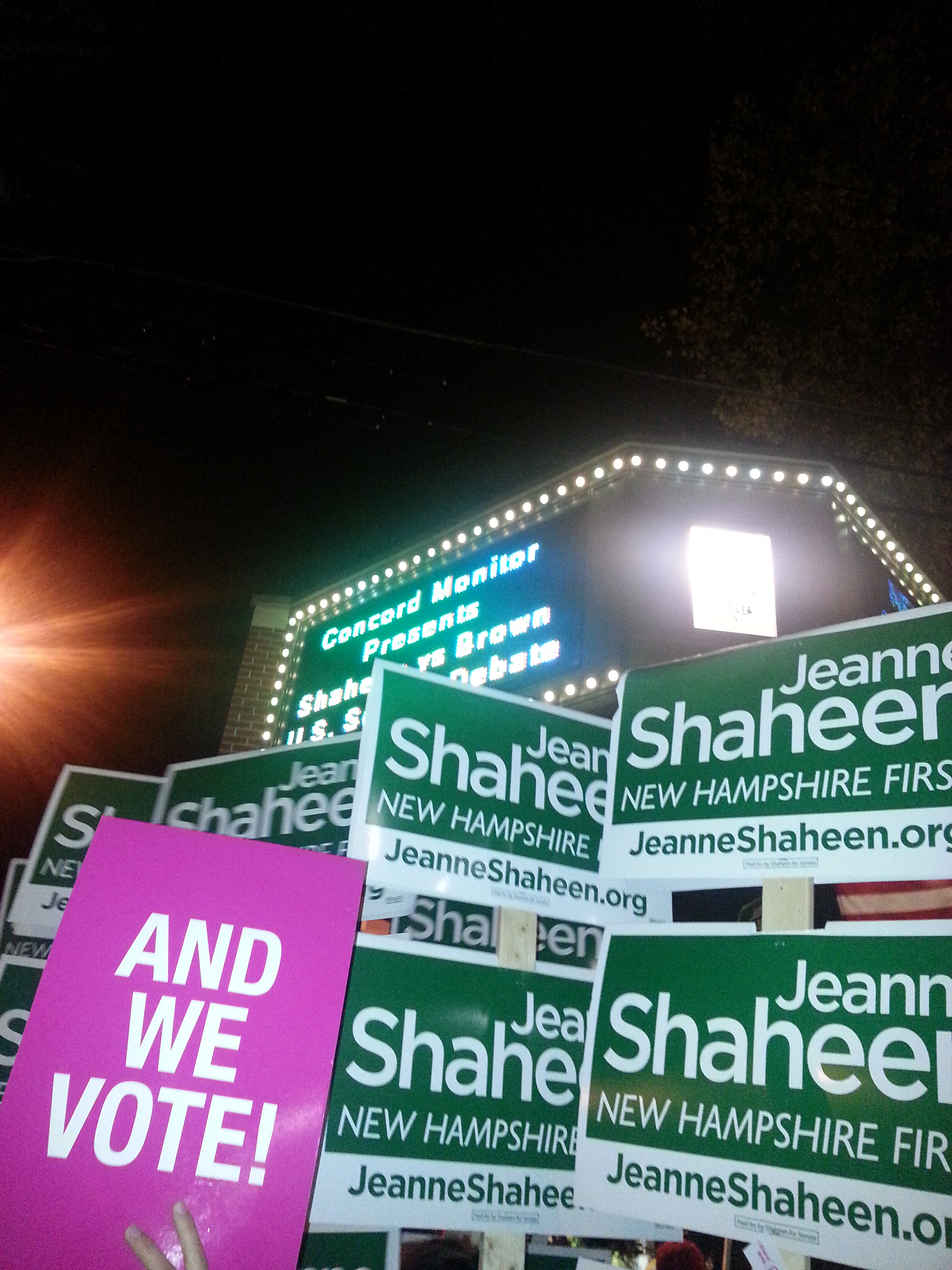
Shaheen and We Vote Signs
On Tuesday, October 21, after a day of phone banking for the candidates, we participated in a visibility event for Senator Shaheen. There were about 100 or more Shaheen supporters holding signs large and small; Brown’s supporters had about 30 or 40 supporters.
Then we went inside and listened to the debate between Scott Brown and Jeanne Shaheen. My favorite line occurred at the very end of the debate. The moderator asked each candidate what one thing they would like to tell their opponent. Shaheen commented that Brown had run for the Massachusetts Senatorial seat and lost to now Senator Elizabeth Warren. Then he considered running for Governor of Massachusetts. And then he decided to claim that he was no longer from Massachusetts but from New Hampshire and would therefore run in a second state. Here’s what she said and what I tweeted
.@JeanneShaheen to @SenScottBrown “#NH isn’t a consolation prize.” Carpet bagger! Vote 4 the true people’s choice. Shaheen 4 #USSenate @NOWPACs [endorsed]
Who had Scott Brown lost to in Massachusetts? Senator Elizabeth Warren. She along with people throughout New Hampshire and throughout the country see Brown’s race as that of an opportunistic Carpet Bagger. Senator Warren put that thought to words four days later when she came to stump for Senator Shaheen in Durham, Concord, and Keene.
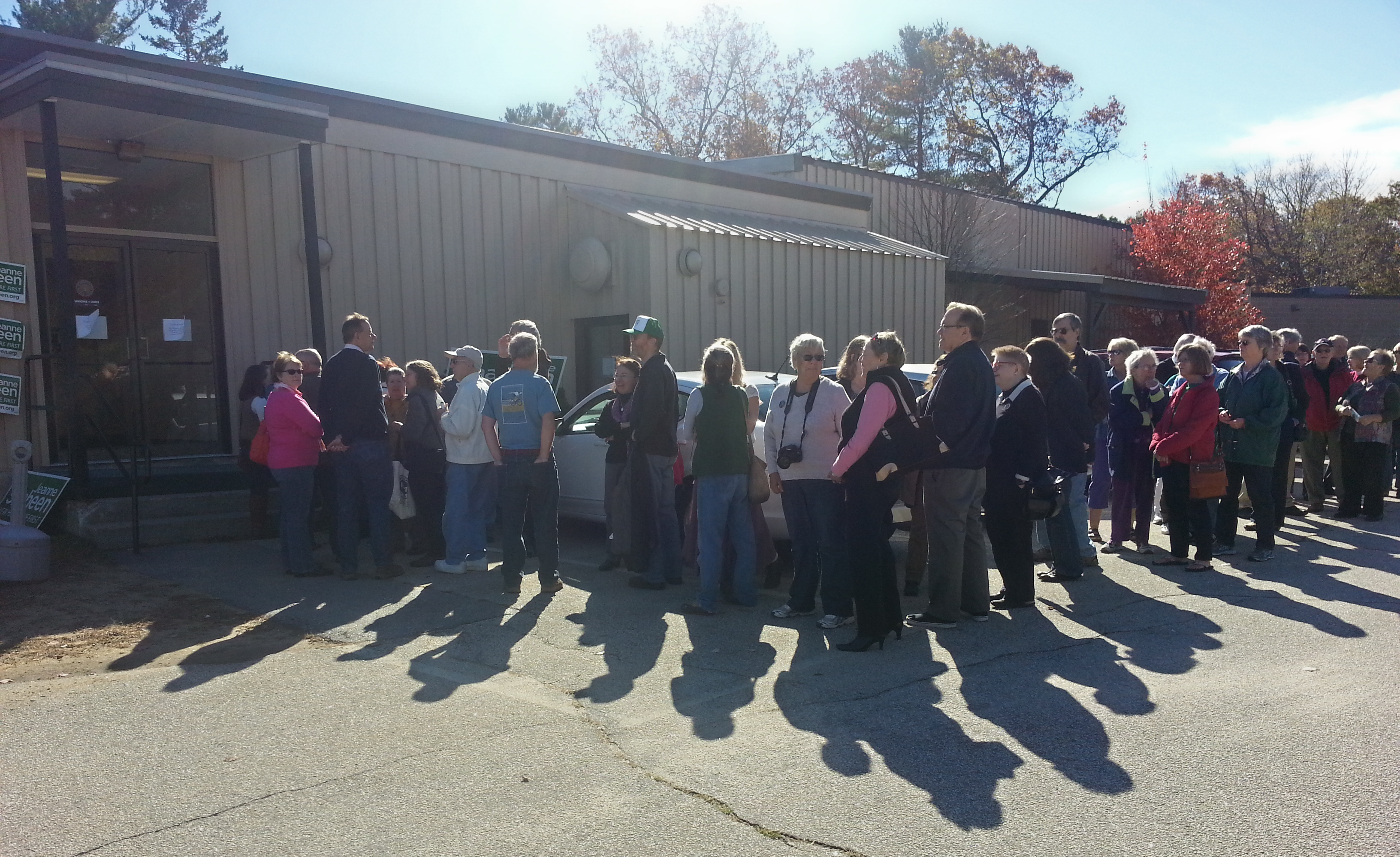
Shaheen Supporters outside IBEW Hall in Concord NH
I attended the “Get Out the Vote for Jeanne Shaheen with Elizabeth Warren” in Concord, NH. I took a video of the entire rally and took some pictures as well. We stood outside the International Brotherhood of Electrical Workers Hall in Concord for about 30 minutes before the doors opened and then went inside and waited for Senators Shaheen and Warren.

Supporters waiting inside the International Brotherhood of Electrical Workers Hall to hear Senators Shaheen and Warren
The first speaker was Jim Bouley, Mayor of Concord. Here’s his introduction of Senator Jeanne Shaheen:
Senator Shaheen then spoke. This portion of the rally is contained in the following two videos:
And then Senator Elizabeth Warren spoke.
After the rally, the NOW PAC Feminist Field Force in New Hampshire (three NOW activists sent to NH to work for the NOW PAC federally endorsed candidates) got a couple of moments to thank Jeanne Shaheen for her passionate commitment to women’s equality and rights.

NOW PAC Feminist Field Force with Senator Jeanne Shaheen L to R: Gaby Moreno, Senator Jeanne Shaheen, Joanne Tosti-Vasey, and Noreen Connell
Thank you, Jeanne Shaheen!
And if you live in New Hampshire, please get out and vote on November 4 for Jeanne Shaheen (D-NH) for the US Senate, Carol Shea-Porter (D-NH District 1) for the US House of Representatives, and Annie Kuster (D-NH District 2) for the US House of Representatives.
Share this:

Fair Elections
Fair campaign finance reform is needed for our government. There are two bills in the US Congress that could do this at the federal level.
We need to support Fair Elections and return our government to one that’s of, by, & for the people–not bought & paid for by special interests. There are two bills in Congress that would make this happen – 1) the Government by the People Act (HR. 20) and 2) the Fair Elections Now Act (S. 2023).
The lead co-sponsors of The Government by the People Act (HR. 20) are House Democratic Leader Nancy Pelosi (D-Calif.) and Rep. John Sarbanes (D-Md.). This bill allows “everyday Americans [to take] a $25 refundable My Voice tax credit to help spur small-dollar contributions to candidates for Congressional office” and establishes “a Freedom from Influence Fund to multiply the impact of small-dollar donations ($150 or less).” There are 138 additional co-sponsors. In addition, organizations such as Alliance for Justice, Americans for Democratic Action, Common Cause, Service Employees International Union (SEIU), and the Sierra Club have endorsed this bill. Currently, there are over 50 organizations who have signed on as supporters of this bill. You can see the full list of Congressional co-sponsors and organizational endorsers here.
Senator Dick Durbin (D-Ill.) has introduced The Fair Elections Now Act (S. 2023). This bill that would allow Senate candidates to run for office by relying on small donations from people back home. Currently, there are 15 additional Senators who are co-sponsoring this bill. Organizations such as the Brennan Center for Justice, Credo Action, League of Conservation Voters, NAACP, and Working Families have endorsed this bill. Currently, there are 38 organizations that have signed on as supporters of this bill. You can see a full list of the Senatorial co-sponsors and organizational endorsers here.
You too can publicly support these bills. Public Campaign and a coalition of organizations are working to return our government to one that is of, by, and for the people–not bought and paid for by special interests. They have created a website for individuals and organizations to sign on in support of these bills.
As an individual, You can sign on the Government By the People Act / Fair Elections Now Act website as a “citizen cosponsor” of the Government by the People Act. If you represent an organization, your organization can endorse the Government by the People Act here.
There is not a sign-up page on this website for signing on to the Fair Elections Now bill as either a citizen co-sponsor or as an organizational endorser. I don’t know why. If you are interested in signing on in to the Fair Elections Now bill, I suggest you contact them and make this request as I believe both bills need grassroots support. They do have an email address where you can contact them via email at ofby@publicampaign.org or by sending a letter to Public Campaign, 1133 19th Street NW, 9th Floor, Washington, DC 20009.
In either case, you can also follow this campaign for fair elections on Twitter by following @ofbyus.
Let’s get this done. Return our elections to the people. Pass both the Government By the People Act and the Fair Elections Now Act.
Share this:

Corbett’s at It Again
This time, Corbett is attacking LGBT couples
“Just Close Your Eyes”
Last year, the Pennsylvania General Assembly was considering passage of a transvaginal ultrasound bill to force women to have an unnecessary ultrasound in advance of going to an abortion clinic if they want to terminate their pregnancy. This bill would have required pregnant women to have the intrusive vaginal ultrasound with a video screen pointed at then and then would have required them to carry that report to the clinic the next day along with a signed form indicating that they had the procedure done. This report would also have to be placed in their medical record despite the fact that this procedure was not medically necessary.
When Pennsylvania Governor Tom Corbett was asked if this was a bill that burdened women, he said that the women who didn’t want the procedure could “Just close their eyes.”
Here’s a clip of that comment (the commentary and the comment start at 02:39 minutes into this video):
This time he says, “I think a much better analogy would have been brother and sister…”
Now this week, he’s attacking loving gay couples who want to marry just like their heterosexual friends do. On Friday he responded to another reporter’s question. He appeared on a Harrisburg TV station program called “Ask the Governor.” The reporter asked him to comment on the legal argument that his lawyers are proceeding with in a case to stop Montgomery County’s Register of Wills from issuing marriage licenses to gays and lesbians who want to get married in Pennsylvania.
The legal brief compares same-sex marriage to allowing 12-year old children to get married. His response, just a bit longer than the “Just close your eyes” comment from last year, is just as offensive. The reporter said to him, “comparing gay marriage to the union of 12-year olds … you called inappropriate.” Corbett responded:
“It was an inappropriate analogy. I think a much better analogy would have been brother and sister, don’t you? ”
Here’s a clip of this comment:
He later, as with last year’s comment, apologized, saying this time that it’s just a “legal” argument since marrying a 12-year old or having an incestuous marriage, or marrying a person of the same-sex are all illegal.
This is the guy who thinks he represents the Commonwealth?!!? Women as well as men? I don’t think so! All gays and lesbian couples as well as any heterosexual couple that wants to get married?!!? I don’t think so!
Inappropriate, Offensive, Insensitive, and Hateful
Both of these statements are offensive, insensitive, and hateful. And, yes just as Corbett later stated they are both inappropriate. Yet he continues to attack – women, gays, immigrants, etc. For a sampling of these attacks by Governor Corbett (as well by the Pennsylvania legislature), check out my blog posting earlier this entitled “War on Women in PA: At Least a 20-Year Happening.”
The apologies are not enough. Corbett has to go. He needs to be a 1-term Governor in Pennsylvania – something that hasn’t happened since the PA Constitution was amended in 1968 to allow a Governor to succeed himself (or herself, which might change if we ever elect a female governor) with a second term.
The Alternatives (So Far)
We know that Tom Corbett will be the Republican candidate for PA Governor in 2014. We don’t know who the Democratic (or any other party) candidate will be on the November ballot. Right now there are at least eight Democrats running: John Hanger, Jo Ellen Litz, Rob McCord, Katy McGinty, Max Myers, Ed Pawlowski, Allyson Schwartz, and Tom Wolf have officially announced and Rep. H. Scott Conklin, Senator Mike Stack, and former Auditor General Jack Wagner are considering a run. We need information on these alternatives.
So I started looking for blogs or commentary on alternatives to Tom Corbett. So far, there is only one that is not party-based that I could find. It is written by Cindy Purvis, Treasurer of Healthcare for All PA. Her blog is titled “Race for PA Governor” and focuses on single-payer healthcare reform. So check out her blog.
After the fall elections, there should be more websites up that can provide more complete information on the stances of candidates across a wide spectrum of issues, including women’s rights, reproductive justice, marriage equality, and other LGBTQ issues. One of the best, in my opinion is Project Vote Smart. Right now there is nothing on any race being held in 2014, but check back later.
Meanwhile, you can let your outrage be known. Contact Tom Corbett by email or phone at 717-787-2500. Tell him that his wars on women and the LGBT community must stop. Let him hear your outrage. Maybe he might reconsider some of his views and actions towards the citizens of Pennsylvania. I doubt it, but it doesn’t hurt to try.
Share this:
Voting Rights for Felons and Ex-Cons
Voting Rights for Felons and Ex-Cons
Yesterday, a friend of mine called me. She said that she had been talking to a woman whose partner had a felony record who had served his time for the crime. Among the several issues they discussed was his frustration that he was no longer able to vote. Like many people, my friend and the couple she was talking to me about all believe that once someone has been found guilty of a felony, they face a lifetime ban on their constitutional right to vote.
Since primary season is coming up in many places around the country and since most states have voter registration deadlines before their primary election day, I thought I’d provide some background information on this issue.
What is the myth?
Simply stated, the myth is that ex-cons cannot vote – once convicted and forever afterwards. There are at least two errors in this myth:
- Except for a narrow category of crimes in Mississippi, disenfranchisement does not occur in any state if you are found guilty of a misdemeanor crime. Even if you spend time in jail for that misdemeanor.
- Voter disenfranchisement for people with a felony conviction differs by state. Eleven states permanently disenfranchise some or all current and former felons from voting, but most don’t.
So it all depends on where you live. Here’s what I found out about state laws on this issue from the Brennan Center for Justice
Permanent Disenfranchisement for All Felons
Only four states – Iowa, Florida, Kentucky, and Virginia – permanently disenfranchise current and former felons from voting. The only way for a person to have their voting rights reinstated is through an “individual rights restoration” process set up by each state.
Permanent Disenfranchisement for Some but Not All Felons
Seven states permanently disenfranchise some, but not all current and former felons from voting.
In Arizona, if someone is convicted of two or more felonies, the right to vote is permanently denied.
In the other six states in this category, you need to check your state law to determine which felony convictions permanently deny you the right to vote. Here’s a quick summary of these laws.
- In Alabama, you can be permanently barred from voting if your crime is listed in their disenfranchisement list. If the conviction is a “moral turpitude” type of conviction, you can have your voting rights restored upon completion of your sentence and payment of fines and fees.
- In Delaware, voting after incarceration can be reinstated five years post-incarceration unless the crime you committed is one among a list of crimes that permanently disenfranchises your right to vote.
- In Mississippi, you permanently lose your right to vote if you are convicted of any of ten categories of crime, whether that crime is a felony or misdemeanor. If your crime isn’t on this list, you can vote even while incarcerated. Note, this is the only state that has a law that permanently bans voting for someone who has created a misdemeanor.
- In Nevada, if someone is convicted of two or more felonies, the right to vote is permanently denied. People convicted of violent crimes at any time are permanently barred from voting. Nevada will restore those rights if a pardon is granted or if the court where the conviction originally occurred restores those rights.
- In Tennessee, if your crime is on the list of crimes that permanently bar you from voting, then you can only have these rights reinstated if you are pardoned. For all other crimes, you can have your voting rights restored upon completion of your sentence, payment of fines and fees, and show that you are up to date on all child support payments.
- In Wyoming, you can have your voting rights restored five years post-incarceration for first-time non-violent crimes. All others are permanently disenfranchised unless pardoned by the Governor.
Voting Rights Restored Upon Completion of Incarceration, Probation, and Parole
Nineteen states – Alaska, Arkansas, Georgia, Idaho, Kansas, Louisiana, Maryland, Minnesota, Missouri, Nebraska, New Jersey, New Mexico, North Carolina, Oklahoma, South Carolina, Texas, Washington, West Virginia, and Wisconsin – restore your rights to vote upon completion of your sentence, which includes incarceration, probation, and parole.
In Nebraska, one additionally has to wait two years after completing the sentence before being allowed to vote.
In Washington state, you can lose your right to vote again if you haven’t paid your financial obligations after completing your sentence.
Voting Rights Restored After Incarceration and/or Probation
Five states – California, Colorado, Connecticut, New York, and South Dakota – allow you to vote once you have completed your sentence and/or probation.
In New York, those on probation can have their voting rights restored if they receive either a “Certificate of Relief from Disabilities or a Certificate of Good Conduct.”
Voting Rights Immediately Restored After Incarceration
Fifteen states – the District of Columbia, Hawaii, Illinois, Indiana, Massachusetts, Michigan, Montana, New Hampshire, North Dakota, Ohio, Oregon, Pennsylvania, Rhode Island, and Utah – immediately restore voting rights upon one’s release from jail or prison. There are no voting restrictions for people on parole or serving probation time.
No Restrictions on Voting for People with a Criminal Record
And just two states – Maine and Vermont – allow anyone otherwise eligible to vote regardless of criminal conviction to vote. Even while incarcerated, on probation, or parole.
Who is most likely to be impacted by this disenfranchisement?
According to the ACLU, people and communities of color are most often disparately impacted by felony disenfranchisement laws. There are over 5.3 million people in the United States that are barred from voting due to a criminal conviction. The majority of these crimes are non-violent.
Of the 5.3 million disenfranchised, 1.4 million or 26 percent of people with a criminal conviction are African-American citizens. Considering that black persons make up just 13 percent of the national population, one can immediately see that if you are Black, you are twice as likely to have your voting rights denied. This means that one in 13 African-Americans across the country are being denied their right to vote.
The myth of an ex-con never being allowed to vote compounds this issue. As previously stated, many believe that once convicted, they can never vote again.
With a widespread belief in this myth as well as a lack of public education to refute it, more and more ex-cons are at risk of not regaining their right to vote. Since actual disenfranchisement disparately impacts people of color, this assumption exacerbates this form of discrimination.
In my opinion, little is done by the government, courts, and communities to educate people and communities about their voting rights when one has been sentenced for a crime. Exceptions to this come from only a few, non-profit advocacy sources, including the ACLU, the Brennan Center for Justice, the Prison Policy Initiative, and the Sentencing Project. There are others, but I believe that these four contain the best resources.
What do you need to do to get registered?
If your state is one of the states that do not permanently disenfranchise people who have completed their sentence (or if you live in Maine or Vermont which has no felony restrictions on voting), you should check out what your state law is regarding registering to vote. The federal government has a website that has basic information on how to register and what the registration deadlines are by state. It also has links to every state’s election office website where you can get details about state-specific requirements for voter eligibility.
If you know or believe that you have the right to vote in your state despite having a criminal history and receive a denial to vote when you attempt to register, you should check with an organization that provides legal services to people who have been incarcerated. You can find a listing of these organizations by state here. If your state isn’t listed, then the Prison Policy Initiative suggests that you contact one of the national groups that provide voter disenfranchisement assistance.
Once you get registered, GO VOTE! It’s your right.
Share this:

Institutional Corruption and the Influence of Money and Politics on People’s Lives
 This morning, I was scanning Tweets that came into my Twitter account. One of the Tweets said,
“Why the phrase ‘Supreme Court to hear campaign-finance case’ should scare you.”
It contained a link to an article in the Daily Beast. This article said that the US Supreme Court has decided to take another look at campaign financing in a case from the United States District Court in DC called McCutcheon v. Federal Election Commission. I read the article.
And yes this case scares me. McCutcheon argues that there should be no limits at all on campaign financing. It scares me because I believe that if the Supreme Court rules in favor of McCutchen, there will be more influence and therefore more institutional corruption on our public policy. This will then allow the creation of more holes in the safety net for people’s lives due to the corrupting influence of big money. For clarification, institutional corruption is defined as:
[T]he consequence of an influence within an economy of influence that illegitimately weakens the effectiveness of an institution especially by weakening the public trust of the institution.
Why? Because I do not trust the members of the current Supreme Court to openly and fairly take into account that elected officials need to answer to their constituents and not to the people and companies and lobbyists that influence them by throwing lots of money and offering consulting jobs to these elected officials (a form of “money”) once they leave office.
My mistrust results from their decision in the 2009 Citizens’ United case. They held that the First Amendment to the US Constitution prohibits the government from restricting independent political campaign expenditures from corporations and unions. The aftermath of this decision has been devastating. Immediately after this decision, the DC Circuit Court (which handles cases involving federal regulations) ruled that
“individuals could make unlimited contributions to so-called Super PACs, which supported individual candidates.”
And what did we see? In the 2010 elections, Super PACs—mostly funded by the mega-rich—assisted conservative Tea Party candidates at all levels of government to win seats that they would not have otherwise been able to win. This resulted in a lot of gerrymandering around the country for the incumbents’ self-interest. And in 2012, $6.2 billion was spent on elections; over $10 million of these funds were given to a small number of Super Pacs by a very small number of mega-wealthy individuals—including the Koch brothers—to influence the outcome of the elections.
If this case overturns what few limits on campaign financing are left, the doors for institutional corruption will be thrown wide open. Candidates will spend even more time chasing money, mostly soliciting funds from large, non-constituent individuals and corporations. Most of these individuals are heads of corporations whose special interest is their bottom-line profits and not the interests of the “47%.”
Fred Wertheimer is President of Democracy 21. It is a non-partisan group that works to eliminate the undue influence of big money in the public arena. He agrees with me that big money corrupts our public institutions. In a press statement on February 19, he said that the
“[A]ggregate limit on contributions by individuals is necessary to prevent circumvention of the limits on contributions to candidates and political parties and the prohibition on federal officeholders soliciting huge corrupting contributions.”
And further, if the Supreme Court either completely guts or weakens campaign financing, this decision
“…would open the door to $1 million and $2 million dollar contributions from an individual buying corrupting influence with a powerful officeholder soliciting these contributions, and with the political party and federal candidates benefiting from these seven figure contributions.”
I believe that it is the local constituent who should be influencing their representatives. Not corporations. Not big money. And not the 1% at the top of the income ladder who do not live or experience the lives of the people who live in each of our communities.
I am one of the 85% of Americans who view Congress unfavorably because of what they have NOT been doing for people’s lives. Like allowing funds for critical domestic programs to be cut due to the budgetary stalling and delays of the Fiscal Cliff and Hurricane Sandy debates and resulting Sequestration that now looks like it will become reality this coming Friday. Like delaying passage of the Violence Against Women Act (VAWA) from being reauthorized for over two years (which, may change tomorrow when and if the House FINALLY votes on the Senate-passed VAWA Act of 2013). Like talking about but not taking any comprehensive action, so far, to deal with violence and gun safety (for more information on this gun safety issue, read my blogs here and here).
No, I don’t trust the US Supreme Court. And no, I do not trust Congress. All because of the influence of money on the decisions the do and do not make.
Institutional Corruption is a problem. We need to reduce that corruption. We need to empower the small donors. New York City, as well as Los Angeles and San Francisco have done this. And in a plan put together by Brennan Center for Justice at New York University School of Law and Democracy 21, we could do the same thing as well across the country. Look at the plan and then lobby your legislator, even if you don’t trust him or her. Vote for candidates in the future who pledge to listen to their constituents and not to big money.
This will take a long time. But it is necessary. Then and only then do I believe that we can and will be able to trust our elected officials to truly represent us and our concerns.
For More Information on Institutional Corruption
For more information, watch the video below. In this 2009 presentation, Lawrence Lessig defines institutional corruption. He then discusses the probable effects of this undue influence of money (broadly defined) not only on elected officials but its effect on other institutions, such as the EPA and medical research.

 Civil Rights Advocacy