Marc Brenman is a colleague of mine. He is the former Executive Director of the Washington State Human Rights Commission and co-author of “Planning as if People Matter: Governing for Social Equity.“
Marc has compiled a very detailed plan and ideas to deal with gun violence that he believes have at least some value in this discussion regarding a comprehensive gun control, safety, education, medical care, and community responses to the current climate of gun violence here in the United State. Earlier this month, I linked one of my earlier blogs to one of the groups I am a member of on LinkedIn. After seeing a much shorter version of his thoughts in a comment to my posting, I asked him if he would like to do a guest blog detailing his thoughts on this issue. The following is what he wrote.
Marc can be contacted directly at mbrenman001@comcast.net
Marc’s Plan in Response to the Mass Shootings in the United States
Here are some elements of a plan in response to the Sandy Hook tragedy and other similar mass murders committed with guns in the US. Each of these has some value, and together would have great value. Some elements are derived from others. There are pros and cons to many of these suggestions and initiatives; those aspects are generally not discussed here.
Effective enforcement of gun control laws can deter illegal gun trafficking, but loopholes, high standards of evidence, and weak penalties make it difficult to enforce laws designed to keep guns from prohibited persons. Stronger gun laws will lead to better enforcement of those laws.
Keep the Situation in Perspective
Schools are still among the safest places for our young people to be. Students are 99 times more likely to be victimized in the community—on the streets, at the mall, at movie theaters, in fast food restaurants and other public places—rather than at school.
Reframing the Discussion
Guns are a force multiplier, and make any inclination to violence much more destructive, whatever the cause. Gun use intensifies violence, increasing the case-fatality rate in assaults and “accidents.” Gun violence substantially reduces the standard of living in a community in which it is common, and not just for the immediate victims. “For many social policy applications we either must give up on the goal of evidence-based policy, or develop a broader conception of what counts as evidence.” (U. of Chicago) “Compared with other common weapons, guns have a peculiar ability to create fear, resulting in a loss of peace of mind together with self-protective distortions in routine activities of work and play. There is no counterpart with other weapons to drive-by shootings and stray bullets.” (U. of Chicago)
Public Education
Some mistakenly believe that the Second Amendment to the U.S. Constitution would prohibit the kinds of legal reforms we believe are warranted. In 2008, in District of Columbia v. Heller, the U.S. Supreme Court ruled that the Second Amendment protected an individual right to own guns, striking down Washington, D.C.’s law banning handgun possession in the home. However, the Heller decision also mentioned numerous types of presumptively valid gun laws, including ―laws imposing conditions and qualifications on the commercial sale of arms. Since Heller, lower courts have overwhelmingly upheld the constitutionality of a wide range of gun laws other than handgun bans.
Establish a long-term public-education media campaign to change the public’s perception of gun violence. It must be understood that crime is merely the most recognized aspect of the public-health problem posed by firearms. The campaign should also be designed to educate citizens about the risks associated with firearms ownership.
Stakeholder Engagement
There are differences in the problem defining process. If the problem is not defined well, finding solutions becomes much more difficult. However, there will not necessarily be consensus in defining the problem. It would be useful to have the discussion among different parties.
Recruit individuals and organizations not traditionally involved in the debate. Gun-control organizations must reach out to build active, long-term coalitions with organizations whose constituencies are affected by firearms violence, including women’s groups, youth organizations, civil-rights organizations, hospitals, consumer organizations and public-health associations. Support should also be sought from those with economic interests in reducing firearms violence, such as the insurance industry, hospital associations and criminal-justice associations.
“Since all crime is local, the response to emergencies caused by crime should start with a local plan that is linked to the wider community. Universities and colleges should work with their local government partners to improve plans for mutual aid in all areas of crisis response, including that of victim services.” (Report of the Virginia Tech Review Panel; Office of the Governor of Virginia)
Move Quickly
“[C]riminal misuse usually follows rather quickly after gun acquisition. In other words, the millions of current gun possessors will account for little of the violent crime five years from now. A reasonable goal, then, is to increase the effective price of guns to the high-risk segment of the market. (U. of Chicago)
Improve School Safety
Every campus should have a series of threat assessment protocols so that school officials can effectively work with mental health and law enforcement professionals in handling circumstances that could result in potential violence or harm.
“Identify whom to call in a crisis. Maintain an updated list of who to call in case of various kinds of crisis. Develop a close working partnership with these emergency responders…Create a close working partnership with mental health professionals who can assist school officials in evaluating and assessing potentially dangerous students who may threaten or intimidate others. (National School Safety Center).”
Provide ways for students to report rumors or concerns and ensuring that students trust and feel connected to adults at their school. Recent studies by the Secret Service show that in the vast majority of student shootings, other students on the campus were aware of the event before it occurred.
Use tip lines. Tip lines acknowledge the key role that students and community members play in keeping schools safe. They also provide a deterrent effect that may preclude acts of crime and violence from occurring. Advice from educators and law enforcers around the country underscores several key recommendations for successful tip line management:
- Make the tip line a collaborative, communitywide effort; involve students in planning and managing the tip line; regularly publicize and promote the tip line;
- Protect privacy and caller anonymity;
- Keep callers informed of progress; and
- Provide incentives or rewards.
Training every staff member to look for signs of “off behavior,” even subtle ones, from people who come into school buildings, is critical.
Ensure that classroom doors can be locked.
Control access to school buildings and grounds during school hours. “Minimize the number of campus entrance and exit points used daily. Access points to school grounds should be limited and supervised on a regular basis by individuals who are familiar with the student body.
- Campus traffic, both pedestrian and vehicular, should flow through areas that can be easily and naturally supervised.
- Delivery entrances used by vendors also should be checked regularly.
- Parking lots often have multiple entrances and exits, which contribute to the vandalism and defacement of vehicles and school property.
- Vehicular and pedestrian access should be carefully controlled. Perimeter fencing should be considered.
- Bus lots should be secured and monitored. \Infrequently used rooms and closets should be locked.
- Access to utilities, roofs, cleaning closets should be secured.” (National School Safety Center)
Require faculty to wear badges or photo identification. “All school employees should be advised to greet visitors or any unidentified person and direct them to the main office to ensure that these persons have legitimate business at the school. Teachers and staff should be trained to courteously challenge all visitors.” (National School Safety Center)
Use security cameras.
Equip individual classrooms with telephones. “Establish an Emergency Operation Communication System. In addition to campus intercoms and two-way radios, it is important for school officials to be able to communicate with law enforcement and outside telephone providers. This includes the use of cell phones.” (National School Safety Center)
Have lockdown and Code Blue procedures, practices, and drills.
Use Crime Prevention Through Environmental Design (CPTED). These theories hold that law enforcement officers, architects, city planners, landscape and interior designers, and volunteers can create a climate of safety in a community. CPTED’s goal is to prevent crime by designing a physical environment that positively influences human behavior. The theory is based on four principles: natural access control, natural surveillance, territoriality, and maintenance.
Youth Gun Violence
“[O]ne way to prevent youth gun violence is to make the incentives that youth face to engage in prosocial activities (particularly schooling) and avoid risky behaviors (such as gun involvement) more swift, certain, and salient. (Gun Violence Among School-Age Youth in Chicago; Crime Lab; University of Chicago).”
“Address root issues, such as poverty, social inequality, and school failure. Gun availability has multiplier effects when combined with such risk factors for youth violence involvement as mental health problems, alcohol or drug abuse, and school failure or disengagement. “The lethality of guns means it is important to try to keep guns away from youth who are engaged in violence as an independent goal, above and beyond trying to reduce youth involvement with violent events.” (U. of Chicago)
“[Y]oung people, criminally involved young adults, and even drug-selling street gangs respond to police pressure against illegal gun carrying and use.’ “[D]eliver a credible threat to…gangs that using guns was not going to be tolerated, and that the entire gang would suffer when any one member of the gang used a gun. The hope was to provide gang leaders with an incentive to limit gun use by the members, for fear of a police crackdown.” (U. of Chicago)
Suicide Prevention
Many people commit suicide using a gun.
“[I]t is reasonable to suppose that a policy that made it more difficult for those who consider it to use their preferred means of ending their lives (often, a gunshot) would cause some to desist (U. of Chicago).”
Gun suicides are more common among whites than blacks, and more common among the old than among young or middle-aged adults (Cook & Ludwig, 2000). Men are vastly overrepresented in all categories.
Background Checks and Record Keeping
Ensure state compliance with requirements to post appropriate mental health records in the National Instant Criminal Background Check System
Establish clear reporting guidelines for when and how mental health records are required to be posted in the National Instant Criminal Background Check System so that states can be held accountable for compliance
Close the gun show loophole. Require a full background check in all gun transactions, including private sales at gun shows and online purchases. Presently, only seventeen states regulate private firearm sales at gun shows. An advocate for closing the private sale loophole once likened current federal gun policy to an airline security system which offers passengers a choice between submitting oneself to our current screening system, or side-stepping it, and boarding with whatever you would like to bring on board. Approximately 40% of the guns acquired in the U.S. annually come from unlicensed sellers, who are not required by federal law to run background checks on potential gun purchasers.
If an individual privately sells guns to anyone, he or she must first report it to local authorities.
Fully fund state technology efforts to comply with the federal background check system requirements.
Require states to comply fully with the protocols of the National Instant Criminal Background Check System or threatening to take away their federal funding.
Require states to rerun background checks more often (a minimum of every other year) to prevent otherwise ineligible individuals from continuing to possess weapons.
Mandate federal compliance with a presidential executive order directing all agencies to submit records to this instant background check system.
Mandate that gun dealers take yearly inventories and report any lost or stolen guns and/or ammunition.
Change the Congressionally mandated Tiahrt Amendments to make it easier to trace weapons and prosecute violators. These amendments have weakened the federal gun laws by amending the Gun Control Act. One provision of the Tiahrt Amendments requires the FBI to destroy all approved gun purchaser records within twenty-four hours of approval, making it extremely difficult for the Bureau of Alcohol, Tobacco, Firearms and Explosives (ATF) to quickly trace crime guns or to retrieve firearms from prohibited individuals. In other words, there is no searchable paper trail. The Tiahrt Amendments also prohibit the ATF from requiring gun dealers to submit inventories so that the 50,000 gun dealers currently operating in the United States are not mandated to report the loss or theft of guns. State and local law enforcement are still prohibited from using trace data in civil proceedings to suspend or revoke the license of a gun dealer who has sold weapons illegally.
ATF should be empowered to operate as a health and safety agency with the ability to:
- Set safety standards for firearms, monitor compliance with such standards and issue recalls of defective firearms. The U.S. General Accounting Office has estimated that 31% of unintentional deaths caused by firearms might be prevented by the addition of two devices: a child-proof safety lock (8%) and a loading indicator (23%) (U.S. General Accounting Office, Accidental Shootings: Many Deaths and Injuries Caused by Firearms Could Be Prevented).
- Restrict the availability of specific firearms, classes of firearms and firearm products when appropriate, i.e., where the products present an unreasonable risk of death or injury and no feasible safety standard would adequately reduce the risk.
- Take immediate action to stop the sale and distribution of firearms or firearms products found to be “imminent hazards.”
Close loopholes. Criminals who have been convicted of misdemeanors other than domestic violence are not usually banned from gun possession under the current laws. This loophole must be closed because research has shown that one previous misdemeanor (violent or not) may be a future indicator for further violence involving a firearm. Another study revealed that individuals convicted of violent misdemeanors were eight times more likely to be charged with subsequent violent crimes, including crimes involving firearms, and that one out of every three violent misdemeanants seeking to purchase a handgun was arrested for newly committed crimes within three years of acquiring that handgun.
The best solution to the limitations of running a background check is to perform both federal and state checks before allowing a gun to be sold.
Manufacture and Sale of Guns
Prohibit the manufacture, sale and purchase of assault weapons and outlawing high-capacity bullet magazines, very large amounts of ammunition, bullets that have the sole purpose of causing great bodily injury, and aftermarket kits to convert certain firearms from semi-automatic to fully-automatic. Define “assault weapons” better and more specifically. Include fully automatic rifles and semi-automatic rifles and semi-automatic handguns. One in five law enforcement officers slain in the line of duty was killed with an assault weapon. Gun shooting victims were more likely to die in larger-caliber shootings, again suggesting that the intrinsic lethality of the weapon affected the outcome (Cook, 1991). The obvious partial solution is to restrict very large caliber gun manufacture, sales, and possession.
Prohibitions and Restrictions on Gun Ownership
Firearms Prohibitions for High-Risk Persons Should be Broadened. Our current laws permit many people who have been convicted of crimes—most misdemeanor crimes adjudicated in adult court and felony crimes handled in juvenile court—to possess firearms. Data from two studies of individuals who have committed the most serious crimes indicate that prior to committing these crimes, the perpetrators were not prohibited from possessing a firearm under federal law. Many suspects charged with felony crimes are convicted of lesser charges as a result of a plea agreement. Research has shown that misdemeanants who were legally able to purchase handguns committed crimes involving violence following those purchases at a rate two to ten times higher than that of handgun purchasers with no prior convictions. Handgun purchasers with a history of arrest but no convictions have an equally high or higher risk of committing violent crimes following handgun purchases as do misdemeanants who legally purchased a handgun.
The number of drug abusers prohibited from possessing firearms might be increased significantly by revamping these regulations to, for example, expand the period following a drug conviction for which a person is prohibited from possessing firearms.
More Restrictions on Youth Purchases. Restrictions on youths’ ability to purchase and possess firearms should be broadened. Although federal law and most state law allows youth 18 to 20 years of age to legally possess a handgun, youth of these ages have some of the highest rates of homicide offending. Age-specific homicide offending rates rise sharply in the late teens and peak at age 20. An analogy is to graduated driver’s licensing.
There should be more federal control over gun policy, particularly because the federal government is going to better internalize cross-state spillovers in gun trafficking. In an article from Brown University in Science Daily on October 24, 2011 titled “Gun traffickers exploit differences in state laws, economist says,”
-
Trafficking flows respond to gun regulations, with guns flowing from states with weak gun laws into nearby states with strict laws.
-
Proximity matters: Trafficking flows are more significant between two nearby states than between two distant states. Thus, a weakening of gun laws has a more significant effect in nearby states.
-
The fraction of crimes involving a gun tends to be higher in states exposed to weak gun laws.
Raise the Price and Increase the Cost of Illegal Gun Acquisition.
“Transaction costs in underground gun markets are substantial: prices are high relative to the legal gun market; wait times are considerable; mistrust is common between buyers and sellers; and many transaction attempts go unfulfilled, even by people who are well-connected in the underground economy (Cook, Ludwig, Venkatesh, and Braga, 2007).”
The underground market seems to work far less smoothly for guns than for drugs, perhaps in part because guns, unlike drugs, are durable goods, so the number of market transactions is lower and exchange becomes more difficult to manage. These patterns suggest opportunities for enforcement efforts that disrupt the illicit gun market. Measures such as buy-and-bust operations or efforts to incentivize arrestees to provide information about buyers and sellers in the gun market may prove more effective than those directed at illegal drugs.” (U. of Chicago) “Diverting high-risk buyers from the primary to the secondary market (by, for example, improving background checks or cracking down on rogue dealers) would further increase prices in the latter by increasing demand (Cook & Leitzel, 1996).”
Safety Training
Mandatory Training on Gun Safety for Gun Owners and Users. Tie this requirement to federal funding of states. If there is no such training, then a withdrawal or deferral of federal funding occurs. Life, health and homeowner insurance companies deny any injury or liability claims caused by unregistered weapons/ammo owned by the claimant, or if the gun owner failed to take the requisite training.
Require any person seeking to own, possess, purchase or otherwise acquire a firearm to obtain a firearm safety certificate, which obligates the applicant to successfully complete a safety training course that includes live firing, a safe-handling demonstration and a written test of firearm laws.
Require Training for Concealed Carry. There is a critical lack of accountability required for gun ownership, especially for carrying a gun in public. For example, one does not have to be a trained marksman to own a gun or carry a concealed weapon in many states; a course is required for concealed carry in most, but not all, states, most notably in the states that do not require permits for CCW. Require periodic recertification.
Reporting loss or theft of weapon
Require any firearm owner or possessor to report the loss or theft of his or her firearm to law enforcement within 48 hours of the time he or she knew or reasonably should have known of the loss or theft.
Detection of Incidents
Install Gunfire Detection Systems. Such systems help law enforcement detect the physical location of the gunfire, review video of the location, and dispatch an appropriate response. Gunfire detection systems have been shown to produce safer communities, produce 80% more arrests, and provide evidence for court.
Storage, Safes and Trigger Locks
Mandatory trigger locks and gun safes for gun owners. Installation of gun cabinets may improve gun and ammunition storage practices. Financial assistance to gun owners, such as tax incentives, can be provided to gun owners for this purpose.
Child access prevention (CAP) laws require gun owners to store their firearms so that children and teens cannot easily access firearms unsupervised. Studies have found CAP laws to be effective in reducing accidental shootings of children by as much as 23%, and suicides of adolescents by 8%. Keeping firearms locked, unloaded, and storing ammunition in a locked location separate from firearms may assist in reducing youth suicide and unintentional injury in homes with children and teenagers where guns are stored (David C. Grossman et al., Gun Storage Practices and Risk of Youth Suicide and Unintentional Firearm Injuries, 293 JAMA 707, 711-13 (Feb. 2005).
Require trigger locks.
Retrieve weapons from ineligible individuals.
Policies regulating the retrieval of weapons from ineligible individuals are also seriously inadequate. For example, if a crime is committed after the purchase of a gun, it remains unclear in several states which law enforcement agencies must be notified, if any, and which procedure law enforcement must follow to retrieve weapons from the person accused or convicted of a crime. Moreover, laws often do not mandate that stolen guns be reported to law enforcement officials, so a stolen gun could easily be used to commit violent crimes
Alcohol Use
Expanding firearm prohibitions to include persons who are alcoholics or problem drinkers could potentially reduce alcohol-related violence. Substance abuse is associated with a significant increase in violent behavior. It’s a much more significant risk factor than mental illness. Therefore, create and make more severe the penalties for using a gun while drinking alcohol, as well as for using a gun while on certain medications known by medical experts to cause agitated or aggressive behavior. Federal firearm laws do not prohibit alcoholics from possessing firearms, and only 16 states have statutes prohibiting alcohol abusers from possessing firearms. Furthermore, some states with gun prohibitions for alcohol abusers lack regulations to allow authorities to enforce the prohibition.
Trafficking
Make gun trafficking a federal crime, with stiff penalties for those who arm criminals.
Mental Health Services
Fully Fund Mental Health Services. Fund these services through a special tax on guns, ammunition, and permits dedicated to mental health screening, counseling, and services. Instituting and expanding programs that work through schools to identify and help students with issues, helping families with at risk children, and adults with crisis counseling might help create a safer environment.
- Ensure access to mental health care, including treatment and medication.
- Establish 24/7 walk-in crisis centers.
- Provide annual mental health screenings in schools, as is often done for vision, hearing, and dental issues. Maintain confidentiality as necessary, but don’t let confidentiality requirements interfere with provision of necessary services.
- Conduct screenings in pediatricians’ and doctor’s offices for boys and young men with a history of a traumatic event of many types. Screening can also be done by school counselors and school nurses. Include in the screening probing for a history of acting on threats or of having violent or destructive behavior. Other screening factors include self-loathing, rage, social marginalization, family problems, work or school problems, and precipitating crisis events. Substantial evidence indicates that perpetrators of murder–suicide share many of the following characteristics: (1) they had troubled childhoods, (2) they lived in oppressive social environments, (3) they suffered from low self-esteem, (4) they were triggered by a personal crisis, (5) they were seeking revenge, and (6) they were seeking fame and glory. Many suffered grotesque physical and /or psychological abuse during childhood, including injury in the company of their caregivers.
- Under the IDEA, the Individuals with Disabilities Education Act, Section 504 of the Rehabilitation Act of 1973, and the Americans with Disabilities Act, students with emotional disorders are supposed to receive free and appropriate services in K-12 schools so that they can remain in school and succeed in life. However due to the high cost of these services, school budgetary cuts, resistance by some school districts, and the lack of knowledge by parents that these programs are mandated, but not fully implemented, many young people drop out or do not receive the services they need. These Acts should be fully funded and enforced.
- Expand the Australian concept of Mental Health First Aid (MHFA) training. The idea behind MHFA is no different than that of traditional first aid: to create an environment where people know how to help someone in an emergency situation. Not only does the course increase mental health literacy, according to studies of the Australian model, but it’s also shown to improve the mental health of those taking the training, making them more confident in dealing with people who have a mental health illness. Participants learn how to detect a number of mental illnesses — including schizophrenia, bipolar disorder, psychosis, substance use disorders, depression, anxiety and eating disorders — and how to respond to people who have them. Their response is guided by a five-step action plan, termed “ALGEE,” which stands for:
- Assess for risk of suicide or harm.
- Listen nonjudgmentally.
- Give reassurance and information.
- Encourage appropriate professional help.
- Encourage self-help and other support strategies.
One of the program’s main goals is to erase the stigma associated with mental health illnesses.
Remove the requirement that youth under age 18 must consent to mental health treatment. Instead, make provisions in case this is not possible: require that a parent/ guardian must consent to the treatment and a mental health professional that has knowledge of the case and an unrelated professional such as a teacher, pediatrician, etc. For example, a 13-year-old mentally-ill person may or may not consent to treatment. However, they are still likely living with a parent/ guardian.
Provide other options for mentally ill youth and adults who are returning to the community (often to a parent or relative’s home) after in-treatment or institutionalized care.
Provide more opportunities for respite for parents of children with mental illness. Include insurance coverage for this type of care. Help provide infrastructure, care and support to maintain the mental health of the parent/ guardian caring for the child.
Medical Services
End medical gag laws. Some states, such as Florida, have passed laws that prohibit doctors from asking their patients about gun ownership, even though studies clearly show that gun ownership is a health risk factor for the owner and his family. A group of Florida doctors and physician groups soon filed a lawsuit, arguing that the outrageous law interfered with their free speech rights under the First Amendment, as well as their ability to care for their patients by warning them about the dangers of firearm ownership. The district court agreed, finding that “[t]he law chills practitioners’ speech in a way that impairs the provision of medical care and may ultimately harm the patient.” The court’s order prohibited the state from enforcing the law. The American Bar Association has also spoken out against “medical gag laws.” At its annual meeting the ABA adopted a resolution expressing strong opposition to such laws. The accompanying report stated,
For medical practitioners to meet their preventive care and safety counseling responsibilities, they must be able to discuss a broad range of topics with their patients related to known risk factors. This unfettered access allows doctors to adequately assess and address these factors with their patients. Risk factors that may be discussed vary depending on the age of the patient, but for adults often include alcohol consumption, illicit drug use, smoking, diet, and exercise; pediatricians often discuss wearing seat belts and bicycle helmets, the potential dangers of backyard swimming pools, and the need to securely store household cleaners and toxins. Firearms in the home are another known risk factor that doctors may choose to discuss with their patients or the parents of young patients.
Threat Assessment
Use a threat assessment approach. Look at the person’s personal risk factors and ask,
- “Do they have a history of mental illness?”
- If students, what kinds of behavioral problems have they had? What are their relationships like?
Also look at protective factors:
- Do they have someone they can talk to?
- Are there guns in the home? Are they locked up?
- Are there signs such as social withdrawal, irritability, and a change in habits?
The best predictor of future behavior is past behaviors. A history of violence towards family members, toward others, towards animals is a warning sign. A common pattern for school shooters is being male, having a history of loss or a perceived failure or rejection, and having access to firearms.
For example, despite being rejected by the military because of a history of illicit drug use and being kicked out of a community college for repeated incidents of threatening and bizarre behavior, Jared Loughner, the Tucson, Arizona, mass gun murderer, legally purchased a semi-automatic pistol with a magazine capable of holding 30 rounds of ammunition.
“Some warning signs carry more weight than others. For instance, a fascination with, and possession of, firearms are more significant than being a loner, because possession of firearms gives one the capacity to carry out an attack.”
According to Roger Depue in the Virginia Tech Review Panel Report, the “following are some warning signs (indicators and red flags) associated with school shootings in the United States. Schools, places of employment, and other entities that are creating a threat assessment capability may want to be aware of these red flags:
- Violent fantasy content – Writings (Stories, essays, compositions),
- Drawings (Artwork depicting violence),
- Reading and viewing materials (Preference for books, magazines, television, video tapes and discs, movies, music, websites, and chat rooms with violent themes and degrading subject matter), and role playing acts of violence and degradation.
- Anger problems – Difficulty controlling anger, loss of temper, impulsivity,
- Making threats
- Fascination with weapons and accoutrements – Especially those designed and most often used to kill people (such as machine guns, semiautomatic pistols, snub nose revolvers, stilettos, bayonets, daggers, brass knuckles, special ammunition and explosives)
- Boasting and practicing of fighting and combat proficiency –
- Military and sharpshooter training, martial arts, use of garrotes, and knife fighting
- Loner – Isolated and socially withdrawn, misfit, prefers own company to the company of others
- Suicidal ideation –
- Depressed and expresses hopelessness and despair
- Reveals suicidal preparatory behavior
- Homicidal ideation –
- Expresses contempt for other(s)
- Makes comments and/or gestures indicating violent aggression
- Stalking – Follows, harasses, surveils, attempts to contact regardless of the victim’s expressed annoyance and demands to cease and desist
- Non-compliance and disciplinary problems – Refusal to abide by written and/or verbal rules
- Imitation of other murderers –
- Appearance, dress, grooming, possessions like those of violent shooters in past episodes (e.g. long black trench coats)
- Interest in previous shooting situations – Drawn toward media, books, entertainment, conversations dealing with past murders
- Victim/martyr self-concept – Fantasy that some day he will represent the oppressed and wreak vengeance on the oppressors
- Strangeness and aberrant behavior – Actions and words that cause people around him to become fearful and suspicious
- Paranoia – Belief that he is being singled out for unfair treatment and/or abuse; feeling persecuted.
- Violence and cruelty – A history of using violence to solve problems (fighting, hitting, etc.), abusing animals or weaker individuals
- Inappropriate affect – Enjoying cruel behavior and/or being able to view cruelty without being disturbed
- Acting out – Expressing disproportionate anger or humor in situations not warranting it, attacking surrogate targets
- Police contact – A history of contact with police for anger, stalking, disorderly conduct;
- Past temporary restraining orders (or similar court orders),
- A jail/prison record for aggressive crimes
- Mental health history related to dangerousness – A history of referral or commitments to mental health facilities for aggressive/destructive behavior
- Expressionless face/anhedonia – An inability to express and/or experience joy and pleasure
- Unusual interest in police, military, terrorist activities and materials
- Vehicles resembling police cars, military vehicles, surveillance equipment, handcuffs, weapons, clothing (camouflage, ski masks, etc.)
- Use of alcohol/drugs – Alcohol/drugs are used to reduce inhibitions so that aggressive behaviors are more easily expressed”
National success in reducing injuries from car crashes can serve as a model for reducing firearm injury. Just as speeding or distracted driving escalates risks on an unsafe road, misuse of firearms in the wrong places and at inappropriate times can intensify risks for violent injury and death. A patient’s firearm risks should be examined in the context of his or her environment, their household, and their history of risk-taking behaviors.
Patient Safety
The military, the Veterans Health Administration, and the wider medical community should create a trusted mechanism for safely removing and temporarily storing firearms on a patient’s behalf with his/her consent.
Suicide Prevention
The issue of guns should be linked to the issue of suicide prevention. Access to firearms is a risk factor for suicide. Firearms used in youth suicide usually belong to a parent.
Reducing access to lethal means saves lives. The best generally available proxy for gun prevalence is the fraction of suicides that involve a firearm (FSS), which is highly correlated with survey-based measures of gun ownership rates in cross-section data (at both the state and county level), and also tracks movements over time at the regional and state levels (Azrael, Cook, & Miller, 2004; Kleck, 2004; Cook & Ludwig, 2006). “[S]tates with relatively high gun ownership rates also have a higher ratio of male-to-female suicides compared with states with fewer guns. These findings are consistent with the idea that guns increase the lethality of suicide attempts. (U. of Chicago)
Lethal Means Counseling
Nurses and other emergency department personnel in hospital emergency rooms should provide “Lethal means counseling.” This means:
- Assessing whether a person at risk for suicide has access to a firearm or other lethal means, and
- Working with them and their family and support system to limit their access until they are no longer feeling suicidal. Psychiatrists should also provide such counseling in their practices. Among families of high risk youth, those who received the counseling were significantly more likely than those who had not to remove or secure the dangerous items. Others who come into contact with suicidal people should also provide such counseling.
Emergency departments and trauma centers offer the opportunity to reduce repeat or retaliatory violence in injured youth. Addressing distress and mood disorders, providing relationship therapy, brief interventions for at‐risk drinkers, nutritional supplements, and encouraging help-seeking can lower risks for future violence.
Social Safety Net
Improve the social safety net generally, so that fewer people fall through the cracks.
Mandatory Reporters. Tighten rules for mandatory reporters, so that more people with violent potential come to the attention of law enforcement.
Community Oriented Policing. Restore funding for the Community Oriented Policing (COPS) program, to put more police back in communities. Directed police patrol against illicit carrying has promise for reducing gun violence.
Use other targeted harm reduction strategies, analogous to those used for illegal drugs. Harm reduction is a pragmatic, public-health approach to dealing with drug-related issues that focuses on minimizing the negative consequences of drug use and drug laws and policies. Providing an alternative to the U.S. prohibition-based abstinence model, harm reduction favors effective and low-cost approaches like needle exchange and methadone treatment. These approaches are legal in New York State, and have successfully reduced drug use, crime, and the spread of HIV/AIDS.
Gun Owner and Retailer Responsibility. Gun enthusiasts should police other gun enthusiasts, and learn to notice and act on signs of potential violence. For example, firearm retailers and range owners can help prevent suicide by
Use guidelines with gun store/firing range owners about how to avoid selling or renting a firearm to a suicidal customer
Encourage gun stores and firing ranges to display and distribute suicide, anger, and violence prevention materials tailored to their customers, including materials, resources, and hotline telephone numbers and websites.
Experience has shown that higher-yield interventions include third-party reporting of concerns or leaked intent.
James Knoll: “An open and fearless heart seeks to take responsibility for its own anger. It does so by learning how not to externalize blame, being willing to examine itself, and cultivating responsibility.”
Media Coverage. The media, in covering a mass murder shooting, should ensure that the perpetrator is neither glorified nor demonized. Avoiding much emphasis on the perpetrator is a good general rule. Rather, media should emphasize victim and community recovery efforts.
Product Liability Laws
Firearms are the only consumer product not regulated by a federal agency for health and safety. This unique exemption has been exploited by the gun industry as it has moved to embrace increased lethality as the foundation of its design, manufacturing, and marketing efforts in the wake of the long-term decline in household gun ownership.
Apply the decades-long lessons of consumer product safety regulation and injury prevention to the gun industry and its products. Strengthen product liability laws, so that gun manufacturers have at least some liability for the damage that their guns do. Congress enacted a law in 2005 that gives gun manufacturers and dealers broad immunity from being sued. The Protection of Lawful Commerce in Arms Act (PLCAA) shields the gun industry. This law should be rescinded. Before the PLCAA, lawsuits were starting to prod the gun industry to act more responsibly. In 2000, Smith & Wesson, the nation’s largest handgun manufacturer, agreed to a variety of safety conditions to end lawsuits that threatened to put it in bankruptcy. Among other things, Smith & Wesson agreed to put a second, hidden set of serial numbers on all of its new guns to make it harder for criminals to scratch away the identifying markings. But the PLCAA took away the pressure to work on safety.
Consumer Product Regulation and Safety Devices
The nation has decided to regulate the design of numerous consumer products, such as cribs and small, high-powered magnets, in order to prevent far fewer deaths than could be prevented with a ban of large capacity magazines for example. We need a holistic approach to protecting children.
Safety Disconnect Devices. Although unintentional or accidental shootings account for a small share of firearm-related mortality and morbidity, these deaths and injuries are highly preventable through proper design of firearms. Some of these incidents occur because inexperienced gun handlers, often children, do not realize that a gun is loaded, or that a pistol can have a round loaded in the chamber to fire even after the ammunition clip is removed. Unintentional shootings of this type can be prevented by magazine safety disconnect devices and loaded chamber indicators, relatively inexpensive safety features already available on some handguns.
Biometrics. Technological fixes so that only the registered owner can shoot the gun. Guns can be designed so that they cannot be fired by unauthorized users, and thus, prevent unintentional and self-inflicted shootings by underage youth, as well as some crimes committed with stolen guns (Teret SP, Webster DW. Reducing gun deaths in the United States: personalized guns would help – and would be achievable. British Medical Journal 1999:318:1160-1161).
Safer gun technology exists, but most manufacturers, not required by law to incorporate safety into their designs, have been reluctant to make use of it. The technology to manufacture child-resistant handguns has existed since the late 1800s when Smith & Wesson produced a handgun with a safety grip, and claimed that “no ordinary child under eight years of age [could] possibly discharge it.”
Also, technology exists to “personalize” a gun so that only the authorized user can operate it. Methods for personalization include low-technology devices such as combination locks and high-technology electric, radio frequency, or magnetic sensory devices. Colt’s Manufacturing Company, Inc. (Colt) has developed working prototypes of a personalized gun which use radio frequency technology. In 1996, Sandia National Laboratories released a report of its work on personalized gun technologies.
Liability Insurance
Gun holders should be required to purchase additional liability insurance to cover gun incidents that cause harm to themselves and other. Proof of insurance should be provided as a condition to purchase a gun. The analogy is to car insurance.
Divestment
Institutional and other investors should divest from gun manufacturers. For example, the father of Stephen Feinberg, founder of Cerberus, the private-equity firm that owns gunmaker Freedom Group Inc., lives in the town where a Freedom Group-made rifle was usedto kill 20 children in Newtown, Connecticut’s elementary school. Martin Feinberg is a resident of Liberty at Newtown, a community for people 55 and older that’s about 6 miles from Sandy Hook elementary school. Cerberus today announced on December 18, 2012 that it will sell Freedom Group.
Advertising
In the absence of rules governing the design of firearms, regulating the way guns are advertised may be a useful public health intervention. Some gun advertisements include messages suggesting that bringing a handgun into the home is generally protective for the occupants of the home. The best available scientific information contradicts this message. Given this disjunction, regulating those advertisements may be an appropriate response.
Under federal law, the Federal Trade Commission (FTC) has authority to prohibit advertisements that are “deceptive” or “unfair.” Under the FTC’s deception analysis, the focus is on whether consumers are misled by an advertisement. For a finding of unfairness, the FTC looks for advertisements that may cause substantial injury to consumers. Under either analysis, a strong argument can be made that firearm advertisements promising home protection are unlawful.
The Prevalence of Evil People rather than Demonizing the Mentally Ill
Broaden the discussion beyond mental health to include evil people, and learn to recognize the signs of evil. James Scully, MD, CEO of the American Psychiatric Association has stated, “The idea that mental illness and evil are one and the same thing is simply a relic of the past and has no place in our public dialogue. People who are clearly not mentally ill commit violent crimes every day.”
Most mass shooters have not had a mental illness but instead were very angry and/or seeking vengeance. According to the psychiatrist James Knoll,
“The majority of research indicates that there are factors common to mass murderers, such as extreme feelings of anger and revenge, the lack of an accomplice (in adult mass murder), feelings of social alienation, and planning/organizing the offense. In a detailed case study of 5 mass murderers who were caught before they were killed, a number of common traits and historical factors were found. The subjects had all been bullied or isolated as children, turning into loners who felt despair over being socially excluded. They were described as suspicious, resentful, grudge-holders who demonstrated obsessive and inflexible thinking. Not surprisingly, they were also narcissistic and coped with personal problems by blaming others. Their worldview was characterized by seeing most others as rejecting and uncaring. As a result, they spent a great deal of time nurturing their resentment and ruminating on past humiliations. The ruminations evolved into fantasies of violent revenge. They did not see their own violent death as a deterrent, particularly because they perceived it as bringing them fame with an aura of power.” Besides access to a gun, other factors often found in killing of family members (familicide) include the presence of a stepchild, substance abuse by the perpetrator, domestic violence, jealousy, and economic stress. In familicide cases, studies have found that 91–95% of the time the perpetrator is a man.
“Rampage shooters are generally assumed to be mentally unbalanced, while suicide bombers are seen as extreme, but rational, political actors. However, this review explores the possibility that the primary differences between the two types of killers are cultural, not individual, and that in terms of their underlying psychology and motivation, they are actually quite similar.” (Adam Lankford and Nayab Hakim; From Columbine to Palestine: A comparative analysis of rampage shooters in the United States and volunteer suicide bombers in the Middle East in Aggression and Violent Behavior; Volume 16, Issue 2, March–April 2011, Pages 98–107)
It can be argued that the evil does not lie within the shooter, but within the society that permits the shooter. Barrister John Mortimore clearly stated this realization: ‘If this man was allowed to have handguns under license it is not demonic evil but a failure of resistance’ (Mortimore, cited by Squires, 131). (Squires, Peter. Gun Culture or Gun Control? Firearms, Violence and Society. Routledge: New York, 2000)
Concealed Carry
Tighten the rules on concealed carry of a gun. Concealed weapons are defined as “weapons, especially handguns, which are kept hidden on one’s person, or under one’s control.” Under one’s control can also mean a gun that is easily accessed in places such as a glove compartment or under the seat of one’s car while driving.
Violence against Women
According to the Violence Policy Center’s report, When Men Murder Women: An Analysis of 2007 Homicide Data, 91% of murdered women were killed by someone they knew. Because guns increase the probability of death in incidents of domestic violence, the carrying of concealed weapons (CCW) is especially problematic.
Incidence. Federal law does not prohibit the carrying of concealed weapons by private citizens, nor does it provide rules for concealed weapons permits or licenses by private citizens. From the Web-based Injury Statistics Query and Reporting System (“WISQARS”) Leading Causes of Death Reports database for women’s violence-related deaths in the United States:
- For females aged 15 to 34, homicide-by-firearm was the leading cause of death from 1999 to 2007.
- For women aged 35 to 64, homicide-by-firearm was the third leading cause of violence-related death from 1999 to 2007.
- Moreover, suicide-by-firearm also ranked in the top five causes of violence-related deaths for women of all ages from 1999 to 2007 with the rate increasing with age after age 35.
- For women aged 15 to 34, the rank was third, and for women aged 35 to 64, it rose to the second leading cause of violence-related death.
A study by Harvard School of Public Health researchers analyzed gun use at home and concluded that “hostile gun displays against family members may be more common than gun use in self-defense, and that hostile gun displays are often acts of domestic violence directed against women.”
Thanks to the high level of state reciprocity, concealed weapons permits are often valid across state lines. These policies should be ended. The correlation between carrying concealed weapons and violence against women deserves heightened research.
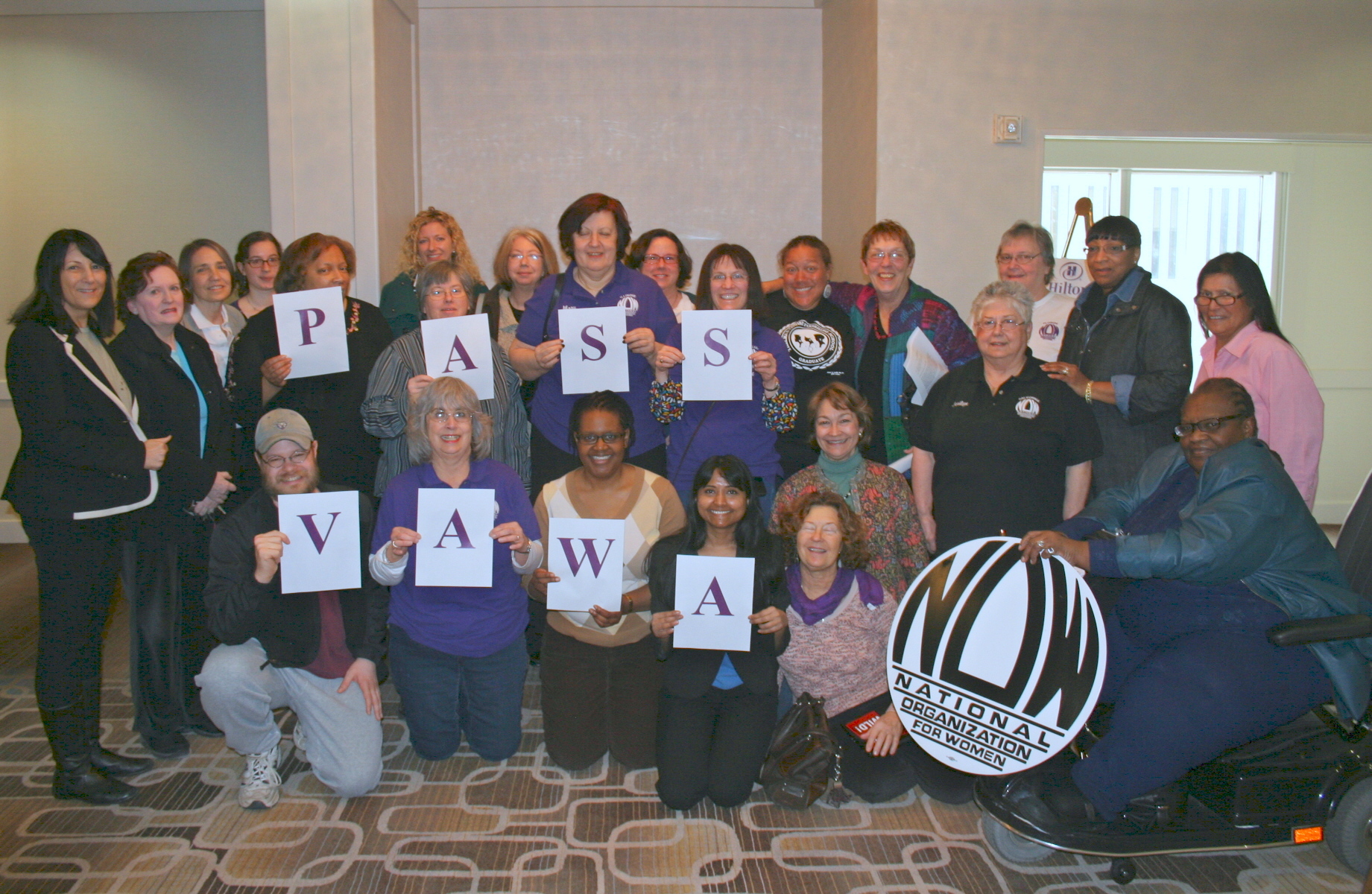
Reauthorize the Violence Against Women Act. VAWA authorizes the government to investigate and prosecute those responsible for violent crime against women, increases the duration of pre-trial detention of accused batterers, imposes automatic and mandatory restitution on those convicted, and allows civil redress in cases that prosecutors chose not to pursue.
Fully fund these additional acts:
- The Family Violence Prevention and Services Act (FVPSA) as extended by the Department of Health and Human Services Appropriations Act in 2010 provides dedicated federal funding for domestic violence shelters, emergency shelters, crisis hotlines, counseling services, and victim assistance programs for the underserved. FVPSA also funds initiatives for teen dating violence and children who witness violence.
- Additionally, the Child Abuse Prevention and Treatment Act (CAPTA) intervenes in child abuse, neglect, and sexual violence and improves services for both victims of child abuse and families that are experiencing domestic violence and child maltreatment.
- Strengthen the Domestic Violence Misdemeanor Gun Ban, prohibiting anyone convicted of a misdemeanor crime of domestic violence or of child abuse from purchasing or possessing a gun. While well-intentioned, the Domestic Violence Misdemeanor Gun Ban has some serious limitations. First, the law does not apply to people who are dating unless the couple has at some point cohabitated and/or have a child together. However, there is a documented risk of domestic violence being committed by a dating partner. California has addressed this gap in federal law by enacting more stringent state laws encompassing a more comprehensive list of persons subject to firearm prohibitions due to domestic violence, including persons convicted of Intimate Partner Violence against someone they are or were dating, regardless of sexual orientation.
Improve State Laws Dealing with Interpersonal Violence. State laws should require removal of firearms from abusers to help ensure that the abusers will not have continued access to firearms to threaten or harm their victims. Twenty-three states do not have a court-ordered removal law or a police gun removal law in place. The following elements should be included in state gun removal legislation:
- Mandatory “shall-remove” laws are preferable to discretionary “may-remove” laws. “Shall-remove” laws limit discretion and facilitate consistent implementation in removal of guns from the abuser.
- Requirements that guns have been used as an instrument of abuse prior to removal should be eliminated as such conditions limit the preventive potential of these laws to reduce the risk of severe and lethal abuse.
- Laws that condition gun removal on arrest of the alleged batterer impose a link between two interpersonal violence response options that need not be connected, and they may needlessly complicate law enforcement officers’ decisions about how and when to use arrest and gun removal to achieve maximum benefit.
- Laws that require the presence or potential risk of danger associated with the gun as a condition of police removal may be too subjective for consistent, effective implementation, and therefore this requirement is not recommended.
- Court authority to remove guns from protective order respondents during both the temporary and permanent stages of the order are more comprehensive than laws that restrict court removal authority to the permanent order stage. Offering this protection when respondents first learn of the order is advisable, given the heightened danger for the protected party at this time.
- Responsibility for removing surrendered guns should rest with law enforcement.
- Relying on respondents to comply with the court’s order may result in decreased compliance with the law.
- In general, laws that specify clear procedures for the mechanism, immediacy, and duration of gun removal and provide funding to train law enforcement and the courts in implementing these laws will increase the likelihood that these laws will positively impact victim safety. Good laws require effective implementation and enforcement. Advocates and policy makers in states where these laws exist can assess how law enforcement and the courts are using these laws to increase available protections for interpersonal violence victims.
- Working with state and local officials to support efforts to ensure that these laws are effectively used is important.
- There is a need for research that informs how these laws are being implemented, and how their implementation impacts victim, law enforcement, and community safety.
Privacy Rights
Increase the understanding of school and college officials, so that they don’t hide behind the Family Education Rights and Privacy Act (FERPA) in mistakenly thinking they can’t do anything about potentially violent students.
Similarly, increase the understanding of HIPAA (the health care privacy act), so that practitioners understand that it doesn’t mean that potentially violent patients can be ignored or hidden. Currently, if the threat does not seem imminent, current confidentiality rules and the Health Insurance Portability and Accountability Act of 1996 (HIPAA) prohibit clinicians from acting on these measures, lest they set themselves up to be sued. Therefore, a legal safe harbor should be created to protect clinicians who warn a potential victim and law enforcement authorities.
Research
Establish a National Institute of Violence Prevention at the National Institutes of Health (NIH) to research root causes and community solutions. We should fund the Centers for Disease Control to develop its infrastructure so it can track, assess and develop strategies to prevent gun violence, just as we do with tainted spinach and influenza. Currently NIH is prohibited by statute from covering gun violence as a public health problem.
Revise the charter of the US Institute on Peace to allow it to work on domestic US conflict issues, such as gun violence.
Political Contributions
Overturn the Citizens United Supreme Court decision, so that the influence of big donors will be decreased in politics. This will reduce the influence of the NRA and arms manufacturers, which are distorting the possibility of good legislation, and make possible a more even playing field for public policy and political discussions, deliberations, and decisions.
Public Health Emphasis and Approach
Shift to more of a public health emphasis, and encourage passive safety elements, similarly to the way car safety has been approached. People still have lots and lots of cars, but each car is much safer. Public health provides a useful framework to address firearm injury because it seeks to prevent harm to both individuals and the community. This approach is informed by epidemiology, “the study of the distribution and determinants of health-related states or events in specified populations and the application of this study to control of health problems.” Specifically, this approach looks for practical prevention and intervention points that occur prior to, during, or after an injury event, and can operate by addressing the agent, the host, and environment.
The prevention of firearm suicides—which outnumber firearm homicides and are not crimes—is often viewed as the responsibility the healthcare system and providers. Healthcare providers have a vital role in preventing intentional and unintentional firearm injuries and their impact on patients, families and communities.
Buy-Back Programs
Use buy-back programs for guns. “Gun “buyback” programs may seem to offer another opportunity to learn more about the effects of gun prevalence on crime. In practice, American buyback programs have had little effect on prevalence because they are brief and voluntary, and leave open the possibility of owners buying new guns to replace those they turn in. Further, the sellers in these buyback programs have been shown to be people at low risk for criminal offending, and the guns that are turned in are often broken or quite different from those that are used in crime (U. of Chicago). This argues for evidence-based programs.
Police Enforcement, Security Guards, and Surveillance of Potentially Dangerous People and Groups
Treat mass gun murderers as domestic terrorists. There are burgeoning sales of 50 caliber sniper rifles—military-bred weapons that can down helicopters and penetrate armor plating, yet are easier to purchase than a standard handgun. A study by the Violence Policy Center revealed that the Al Qaeda network had purchased at least 25 of the weapons in the United States.
FBI documents obtained by the Partnership for Civil Justice Fund (PCJF) under the Freedom of Information Act show that from its inception, the FBI treated the Occupy movement as a potential criminal and terrorist threat even though the agency acknowledges in documents that organizers explicitly called for peaceful protest and did “not condone the use of violence” at occupy protests. Using similar criteria, extreme gun enthusiasts could be similarly surveilled, monitored, and reported on. In fact, extreme gun enthusiasts, because they possess guns, espouse a willingness to use them, and give as a reason protection from an allegedly oppressive government, provide even greater reasons for FBI scrutiny of them. This would help provide early warning of potential mass murders using guns.
Undercover stings of suspect gun dealers, coupled with prosecutions and publicity about the effort, can lead to substantial reductions in the number of new guns diverted to criminals. Using this strategy, Chicago and Detroit saw reductions in the diversion of recently purchased guns from in-state dealers to criminals of 62% and 36%, respectively. States that have and enforce (through regular compliance inspections) comprehensive regulations on gun dealers have fewer guns sold by in-state gun stores that are diverted to criminals soon after retail sale. Currently, the FBI conducts such stings of suspected terrorists. Reframing the idea of gun violence as a form of domestic terrorist would enable similar tactics to be used against gun violence enablers.
Gun Carrying Suppression Units. Many shootings result from spontaneous conflicts involving an individual who is illegally carrying a gun. Some cities deploy special police units to detect and deter illegal gun carrying at times and places where shootings are common. This strategy has reduced shootings in several cities by 30% to 70% without causing the violence to spill over to nearby areas.
Call-In Meetings. Offenders in target areas with the most violent criminal histories are instructed to attend a “call in” meeting. Law enforcement officials tell offenders at these meetings that they will be under surveillance, and will face federal prosecution if they are involved in any violence or firearm offenses. Offenders are also offered assistance, including substance abuse treatment and job training to help them change their lifestyles.
Community leaders and family members sometimes attend to encourage positive change. This strategy is associated with substantial reductions in gun violence in Boston and Indianapolis.
CeaseFire Programs. Chicago’s CeaseFire program is a public health initiative involving outreach to high-risk youth in neighborhoods with high levels of guns violence, mediation of disputes, and efforts to promote social norms that stay away from violence. Street outreach workers—who are typically former gang members—develop relationships with high-risk youth, steer those youth to resources to reduce their risk (e.g., job training), and serve as positive role models. Outreach workers also place themselves in settings where shootings tend to occur, and seek out information about conflicts that could escalate to gunfire. When disputes arise, outreach workers (sometimes with the assistance of “violence interrupters”) help the individuals involved to appreciate the negative consequences of using violence, and offer nonviolent resolutions to the conflict. An evaluation of CeaseFire found shootings declined in 6 of 7 intervention neighborhoods, and that the program was associated with significant reductions in shootings and retaliatory homicides in 4 of 7 neighborhoods studied. When program implementation was interrupted as a result of funding cuts, shootings increased in the affected areas. Baltimore’s replication of the program has demonstrated significant reductions in homicides in two intervention communities.
Armed security guards in schools. There are about 132,400 elementary and secondary schools in the US. If each had one guard, at a loaded cost of about $100,000 per year (loaded cost means salary and benefits and overhead, etc.) then the cost for the nation would be about $13,230,000,000 per year. Where is this $13 billion going to come from? A special tax or surcharge on guns, perhaps? On ammunition? Both?
(With thanks to Johns Hopkins Bloomberg School of Public Health, Center for Gun Policy and Research)
Finally, Getting Ready for New Challenges
3-D printing of guns. We can easily envision a future in which 3-D printers are affordable and patterns abound for products both benign and malicious, and that cut out the manufacturing sector completely.
We should be prepared to respond to this development or any other new challenge in the future.




 Civil Rights Advocacy