The Conservative Pot of Anger

IRS Form 990 non-profit form

Form 990 – the IRS tax form used by recognized 501(c) non-profit organizations

For over a week now we have been hearing about the “scandal” within the IRS’s Tax-Exempt division.  Congress has been holding hearings, calling on current and past Commissioners to testify about the additional scrutiny given to Tea Party organizations.  A couple of days ago, I asked if this additional scrutiny was a scandal or not.

In addition to my comments that day, the Guardian has now brought up another issue that may be adding fuel to the conservative f(ire).  That fuel is a four-decade simmering anger at the IRS by the conservative religious right.  An anger fueled by both segregation and religion.

In 1954, the US Supreme Court declared in Brown v. Board of Education that segregation in education was unconstitutional. In 1964, Congress passed the Civil Rights Act that, which among other issues makes discrimination based on race in public accommodations and employment illegal. In 1967, the US Supreme Court declared in Loving v. Virginia that bans on interracial marriage were unconstitutional.  In 1970, the IRS changed their tax-exempt regulation on private schools to reflect these policies.

Bob Jones University had, under pre-1970 regulations been granted tax-exempt status.  In 1970, as a result of the change in regulations, the IRS notified Bob Jones University that they intended to revoke the university’s tax-exempt status because of their segregationist policy of initially not admitting blacks and then, later of not admitting or expelling students who entered into, engaged in, or advocated for interracial marriage or dating.

Bob Jones University felt that they had a “biblical” right to discriminate.  So they filed case after case to overturn the IRS revocation.  Finally in 1983, in Bob Jones University v. United States, the US Supreme upheld the IRS revocation of Bob Jones University’s tax-exempt status because of its segregationist policies.

The Justices disagreed with Bob Jones’ biblical interpretation of the competing First and Fourteenth amendments to the US Constitution.  In looking at both amendments, they first declared that there is strong governmental interest in ending discrimination:

[The] Government has a fundamental, overriding interest in eradicating racial discrimination in education 29 – discrimination that prevailed, with official approval, for the first 165 years of this Nation’s constitutional history. That governmental interest substantially outweighs whatever burden denial of tax benefits places on petitioners’ exercise of their religious beliefs.

Then, citing the aforementioned cases (and others), the Court held stated:

An unbroken line of cases following Brown v. Board of Education establishes beyond doubt this Court’s view that racial discrimination in education violates a most fundamental national public policy, as well as rights of individuals.

The Court then pointed out that this IRS regulation was still constitutional even after Bob Jones University opened its doors to people of all races.  The Justices reiterated the lower court decision, stating that the University remained racially discriminatory in its policies at the university in violation of the tax-exempt regulations:

Petitioner Bob Jones University, however, contends that it is not racially discriminatory. It emphasizes that it now allows all races to enroll, subject only to its restrictions on the conduct of all students, including its prohibitions of association between men and women of different races, and of interracial marriage. 31 Although a ban on intermarriage or interracial dating applies to all races, decisions of this Court firmly establish that discrimination on the basis of racial affiliation and association is a form of racial discrimination, see, e. g., Loving v. Virginia, 388 U.S. 1 (1967); McLaughlin v. Florida, 379 U.S. 184 (1964); Tillman v. Wheaton-Haven Recreation Assn., 410 U.S. 431 (1973). We therefore find that the IRS properly applied Revenue Ruling 71-447 to Bob Jones University. 32

The judgments of the Court of Appeals are, accordingly,

Affirmed.

I think that this article in the Guardian is correct.  It might just be another reason for the current tax-exempt status furor.  It seems that pulling the tax-exempt status of a religiously-based institution for its violation of our country’s stance for equality under the 14th Amendment of the US Constitution resulted in a simmering pot of anger just waiting for a bit more fire to bring conservatives to a full boil.

What do you think?  Please comment.  I’d be interested in hearing your opinion.

Special Report: IRS Scandal Shakes Washington (OR IS IT?)

I just read this blog by Michael J. Rosen about the extra scrutiny of conservative groups seeking tax-exempt status. I decided to repost his blog with three sets of comments. My comments give thought to three different sets of questions:

  1. What else besides what we’ve heard about might have helped lead to this “scandal?”
  2. Is it really a “scandal?” Do we know?
  3. Is this issue likely to go away soon?

What else might be behind this scandal?

Besides a lack of training and oversight that we’ve heard about, I think another part of this whole problem is the backlog of applications in the non-profit division of the IRS. I talked to them the other day about a non-profit I work with that is attempting to get its 501(c)4 status reinstated due to the 990-N issue. The agent I talked to said that they are getting over 5,000 applications every month and are working on them on a first come, first serve basis.

The IRS website says that with the small staff they have, there is an even greater backlog on applications than what the agent told me. Here’s that IRS statement.

“All [non-profit] applications are sent to the IRS Determinations Office in Cincinnati. This office receives approximately 70,000 applications for tax-exempt status of all kinds each year [that averages out to 5,833 new applicants each month]. This includes applications from section 501(c)(3) and section 501(c)(4) organizations. This office, which includes fewer than 200 people working directly on applications, is primarily responsible for working determination applications.”

The agent helped me to figure out the current status of this VERY SMALL non-profit that I’m working with (if it brings in $400/year for this group, it’s doing well). He told me that the records show that all of the paperwork at our end is basically complete, but the application won’t be reviewed until the office gets to the applications marked as “complete” as of September 2012 (when he says my group officially completed the paperwork). And, directing me to another section of the website, he pointed out that the office is currently working on applications from early May 2012 – i.e., over a 1 year delay in processing!

The aforementioned web page also goes into more detail, from the official IRS viewpoint, of what happened with the Tea Party organizations. It says that approximately 70 Tea Party groups were put into the in-depth “centralized” review; that out of a total of, currently, about 470 organizations being given similar treatment.

Is it a Scandal? Do We Really Know?

A scandal is defined as “a circumstance or action that offends propriety or established moral conceptions or disgraces those associated with it.” A political scandal is “an instance of government wrongdoing” that offends or disgraces those directly associated with that wrongdoing.
In this case, so far, it doesn’t appear to be a scandal that rises to the level of the White House. According to the Washington Post, based on increasing evidence, the IRS issue is very bad press for the Obama administration. According to their report,

If we believe the agency inspector general’s report, a group of employees in a division called the “Determinations Unit…” started giving tea party groups extra scrutiny, were told by agency leadership to knock it off, started doing it again, and then were reined in a second time and told that any further changes to the screening criteria needed to be approved at the highest levels of the agency.

The White House fired the acting director of the agency [this week] on the theory that somebody had to be fired and he was about the only guy they had the power to fire. They’re also instructing the IRS to implement each and every one of the IG’s recommendations to make sure this never happens again.

And from all the evidence obtained so far, there is no evidence of any connection between the “Determinations Unit” and the Obama administration. So unless there is a smoking gun hidden somewhere, there is no political scandal within the White House. Time will tell.

Is this issue likely to go away anytime soon?

No, I personally doubt that the issue will “go away” anytime soon.

Three reasons:

  1. partisan politics to continue attacking Obama’s executive branch;
  2. long history of spying and intrusiveness; and
  3. free-speech issues.

The first issue is purely partisan. Issues that Republicans think will make President Obama look bad are brought up again and again even when the public, to some extent (but not the base) has moved on. Has the Benghazi issue died? How many times will the Republican-dominated House vote to revoke Obamacare before they give up?

The second issue is spying and intrusiveness that, for the first time in a long time, concerns both sides of the aisle. There has been a long history of the feds, usually the FBI, targeting non-profits. Think of the Friends (Quakers) peace-related work for example or the Communist-baiting of the 1950s. Usually it’s the more progressive, left-leaning groups that are targeted. These groups have a long memory and I think may, in this case, support the concerns raised in this non-profit scrutiny case. And since there were progressive groups in this list of targeted non-profits, both sides have some ammunition to push back against the actions of the IRS.

The third is a First Amendment issue. Combine these IRS actions with the free press concerns over the Justice Department’s review of press reporters’ phone logs; both sides have screamed NO. What you have here are two different departments of the executive branch allegedly intruding on the First Amendment: one department—the IRS—may be attacking an individual’s free speech rights and another department—the Justice Department—may be attacking freedom of the press. Both protections are contained within the First Amendment of the US Constitution.

So no, based on all three routes of concern, I don’t think this issue will go away anytime soon.

Michael J. Rosen's avatarMichael Rosen Says...

This week, the US Internal Revenue Service acknowledged and apologized for behavior that had long been rumored. The IRS improperly targeted for extra scrutiny conservative groups seeking tax-exempt status.

IRS logoThe IRS did not ultimately deny tax-exempt status to a single group receiving extra scrutiny. Some say this proves that the actions of the IRS were baseless.

The scandal has now shaken the nation’s capital:

President Barack Obama directed Jack Lew, Secretary of the Treasury, to request the resignation of Steven Miller, Acting IRS Commissioner.

Miller resigned and Lew accepted the resignation.

The Justice Department has initiated a criminal investigation.

Exercising its oversight responsibility, Congress has begun its own probe of the IRS scandal.

Obama addressed the nation on television saying, “It’s inexcusable and Americans are right to be angry about it and I am angry about it. I will not tolerate this kind of behavior in any agency, but particularly…

View original post 371 more words

Civil Rights Denied: PA’s Proposed Constitutional Same-Sex Marriage Ban

Logo of Freedomt to Marry, Inc.

“working to win the freedom to marry in more states, grow the national majority for marriage, and end federal marriage discrimination. ” http://www.freedomtomarry.org/pages/about-us

A couple of days ago I posted a blog about the dueling marriage equality and same-sex marriage ban bills recently introduced into the Pennsylvania General Assembly.  Today I thought I give a more detailed argument as to how discriminatory the same-sex marriage ban is to gays and straights alike.

As previously stated, on May 7, Pennsylvania State Representative Daryl Metcalfe (R-12 Butler County) introduced his legislation (HB 1349) to create a constitutional amendment defining marriage OR its “substantial equivalent” solely as a union between a man and a woman.  That bill would amend Article I of the Pennsylvania state Constitution – the Declaration of Rights section – to take rights away from unmarried couples in Pennsylvania, whether they are same-sex or heterosexual couples.  Here’s the constitutional amendment as written in HB 1349:

“Marriage is the legal union of only one man and one woman as husband and wife and no other legal union that is treated as marriage or the substantial equivalent thereof shall be valid or recognized.”

Until the spring of 2012, 31 states across the country had created constitutional amendments to outlaw marriage or anything that looks like marriage between same-sex couples. The last successful attempt at this form of discrimination occurred by referendum in North Carolina in the spring of 2012; all other attempts since then to deny marriage equality have failed.

Marriage equality however has had many successes since then. Three states – Delaware, Rhode Island, and Washington – either passed a referendum OR legislation legalizing marriage equality following North Carolina’s referendum. One state – Minnesota—is expected to pass their marriage equality bill today; note, this is only 6 months after the voters in Minnesota by referendum killed their proposed same-sex marriage ban.  And one state – Colorado – passed legislation recognizing civil unions even though they have a constitutional ban on same-sex marriage.

Instead of moving forward, right-wing legislators would like to have Pennsylvania join the 31 other states that constitutionally ban-same sex marriages and/or other legal forms of relationships such as domestic partnerships and civil unions.  These Pennsylvanian legislators are making their fourth attack on same-sex couples and on unmarried people – gay or straight.  If HB 1349 passes, Pennsylvania for the first time in its history would enshrine and mandate discrimination into the state Constitution.

This amendment would take rights away from unmarried couples in Pennsylvania, whether they are same-sex or heterosexual couples.  The way this amendment is written would affect all unmarried couples, victims of domestic violence if they are not married to their abuser, and could threaten Pennsylvania’s anti-discrimination laws

Effect on All Unmarried Couples – Gay or Straight

Currently, Pennsylvania statute recognizes only marriages between one man and one woman.

Pennsylvania does not recognize either (1) same-sex marriages or (2) civil unions, domestic partnerships, or any other coupled-household status—whether entered into by same-sex or opposite-sex couples.  Those affected by this amendment would therefore, for example, include senior citizens who live together but are not married because of economic considerations, couples who believe they have a “common law marriage” (which is no longer recognized in Pennsylvania), and gay or straight couples who have any type of intimate relationship.

It could also threaten the lives of unmarried domestic violence victims and allow unmarried individuals to be discriminated against in housing, employment, and public accommodations.

Effect on Domestic Violence Victims

In 2004, Ohio passed their discriminatory anti-marriage constitutional amendment, which was quickly and unexpectedly used to deny protections to unmarried victims of domestic violence.  Here’s what happened.  Almost immediately, unmarried batterers argued that since they were not married, Ohio could not enforce their domestic violence law because that was treating their relationship with their partner as “equivalent to marriage.” The 2nd District Court of Appeals in Ohio agreed and ruled that the Ohio domestic violence law runs afoul of the “Defense of Marriage” amendment, passed by voters in 2004, and does not apply to “a person living as a spouse.”  As a result, unmarried defendants, who could have faced felony domestic violence charges, only faced misdemeanor assault charges.    It took several years for the Ohio Supreme Court to reverse this ruling.  In the interim, unmarried women were at the mercy of their batterers in several counties in Ohio.

The Ohio amendment is very similar to that of the one proposed for Pennsylvania.   In Ohio, by providing protection to persons living as spouses,” the domestic violence statutes created a legal status for cohabiting relationships that is “equivalent to a marriage,” according to the appeals court. The appeals court decision in Ohio then denied protection from abuse to unmarried individuals – gay or straight – because the domestic violence law gave legal standing to an unconstitutional relationship – that of an unmarried couple. The courts argument overturning these domestic violence protections utilized similar language found in Pennsylvania’s HB 1439, which states that no other legal union… or the substantial equivalent thereof shall be valid or recognized.

We have no way of knowing how the courts would rule on a similar argument should this amendment pass and become part of Pennsylvania’s Constitution.  Who knows if Pennsylvania’s Supreme Court would protect the victim or allow batterers to circumvent Pennsylvania’s Protection From Abuse (PFA) law?  We need to protect all people from domestic violence and sexual assault.  Passage of this amendment could deny the protection offered by Pennsylvania’s domestic violence and protection from abuse laws; it could even risk the very lives of unmarried people–gay or straight–because this constitutional amendment denies the rights, privileges, and protections of law to people who are not legally married or who have a relationship that is “functionally equivalent” to traditional marriage.

Effects on Employment, Education, Housing, and Public Accommodations

It also looks like current and proposed employment, education, housing, and public accommodations anti-discrimination laws at both the state and local levels might be jeopardized for unmarried individuals.  Discrimination based on marital status and family responsibilities is unlawful under a variety of existing laws. With a few exceptions, under current state and federal law, people who experience this form of discrimination must fit their claims into an appropriate legal theory—as discrimination based on gender, a violation of family and medical leave laws, or another legal theory.  In addition, many municipalities throughout Pennsylvania have passed or are considering ordinances that would make it illegal to discriminate in employment, housing, and in some cases, public accommodations specifically based on sexual orientation, gender identity and marital status.   Will the state courts, the PA Human Relations Commission, or local Human Relations Commissions be able to enforce these laws if Pennsylvania’s constitution has been amended to require unmarried couples to be treated differently from married couples?  We do not know.  Passage of HB 1439 as a constitutional amendment could put all of these protections at risk since any person, company, or school could argue that their business is mandated to deny employment, hiring, and benefits to any person who is not married.

Civil Rights Denied, Reiterated

Last, but not least, exclusion, discrimination and inequality are not the principles this state was founded upon. This discriminatory “Marriage Protection Amendment” denies unmarried heterosexual, lesbian, gay, bisexual and transgender families the protections and fairness they deserve. Heterosexual married couples and their families are afforded more than 1,000 legal protections and economic benefits provided through state and federal law, benefits and protections that are currently inaccessible to unmarried couples.  Passage of this amendment would therefore subject same-sex couples and their families to exclusion, discrimination and inequality.

The proposed amendment could also take away existing legal protections for committed long-term couples and their children, such as second parent adoptions, cohabitation agreements, co-parenting agreements, wills, living wills, powers of attorney, etc., regardless of their sexual orientation.

Gay and lesbian Pennsylvanians are our neighbors, co-workers, friends, and family member.  They pay taxes.  LGBT people should not be bullied.  They deserve the same rights, protections, and responsibilities that all residents desire and have.

Let’s all work to stop this bill now!  So I’m once again recommending that you keep up-to-date on this horrible bill as well as other LGBTQ legislation at  Equality Pennsylvania’s website.

PA’s Dueling Marriage Equality and Gay Marriage Ban Bills

Logo of Freedomt to Marry, Inc.

“working to win the freedom to marry in more states, grow the national majority for marriage, and end federal marriage discrimination. ” http://www.freedomtomarry.org/pages/about-us

On April 15, Pennsylvania State Representative Mark Cohen (D-102 Philadelphia) introduced legislation (HB 1178) that would legalize civil unions and extend all state laws applicable to marriage to any civil union created anywhere and to any marriage performed and recognized outside of the state.  Less than one month later, on May 7, Pennsylvania State Representative Daryl Metcalfe (R-12 Butler County) introduced his legislation (HB 1349) to create a constitutional amendment defining marriage OR its “substantial equivalent” solely as a union between a man and a woman.

So we once again have a legislative dual going on in Pennsylvania between those that believe in equality for all and those that want to enshrine discrimination into the state Constitution.

Side 1: For Equality

What does Cohen’s bill do?  Very simply, it takes us on the path toward equality for lesbian and gays.  As Rep. Cohen says,

 “This bill would define a civil union as a union between two members of the same sex.  It would make all state laws applicable to marriage also applicable to a civil union.  The bill would also provide for reciprocity of civil unions performed legally in other states and the recognition of same sex marriage in other states as civil unions in Pennsylvania.”

Civil unions represent the middle-of-the-road compromise position between constitutionally banning and permitting gay marriages and have been embraced by both advocates for LGBT rights and a growing number of conservatives.

Nothing in this bill would require any religion or any clergyman to perform any ceremony uniting people in a civil union.  This legislation will merely offer committed gay couples the same legal rights that are bestowed upon married people without the status of marriage.”

I would prefer full marriage equality.  Just like all gay and straight couples in 10 states (plus Minnesota and Delaware if their legislatures pass their marriage equality bills as expected) already have.  And  just like the majority of people in Pennsylvania desire.

In a poll released on May 8 by Franklin and Marshal University, 54% of Pennsylvanians “generally” support while 41% “generally” oppose legalizing same-sex marriage.  In that same poll, 65% support passage of a state law that would allow same-sex couples to legally form civil unions that give them some, if not all, of the marriage rights given to heterosexual couples who marry.

This bill is a compromise.  It currently has 28 cosponsors and was referred to the House Judiciary Committee when it was introduced on April 15.

Side 2: For Discrimination

Meanwhile, Daryl Metcalfe has seen fit to once again try to enshrine discrimination into the state constitution.  It is a one-sentence amendment that has severe ramifications.  Here’s the constitutional amendment as written in HB 1349:

“Marriage is the legal union of only one man and one woman as husband and wife and no other legal union that is treated as marriage or the substantial equivalent thereof shall be valid or recognized.”

Metcalfe justifies this discrimination by invoking partisan politics, a right-wing encroachment on the separation of church and state, and a denial of the protections given to us under the US Constitution:

Pennsylvania does not need to wait for the United States Supreme Court to rule on what natural law already declares as self-evident … Marriage is a sacred bond that can only be fulfilled by one man and one woman, as established by God. Final passage of my legislation will allow state lawmakers to exercise their rightful responsibility and obligation to uphold the rule of law and the will of the people.

The definition of marriage as ‘the union of one man and one woman,’ defended and upheld by this legislation, is the traditional definition of marriage that has been recognized and accepted throughout history and the world for centuries. Neither homosexual special interests gathered under the immoral umbrella of the ACLU, nor the Obama administration’s Department of Justice or any activist court should decide this critical issue for our Commonwealth.  House Bill 1349 is specifically written to empower Pennsylvania voters, and only Pennsylvania voters, with the authority to decide how marriage will be defined in the Keystone State.

News reports indicate that Metcalfe may be on the downside of this battle and that combined with the aforementioned Franklin and March poll, there is now less support for this discrimination.  According to the Philly Magazine,

His support system is fleeting. In the last session, the bill had 40 supporters, but today [May 8], according to a rep from [Rep] Brian Sims’ office, there are only 27. And this is the first time it’s been introduced with zero Democratic backers. To top it off, his bill’s lackluster show of support comes on the heels of yesterday’s announcement that a record number of legislators on both sides of the fence sponsor[ed] legislation that ban[s] discrimination against LGBT people in the workplace and housing and public accommodations [emphasis in original].

Discrimination and inequality are not the principles Pennsylvania was founded upon.

Discrimination and inequality are not the principles this state was founded upon. Metcalfe’s discriminatory amendment, in contrast to Cohen’s call for equality and respect for recognizing loving relationships, denies unmarried heterosexual, lesbian, gay, bisexual and transgender families the protections and fairness they deserve.

Heterosexual married couples and their families are afforded more than 1,000 legal protections and economic benefits provided through state and federal law, benefits and protections that are currently inaccessible to unmarried couples.  Passage of Metcalfe’s amendment would therefore subject same-sex couples and their families to exclusion, discrimination and inequality.

Gay and lesbian Pennsylvanians are our neighbors, co-workers, friends, and family member.  They pay taxes.  LGBT people should not be bullied.  They deserve the same rights, protections, and responsibilities that all residents desire and have.

If the US Supreme Court declares this summer that marriage is a right across the country just like they did in Loving v. Virginia in 1967 (see my earlier blogs here and here on this issue) then we won’t need this interim step of civil unions and Metcalfe’s bill will immediately become moot.  A great way, in my opinion to end this duel.  In Pennsylvania and across the country.

So, let’s hope that the US Supreme Court overturns Proposition 8 this summer under the equal protection and due process protections given to us under the US Constitution’s 14th amendment and therefore—like Loving v. Commonwealth of Virginia in 1967—protect marriage rights for everyone. If they stop short of that, then let’s hope and advocate for the passage of Representative Cohen’s civil union bill.

Meanwhile, to keep up-to-date on these dueling bills as well as other LGBTQ legislation, check out Equality Pennsylvania’s website.

Update on Pittsburgh’s Domestic Violence Policies

Last week I wrote a blog about an attempt by Pittsburgh City Councilman Ricky Burgess  to backtrack on the city’s domestic violence policies.

There has been a week of outrage among advocates for the back-handed attempt to eliminate the police-perpetrated domestic violence ordinance that was created in 2007.

Yesterday, three people, including former City Council President Douglas Shields and my friend Audrey Glickman (both of whom were quoted in last Friday’s blog), spoke out in committee to not backtrack.  Then today, advocates came out in mass to oppose the commingling of police-perpetrated domestic violence with police responses to domestic violence in the community.

Most of the advocates who spoke were given three minutes to express their concerns. Jeanne Clark (candidate for Pittsburgh City Council, long-time NOW member and a women’s rights advocate), Shirl Regan (Executive Director of Women’s Center & Shelter of Greater Pittsburgh), Beth Pittinger (Executive Director of Pittsburgh’s Citizen Police Review Board), and Maryellen Deckard (State Campaign and Development Director for  Action United—a membership organization of low and moderate income Pennsylvanians that employed Ka’Sandra Wade before her death—and the convener of ANEW WOMEN—a group of women who have experienced domestic abuse and want to work for change) were given seats at the Council table to discuss the issues in more depth.

Following the concerns raised about domestic violence and with Jeanne’s call for a public hearing, Pittsburgh City Council quashed the attempt to eliminate the police-perpetrated domestic violence ordinance.  They placed a hold on the proposed Domestic Violence Task Force ordinance until after a post-agenda hearing is held.  And they passed the resolution that allows funds to be expended to start the Maryland Lethality Assessment Training program.

The final vote on this resolution and the amendments made in committee today will be finalized on Tuesday, May 14 during the official business meeting of city Council.   Here’s a news article on what happened, along with some quotes.

After the Council met and voted down Burgess’ proposal to eliminate the zero-tolerance policy, Councilman Bill Peduto sent me the following email:

Joanne –

I wanted to let you know that Councilwoman [Natalia] Rudiak, Councilman [Bruce] Kraus and I were able to lobby Council to successfully pass the Police-response DV bills today while stopping the amendments offered by Reverend Burgess that would have weakened the Police-perpetrated DV legislation we worked so hard on back in 2007.

It is unfortunate that politics entered into this debate at all but I am thankful for the many women and men who wrote in to Council and came to Council Chambers today.  With your help we were able to stop the games and pass this important legislation to protect victims of domestic violence.  Thank you.

Thanks Council members Peduto, Rudiak, and Kraus for your leadership on this issue.  Additional thanks to Councilman Danielle Lavelle for your comments and Councilman Corey O’Connor for your clarification on the differences between a resolution and an ordinance.

A final decision on the Domestic Violence Task Force ordinance will occur only after the post-agenda hearing and public hearing are held.

Thanks all for all of your work.

Picture of Joanne Tosti-Vasey standing with sign that says "I AM Ending Violence"

Joanne Tosti-Vasey “Refusing to be Silent” and calling for an end to gender-based violence

Pittsburgh: Do NOT Backtrack on Domestic Violence Protections

According to the Pittsburgh Post-Gazette, a debate erupted in the Pittsburgh City Council meeting on  Wednesday, May 1, 2013 when Councilman Ricky Burgess presented a proposal to throw out the ordinance that established a zero tolerance policy in the city code for police-perpetrated domestic violence.  This was a last-minute amendment to a package of bills that was designed to improve police handling of calls received about domestic violence within the city.

After a two-hour long, heated debate, Council seems to have separated the two issues – domestic violence within the community and the police perpetrated domestic violence policy.  They will continue the discussion in their meeting on Wednesday, May 8.

What is going on?  Why would Pittsburgh even think of backtracking on the 2007 ordinance that was created to ensure that individuals with a history of domestic violence were not hired, be promoted, nor be allowed to continue employment after committing domestic violence while employed or being considered for employment within the police department? As explained in Chapter116, Department of Public Safety, Section III  of this ordinance, the purpose of the police-perpetrated domestic policy is, in part, to

“delineate a position of zero tolerance by the Bureau. It is imperative to the integrity of the profession of policing and the sense of trust communities have in their local law enforcement agencies that leaders, through the adoption of clear policies, make a definitive statement that domestic violence will not be tolerated.”

So if you want the community to trust your police and believe in their integrity, why would you throw out this ordinance?  And why would you attempt to do this when the intent of the proposal was to improve how police deal with cases of violence in the community?

I believe that there are three issues embedded within this debate.  First, Pittsburgh (and many other communities throughout the country) needs to ensure that cases of domestic violence, stalking, and sexual assault are appropriately handled whenever a call comes into 911 emergency services. Second, there should be no backtracking on the zero-tolerance ordinance.  And third, these two issues are separate issues that should not and cannot constitutionally be commingled. Here’s my take on these three issues.

Police Handling of Domestic Violence Calls

Why this is an issue in Pittsburgh

On December 31, 2012, according to many reports (including this one), Pittsburgh’s 911 services received a cell phone call from Ka’Sandra Wade asking for police to come to her home. The call was truncated.  The officers went, some 10 minutes later after they were done with another call and then called in to determine what was next.  A man would not let them into the door, but through a window told the officers that everything was all right. The officers claim that since the phone call was not from a land line, they did not know whether Ka’Sandra was home, even though she requested officers to come to her home.  They claim that they did not know it was a call about violence.  They lurked about for several more minutes, looking around the house, but then left.

The Officers never spoke directly to Ms. Wade, taking the word of the man at the door that refused to let them in to talk to Ka’Sandra.  She was found dead the next day.  When her boyfriend was confronted in his suburban residence, he said on a note that the officers could have saved Ka’Sandra, and he killed himself.

The Model Domestic Violence Community Policing Policy

According to the model policy by the International Association of Chiefs of Police on responding to potential domestic violence calls, 911 communications centers and police officers should

  1. Assign a priority response to all domestic ­violence calls, whether or not the assailant is known to be on the premises;

  2. Keep the caller on the telephone if the caller is a victim or witness to a domestic violence incident in progress in order to relay ongoing information provided by the caller to the responding officers and remain aware of ­victim’s safety;

  3. Not cancel the original call for service even if a subsequent request to cancel the original call is received; and

  4. Make contact with all residents of the house, all potential witnesses, victims, and perpetrators [emphasis added]….In evaluating the information, officers should take into account the credibility of the persons ­supplying the information and whether there is a reasonable basis for believing the information.

Pittsburgh has not, to my knowledge, instituted this model policy.  As reported in the press, none of these basic protocol actions were taken in this case.  Rather than immediately dispatching police to the scene, the police delayed their response for ten minutes.  They also took the word of only one resident – the man who refused to let them in – rather than talking to the original caller.  911 knew it was a woman that called, not a man. And yet they used his statement to cancel the request for service.  Which may have resulted in Ka’Sandra’s death after they left.  Note, she may have been dead already; however it is presumed that she was murdered after the police left based on the suicide note left stating that the officers could have saved her life.

Actions Taken Since January

People in the community quickly called for action to improve first responders’ behavior.  At the Action United vigil held for Ka’Sandra after her death, one of the speakers said that Action United would convene a group to craft policy to change how first responders act in cases of domestic violence.  That was on a Saturday.  The following Monday, Pittsburgh City Councilman Ricky Burgess announced that he would convene a “group of professionals” to make recommendations to Council on how to handle these types of cases.  The result of this announcement was a series of closed-door, by-invitation-only meetings that resulted in two specific strategies to address the issue:

  1. Instituting the Maryland Lethality Assessment as a tool for police to use when responding to calls that could include issues of domestic violence and
  2. Creating a Domestic Violence Advisory Board (aka “task force’) as described in the Violence Against Women Act. This board would include representatives from organizations and institutions serving the needs of domestic violence victims to “provide policy guidance and make recommendations to the Public Safety Department [includes the bureaus of Police, Fire, EMS, Emergency Management, Building Inspection and Animal Care & Control] about best practices for law enforcement response to Domestic Violence.”  

Although this Domestic Violence Advisory Board sounds like it might help,  some advocates are not clear that creating a new board is necessory or appropriate.  There currently is a Citizen Police Review Board that reviews and makes recommendations on how to improve police services within Pittsburgh. There is also a Domestic Violence Committee that deals with all employees. So if this new board is created, would it be duplicating the oversight currently held by these other boards or not? Or is the problem not that there is no oversight, but that the police have ignored recommendations by these oversight boards that are already in place?

Although many people and most of the community’s advocates for ending domestic violence were left out of these discussions, these two strategies crafted into two ordinances (see here and here) and one resolution might help address some of what happened on December 31, 2013.

These bills were part of Wednesday’s Council meeting and will be discussed again next week.  A broader discussion and eventual passage of these ordinances could help ensure that cases of domestic violence, stalking, and sexual assault are appropriately handled whenever a call comes into 911 emergency services.

Don’t Backtrack

At this Council meeting on May 1, Councilman Ricky Burgess caused a real ruckus when he proposed and presented a last minute proposal to throw out the ordinance that established a zero tolerance policy in the city code for police-perpetrated domestic violence.

As the meeting was beginning, Councilman Burgess distributed a proposed amendment to one piece of legislation containing two paragraphs that referenced a part of what the Working Group had discussed last Friday.  The rest of the pages were an Amendment by Substitution of the portion of the City Code that would gut the Police/Officer-Involved Domestic Violence legislation passed in 2007. 

My girlfriend, Audrey Glickman, posted a couple of comments on the Pittsburgh Post-Gazette article regarding the debate and ruckus that occurred in this city council meeting.  Audrey was the person in 2007 who volunteered and coordinated the group of advocates that worked with former Councilman Doug Shields to craft the zero tolerance policy.  Here’s what she said about the sudden and unexpected back-tracking proposed by Councilman Burgess (I’m combining two of her comments so that you can see the history of the zero-tolerance policy):

This set of bills (and especially the amendment dunked in at the last minute with no knowledge or prior discussion among other Council persons) does not really address the details surrounding the tragedy attending Ka’Sandra Wade, may she rest in peace.  The response of the police – their not suspecting DV immediately, nor apparently even thinking of it, is what needs to be addressed.  The commission of DV by Pittsburgh’s Police Officers and the law that since 2007 has covered it well, and could save potential victims and prevent future lawsuits against the City, should not be up for discussion at all, much less as an amendment by substitution tossed on the Council table like so much trash.

There should be zero tolerance for all City employees committing domestic violence.  But the City Solicitor’s inability (as stated at the Council table) to defend having “zero tolerance” in the Police legislation – in a state in which, according to the representative from the Solicitor’s Office sitting at the Council table today, cities are allowed by law to hold police to a higher standard – is not a reason to eliminate zero tolerance from the Police/DV legislation [emphasis added].

The pieces of legislation that were supposed to be on the table would (1) enact a Lethality Assessment as in Maryland, to help discern issues and teach Police;  (2) fund that effort;  and (3) create a council to oversee DV.  None of that has anything to do with the legislation passed in 2007.

The 2007 legislation serves to prevent the heads of our Police force from getting away with committing DV by virtue of their position; serves to protect our City from a lawsuit such as the one Tacoma, Washington, faced, and had to pay $16 million to the family of the late wife of their police chief; and serves to define the specific policy – in detail – that the Bureau of Police must keep on the books.

The law (already in the City Code, passed in 2007) concerning police *committing* domestic violence was based on a model policy by the IACP [International Association of Chiefs of Police], was hammered out by a huge working group who did not always agree with each other, and when passed it was praised from coast to coast.

The original [2007] legislation was crafted through discussion among dozens of individuals. We had input from national experts and local service providers of all stripes. Everyone researched for months, years even. Emasculating this law would serve no one well.

Creating a political and divisive issue out of a law that was duly passed in 2007 and lauded from coast to coast is pointless and untenable.  Domestic violence is not a political football.  Some of the Councilpersons who spoke at the table referred to it as a women’s issue, but in truth DV is committed against women and men, the young and the old, the suspecting and the unsuspecting.

Council should leave the legislation already on the books alone, and find some way to teach the Police to consider potential DV when they respond to a call.

Audrey is right on the mark.  The zero-tolerance policy is based on model legislation created by Chiefs of Police across the country. It is good legislation. Don’t backtrack now.

Commingling Two Separate Issues

My final concern about what happened is that this last minute amendment to insert police-perpetrated domestic violence into issues concerning how officers respond to domestic violence calls is a commingling of two separate issues.  Audrey  put it this way in her Post-Gazette comment:

[Council ended the discussion of the bills with a] lousy one-week hold when large discussions and public hearings and real research are warranted to hash out whether there is any value at all to that poison-pill portion, which again had nothing to do with the original bills.

Nothing. It has nothing to do with the subject of the original bills. The original bills concerned officers *responding to* domestic violence calls. The poison pill concerned police officers *committing* domestic violence.

There is a world of difference. The former is a more prevalent issue and is the one at hand; the latter is a more delicate issue, and has already been successfully addressed [in 2007].

In addition, the introduction of police-perpetrated violence into a bill on police response through substitution, particularly at the last minute, may be unconstitutional according to the PA Constitution.  I am basing this on a Supreme Court opinion from 2008 when they overturned the expansion of Pennsylvania’s Ethnic Intimidation (Hate Crimes) Act.  Here’s what went down in that case.

In 2002, the Pennsylvania General Assembly updated its statutes to define ethnic intimidation as committing a crime “with malicious intention toward the actual or perceived race, color, religion, national origin, ancestry, mental or physical disability, sexual orientation, gender or gender identity of another individual or group of individuals (Pennsylvania Human Relations Commission, 2003; bolded items were added in the 2002 legislation).” However, the Commonwealth Court of Pennsylvania in 2007 overturned the expansion in a case called Marcavage v. Rendell. They opined that  the final version of the bill, which initially dealt with the crime of crop destruction, changed its original purpose during the amendment process at the last minute.

The Commonwealth Court stated and the Pennsylvania Supreme Court affirmed in 2008 that this law was enacted in violation of Article III, Sections 1, 2, 3, and 4 of the Pennsylvania Constitution. As a result, hate-crime protections for gender, gender identity, sexual orientation, and disability were eliminated from the state’s hate crimes law.

This hate crimes law started off as a crimes bill dealing with a crime of crop destruction.  A crime, but in a different area.  In Pittsburgh, the initial intent and focus of the bills in Pittsburgh was responding to domestic violence.  The substitute proposed by Councilman Burgess focuses on a different area of violence – police or officer-initiated domestic violence.  Two different issues.  A world of difference. And I suspect, if it passes next week, could successfully be argued in court to have been unconstitutionally redacted under the first three sections of Article III of the Pennsylvania Constitution (Article III, Section 4 deals with bills within the General Assembly and is not germane to local legislation).

Actions Needed

The Working Group convened in January, although not completely open and transparent, did came up with two strategies focusing on how police should respond to cases of domestic violence.

Due the confusion that ensued during the public session on May 1, it is unclear whether the proposed amendment was amended in Council to be reduced only to the two paragraphs referring to the work of the Working Group or if the amendment by substitution is still on the table.  Removing the substitute amendment had been the intention of Councilman O’Connor during the debate; but it is believed he withdrew the amendment in the confusion that ensued.

One week may be enough time to discuss finalizing the legislation that was originally discussed by the Working Group.  It is nowhere near enough time to discuss deleting a good piece of legislation—the police-perpetrated domestic violence ordinance—from the City Code, nor should such a discussion be endeavored.  That law has nothing at all to do with what happened to Ka’Sandra Wade.  Weakening that law we would do nothing but tarnish Ka’Sandra’s memory.

On Wednesday, May 8, 2013, these bills will be taken up again in Committee. There will be public comment at the opening of the legislative and standing committee meetings on  Wednesday. These committee meetings officially start at 10:00 AM (but they do sometimes begin late). You should show up in droves.  People can have up to three minutes each to comment.  Come, stand up and be heard.  Tell Council

  1. Don’t backtrack on the 2007 police-perpetrated/officer-initiated domestic violence ordinance. It has nothing to do with the subject of the original bills and could be an unconstitutional overturn of the ordinance as described above;
  2. Institute the Maryland Lethality Assessment tool; and
  3. Discuss how and if the creation of the Domestic Violence Advisory Board would improve police response to domestic violence.  Duplication of duties and effort by multiple oversight boards could muddy rather than clear the waters. Only if it becomes clear that this new board would help should this proposal be enacted.

It is incumbent on all concerned to be vigilant.  Don’t backtrack.  But do do the right thing and make sure that police handle cases of domestic violence properly so that there are no more cases like that of Ka’Sandra Wade ever happen again.
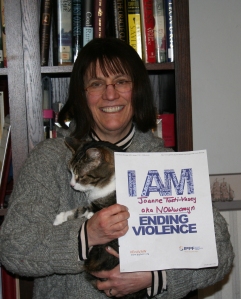
Picture of Joanne Tosti-Vasey standing with sign that says "I AM Ending Violence"

Joanne Tosti-Vasey “Refusing to be Silent” and calling for an end to all forms of violence, including domestic violence

Additional Info After Posting This Blog

After I posted this blog, I had a phone and email conversation with Doug Shields.

He is the former President of Pittsburgh City Council who sponsored of the 2007 ordinance on police-perpetrated domestic violence.  He asked if I would continue spreading the word about what’s going down in Pittsburgh regarding domestic violence protections.  Here is a copy of his email call for action:

“As you know, we all fought hard and long to enact an Ordinance that began to address issues related to police officers and domestic violence.  This came about due to the Mayor’s promotion of three officers who had significant issues related to domestic violence.

Over the past few months, a task force, formed to shape legislation that addresses the lack of clear protocols in responding to a domestic violence call, worked to provide an appropriate response.  As a result, the Council was about to enact the so-called “Maryland Protocol” this week.

Numerous people who had worked hard to get this legislation to the Council table were shocked to find upon introduction, the sponsor, Councilman Burgess, had without notice, took the opportunity to delete the entire section of the Ordinance that was enacted in December of 2011.

When the bill passed finally in 2007, I had tears in my eyes.  It was the only time that ever occurred.

Now this.  Blog by Joanne Tosti-Vasey (See: https://civilrightsadvocacy.net/2013/05/03/pittsburgh-no-dv-backtracking/)

I write to ask you for help to have a strong presence at next Tuesday’s and Wednesday’s Council meeting to utilize the public comment portion of the meeting to condemn this action by Councilman Burgess and to show strong support for the law we need and fought so hard to get.  

Unfortunately, your voice is needed again to defend that which we all worked on for so long.

The members who defended the bill were:  Bill Peduto, Patrick Dowd, Corey O’Connor, Natalia Rudiak and Bruce Kraus.

Those who joined with Mr. Burgess were, President Darlene Harris, Daniel Lavelle, and Theresa Kail-Smith.

Well worth watching this Council meeting, which repeats on air Sunday at 10:00 and 7:00 (Comcast City Channel 13), and which will soon be posted on line at the City’s Legislative Information Center.

Those who cannot be there on Tuesday or Wednesday at 10 AM are encouraged to  email or call the Council to convey their support for the Ordinance.  

Here is the link:    http://pittsburghpa.gov/council/

Here are the contacts for those who were ready to repeal the Ordinance.

Thank you for your anticipated cooperation in this matter.  Please also share this missive with others who would be interested in this issue.

Douglas Shields

Former President of Pittsburgh City Council

Prime sponsor of the Police & Domestic Violence Ordinance”

Call for Paycheck Fairness Act Co-Sponsorship

The wage gap shows that women, particularly women of color are paid significantly less than white men.

The Wage Gap: Lack of Equal Pay

On April 9, I did a blog on Equal Pay Day discussing the lack of equity in pay between men and women’s work.  In that blog, I discussed the need to pass the federal Paycheck Fairness Act.

Part of the process of obtaining passage of a bill is to get as many legislators as possible to sign on as a co-sponsor of the bill you are interested in.  In the US House of Representatives, there are currently 206 co-sponsors of the House version of the bill – H.R. 377. In the US Senate, there are currently 46 co-sponsors of the Senate version, S. 84.

The main coalition pushing for paycheck fairness and pay equity is the National Committee on Pay Equity.  This morning, I opened up an email from a listserv I’m on regarding the Paycheck Fairness Act. Michele Leber, Chair of the National Committee on Pay Equity sent out the following message, asking everyone to spread the word to their friends and colleagues in Virginia. Here’s what she said:

“We learned yesterday [April 24] from the office of Rosa DeLauro, our pay equity champion in the House of Representatives, that every Democrat in the House is now a PFA cosponsor! To reach that goal in the Senate, we need just a few more Democrats, among them Mark Warner of Virginia.

At a meeting yesterday in Warner’s office, his legislative aide said the best way to get Warner’s cosponsorship was to send the senator messages of support for the bill. So please rally any contacts, groups, or chapters that you have in Virginia, asking persons to contact Sen. Warner’s office by phone at 202-224-2023 and/or by e-mail at http://www.warner.senate.gov/public//index.cfm?p=ContactPage, asking him to cosponsor the Paycheck Fairness Act, S.84.

With the 50th anniversary of the signing of the Equal Pay Act coming up on June 10, this is particularly important now.”

So…

If you live in Virginia and are a constituent, please follow Michelle’s request and contact Senator Warner regarding co-sponsorship.

If you don’t live in Virginia, you can find out where your US legislators stand on the Paycheck Fairness Act by going to http://thomas.loc.gov/home/thomas.php. In the search box in the middle of the page, type in “Paycheck Fairness Act” and click search.  On the next page, two bills will show up—S. 84 and H.R. 377.  This page provides several links to information about both of these bills—text, bill history, co-sponsors, etc. If you click on “cosponsors” for each bill, you can determine if your representatives are publicly supporting the bill or not. If they are a sponsor, thank them and then ask them to call for a hearing and vote on the bill.  If they are not, ask them to sign on.

Thanks.

Taxes as a “Blessing of Liberty”

April 15 is Tax Day

April 15 is Tax Day

Today is the day that individual taxes are due in the United States.  Many of us spend hours, if not days, preparing our paperwork to report our income and pay taxes/get a refund from our federal, state, and local governments.  April 15 is the day that all of these payments are due.

Lloyd E. Sheaffer a community columnist for Pennlive/The Patriot-News wrote an op-ed on Sunday, April 14 entitled “Taxes are the price we pay to protect our ‘blessings of liberty’: As I See It.”

Mr. Sheaffer makes an excellent argument as to why we have taxes and even if we don’t like doing the paperwork, we as a society need to pay for our “blessings of liberty” through our taxes.  As he states:

Our tax bill is the tab we pay to live in a democracy that allows all to live as free people, even free to criticize the very system that protects and supports its citizenry.

This support  includes funding for a wide variety of programs and institutions including maintaining our infrastructure (like roads and rail), ensuring our safety (like firefighters and police), improving and maintaining our health (like clean water and air and public health), ensuring justice (like funding courts and civil rights oversight), and creating “a greater chance for material and emotional prosperity if public education is fully funded and appropriately conducted.”

I fully agree with Mr. Schaeffer’s sentiments and suggest that you take a moment and read the full opinion piece.

Here are his closing comments.  I hope you take them to heart:

Nonetheless, if our citizenry can set aside the acrimony felt toward much of our constituted and ordained government and encourage elected officials at all levels to bring genuine reform to our maimed tax system, the day may come when citizens see paying taxes, not as an onerous legal obligation, but as a moral obligation that promotes a “more perfect Union” and truly “secures the Blessings of Liberty to ourselves and our Posterity.”

Until that time comes, sooner rather than later for the sake of us all, I hope you won’t mind paying your duty, even though you don’t like doing so.

“Happy” Tax Day.

Pennsylvania General Assembly Again Attacking Women’s Reproductive Health

Keep Abortion Legal NOW Round

Keep Abortion Legal Safe, Legal and Accessible (http://www.now.org/issues/abortion/)

It’s 2013 and the Pennsylvania General Assembly continues to attack women’s access to reproductive health. According to WeveHadEnoughPA.org, the Pennsylvania legislature has launched and maintained a 2+ year attack on women’s health. There have been numerous bills introduced and in some cases passed that restrict women’s vital access to reproductive health.  Since January 2011, there have been at least 55 votes in the Pennsylvania General Assembly to restrict access from birth control to safe, legal abortions.

The most recent attack is happening this month.  On April 10, the Pennsylvania Senate Insurance and Banking Committee heard and passed out SB 3 by an 8-5 vote; a floor vote could occur any time this month.  This coming Monday, April 15th, the Pennsylvania House Health Committee will be hearing and voting on HB 818, the companion bill to SB 3.

The Additional Burdens on Women Seeking Abortion Care in These Bills

Both of these bills would prohibit insurance companies who provide health care coverage from including abortion coverage within the new healthcare Exchange crafted by the Affordable Care Act (aka Obamacare). The only exceptions to this proposed ban are for women who become pregnant because of rape or incest if they personally report the sexual assault to law enforcement officials and for women who will die without immediate access to abortion services. If a woman doesn’t meet one of these two exceptions, she must completely pay for the abortion totally out of her own pocket, unlike any other medical care she would receive under her health insurance plan.

Currently, about 80% of private insurance companies provide coverage for abortion services. This is important because these very same plans will be offered to people purchasing insurance through the Exchange. As part of the federal law, however, all plans that offer abortion coverage in the Exchange must have a separate payment for that portion of the coverage. This bill would deny women the right to make this separate payment and deny them what is currently available to most people covered by the current private health insurance system. While women would still be able to have abortions in this circumstance, they would be forced to fully pay out-of-pocket all cost for these procedures; their insurance company would be prohibited from paying any portion of this treatment.

This proposed ban places an undue burden on victims of rape and incest and on those women whose lives are in danger health-wise by adding unnecessary barriers to receiving the critical medical attention they need. The two exceptions allowed are extremely limited. These bills require woman who are victims of rape or incest to notify the police and identify the perpetrator prior to seeking abortion treatment.  It also limits women with health issues that complicate their medical treatment to those that are in immediate danger of dying and requires additional medical certification by second, non-attending physician.

This bill places these restrictions on access to health insurance not by mentioning rape or incest or the death aversion clause, but by referring to and expanding Pennsylvania’s version of the Hyde Amendment.  This language is embedded in 18 Pa.C.S. § 3215(c) and would expand restrictions on public funds to all privately paid insurance plans purchased within the Exchange. The law (18 Pa.C.S. § 3215(c))as currently written is a prohibition of the state spending of public funds but not personal funds provided by the person herself for her own health insurance coverage.

The Rape and Incest Exception

Women and minors who are raped would be denied access to abortion services unless they formally report and identify their rapist to the police or child protective services.  Most sexual assaults are not reported to the police. This is even truer when the perpetrator is a family member or acquaintance. According to the Pennsylvania Coalition Against Rape, sexual assault occurs at a much higher rate than is actually reported.

Reasons for not reporting include an initial denial that they have been raped; fear that you won’t be believed or are ashamed for having been raped; or having an ongoing relationship (such as a spouse or parent) with the perpetrator. In order to be safe from further violence by the perpetrator, women and girls may decide not to report the attack to the authorities.  And if you are in denial you are also unlikely to report your rape or the incest of your child to authorities as required in this proposed legislation.

So that means if this bill becomes law and you become pregnant from rape or incest, you are further burdened with the additional costs of fully paying for the abortion. If this bill were not to go into effect, then following the restrictions placed on abortion care under federal law, you would have the abortion services covered based on the insurance rider you purchased in the exchange and you wouldn’t be forced to file a complaint with the police.  This is just one reason why this bill should be voted down.

The “Avert” Death Exception and Need for Expanded Health Exception

In addition, under this proposed law, women who are near death could receive an abortion.  However, say a woman develops cancer or an infection during her pregnancy that will not immediately kill her but would complicate her medical treatment should she continue with the pregnancy.

This health threat/complication is not included in the current bill’s health exception as that exception allows abortions only to “avert” the woman’s death. Any woman with a medical condition that is complicated by the pregnancy but doesn’t immediately place her in danger of death would be forced to bear the additional burden of the full cost of an abortion in addition to the increased threats to her health as well as the additional medical bills for the remaining part of her care.  The medical community, advocates and some legislators are very concerned about this limited exception and have proposed an amendment to both the House and Senate bill to expand this exception from “averting” her death to coverage of the abortion for any pregnancy that poses a substantial risk to the woman’s physical health.

But even if the health exception is expanded to include threats to women’s physical health and care, this bill continues to attack women’s health and lives and should be voted down.

Why this Bill Should be Voted Down

The question of whether abortion will be covered in federally subsidized insurance exchanges has already been settled.  In response to concerns raised by US Senator Ben Nelson, a staunch opponent of abortion, women who want to use their own money to purchase a health insurance plan that covers abortion services must send a separate payment so the funding for abortion coverage is completely separate and paid entirely by the individual. This bill denies women their right to make this separate payment.  And with an estimated 80% of private insurance plans currently covering abortion care, banning abortion coverage in the state exchange would leave women worse off than they were before health care reform began.

Abortion care is a legally authorized and fundamental component of women’s basic health care.  Women should not be denied access to safe, legal, and critical care as part of health care reform implementation.

If abortion coverage is available to some, it should be available to all.  Politicians should not discriminate against women participating in the health insurance exchange.  All women deserve the same peace of mind that they can obtain the health care they need, regardless of where their insurance comes from.

The decision to have an abortion is a private decision between a patient and her physician. It should not be denied by politicians interfering with an insurance company and the policies they offer to the consumer for this procedure.

Banning abortion coverage in transactions between a private company and an individual is governmental activism of the worst kind.  With all of the heated rhetoric over healthcare reform, one would assume that lawmakers would be sensitive about taking any action that suggests government intervention in private healthcare decisions.

Finally, instead of denying Pennsylvania women access to fundamental reproductive health care services, politicians should be working to protect and advance women’s health.

Action Needed

Contact your Pennsylvania Senator and Representative today (find their contact information here).  Tell her/him to support the expanded health exception amendment to both SB 3 and HB 818 and to oppose the entire bill regardless of the inclusion of the amendment.

What is Equal Pay Day and Why Should I Care?

For the last three years, my local NOW chapter—Ni-Ta-Nee NOW—has organized community education events surrounding Equal Pay Day and paycheck fairness.

A frequent question we have is, “What’s Equal Pay Day and why should I care?”  To help answer that question, we have done op-eds and interviews with the local press (See here and here).  We also create a flyer that we update each year.  As President of Pennsylvania NOW, I wrote another blog on this issue in 2011. And elsewhere on my blog site, I have commented on the need for fairness in pay.

Today, we will once again be distributing Equal Pay Day flyers in front of the gates of The Pennsylvania State University over the dinner hour today.

Why today? Because Equal Pay Day moves from year to year. For 2013, that day is April 9.

The following is a web-based version of this flyer.  The hard-copy version focuses on Pennsylvania.  I have kept that information here; I’ve also added commentary and links for information and contacts in other states.

TUESDAY APRIL 9TH 2013

EQUAL PAY DAY

IT’S THE DAY ON WHICH WOMEN’S WAGES CATCH UP WITH MEN’S WAGES FROM THE PREVIOUS YEAR.

Equal Pay Day symbolizes how far into the year a woman must work full-time, on average, to earn as much as a man earned the previous year.  In 2013, it took 2 days MORE than in 2011 and 8 days LESS than in 2012 for a woman to earn as much as a man earned in the entire year.

THE WAGE GAP

National Perspective

The wage gap shows that women, particularly women of color are paid significantly less than white men.

The Wage Gap: Lack of Equal Pay

The wage gap is the ratio of women’s to men’s median annual earnings for full-time, full-year workers. Based on these earnings, women earned just 82% of what men earned (US Bureau of Labor Statistics, 2013).

Nationally, Asian American women have the smallest wage gap, earning 88% of what the average white man earned in 2012. White women are next, earning approximately 81% of white men’s average income. African-American women (68%) and Hispanic women (59%) have the largest wage gaps compared to white men (Institute for Women’s Policy Research, March 2013).

A typical woman earns $431,000 less in pay over 40 years due to this wage gap. (Center for American Progress, 2012)

At the current rate of progress, the Institute for Women’s Policy Research estimates that it will be 2057 before women’s wages reach parity and Equal Pay Day will finally be on December 31 rather than somewhere in April of the following year!

Pennsylvania Perspective

The wage gap is just as bad, if not worse, in our state. When ranked among the other 50 states, the District of Columbia, and Puerto Rico, Pennsylvania’s wage gap placed it 34th (Women’s Law Center calculation based on American Community Survey Briefs, April 2013).  You can look up your state’s pay equity ranking at this site as well if you don’t live in Pennsylvania.

The median annual income for a woman working full-time, year round in Pennsylvania in 2011 was $37,089, compared to men’s $47,956. This is a wage gap of 77% (Women’s Law Center calculation based on American Community Survey Briefs, April 2013). A typical woman in PA earns $459,000 less in pay over 40 years due to this wage gap. This gap rises to $722,000 for women who have earned college degrees. (Center for American Progress, 2010)

WHAT CAN I DO??

If You are an Employer

If you are an employer, you can get help in examining pay practices by conducting an equal pay self-audit using the guidelines from the US Department of Labor (available at www.pay-equity.org/cando-audit.html).

If You Believe You Are Experiencing Wage-Based Discrimination

Tell your employer if you are being paid less than your male co-workers. Click here for some tips on negotiating for pay equity.

If there’s a union, ask for their help.

If discrimination persists: There are three places to file complaints – at the federal level, at the state level, and at the local level.

At the Federal Level

You can file under federal law with the Equal Employment Opportunity Commission (EEOC). Go to this link and follow the instructions.

At the State Level

You can find your state’s anti-discrimination agency website and contact information in a pdf file created by Legal Momentum starting on page 28.  Most of the agencies have a website address that you can copy and paste into your browser.  All of the agencies have a phone number that you can call for assistance.

If you live in Pennsylvania, you can file a complaint with the Pennsylvania Human Relations Commission in Harrisburg.  Contact information is available by region.  Just go to their website and look for your county’s name.  The phone number and address for your regional office is listed directly above the names of the counties served by each office.

At the Local Level

There are a few communities throughout the country that have created local ordinances that include the state-based anti-discrimination protections and have also expanded coverage to other areas (such as protections based on sexual orientation, family status, and/or family responsibilities across the life-span).

You should therefore check to see if your local county, city, or community has an ordinance providing similar protections for wage-based discrimination. If so, you can more conveniently file a wage-based complaint at the local level.  Check with your state’s anti-discrimination agency (see info above under “At the State Level”) to see if there is a local ordinance in your community.

In Pennsylvania, there are about 30 communities with such an ordinance. Your regional office of the Pennsylvania Human Relations Commission can give you this information, along with whom to contact.

One of these 30 communities in Pennsylvania is State College, PA, where the main campus of The Pennsylvania State University is located. Their ordinance covers wage-based discrimination based on sex as well as color (race), religion, ancestry, national origin, sexual orientation, gender identity or expression, familial status, marital status, age, mental or physical disability, use of guide or support animals and/or mechanical aids.  If you work within the State College, PA borough, you can file a complaint with them under their Employment Anti-Discrimination Ordinance at 814.234.7110 (Side note: I was one of the people instrumental in crafting this ordinance).

Supporting and Advocating for Paycheck Fairness

Ask your Congressional representatives to co-sponsor the Paycheck Fairness Act – HR 377 in the US House of Representatives and S 84 in the US Senate).  The Paycheck Fairness Act updates and strengthens the Equal Pay Act of 1963. It gives women the tools they need to challenge the wage gap itself.

You can find out where your representatives stand on the Paycheck Fairness Act by going to http://thomas.loc.gov/home/thomas.php. In the search box in the middle of the page, type in “Paycheck Fairness Act” and click search.  On the next page, two bills will show up—SR 84 and HR 377.  This page provides several links to information about both of these bills—text, bill history, co-sponsors, etc. If you click on “cosponsors” for each bill, you can determine if your representatives are publicly supporting the bill or not. If they are a sponsor, thank them and then ask them to call for a hearing on vote on the bill.  If they are not, ask them to sign on.

And For More Information

Visit http://www.pay-equity.org – the website created by the National Committee on Pay Equity (NCPE).  NCPE is a coalition of women’s and civil rights organizations; labor unions; religious, professional, legal, and educational associations, commissions on women, state and local pay equity coalitions and individuals.”  They are dedicated to ending wage-based discrimination and achieving pay equity. If you like what they are doing, you can join and become a member.