Good Start on Facebook Guidelines, But More is Needed

This morning, the Huffington Post posted an article about yesterday’s statement from Facebook.  Facebook has agreed to take the following steps to reduce online violence against women and children on their pages:

  • We will complete our review and update the guidelines that our User Operations team uses to evaluate reports of violations of our Community Standards around hate speech.  To ensure that these guidelines reflect best practices, we will solicit feedback from legal experts and others, including representatives of the women’s coalition and other groups that have historically faced discrimination.
  • We will update the training for the teams that review and evaluate reports of hateful speech or harmful content on Facebook. To ensure that our training is robust, we will work with legal experts and others, including members of the women’s coalition to identify resources or highlight areas of particular concern for inclusion in the training. 
  • We will increase the accountability of the creators of content that does not qualify as actionable hate speech but is cruel or insensitive by insisting that the authors stand behind the content they create.  A few months ago we began testing a new requirement that the creator of any content containing cruel and insensitive humor include his or her authentic identity for the content to remain on Facebook.  As a result, if an individual decides to publicly share cruel and insensitive content, users can hold the author accountable and directly object to the content. We will continue to develop this policy based on the results so far, which indicate that it is helping create a better environment for Facebook users.
  • We will establish more formal and direct lines of communications with representatives of groups working in this area, including women’s groups, to assure expedited treatment of content they believe violate our standards. We have invited representatives of the women Everyday Sexism to join the less formal communication channels Facebook has previously established with other groups.
  • We will encourage the Anti-Defamation League’s Anti-Cyberhate working group and other international working groups that we currently work with on these issues to include representatives of the women’s coalition to identify how to balance considerations of free expression, to undertake research on the effect of online hate speech on the online experiences of members of groups that have historically faced discrimination in society, and to evaluate progress on our collective objectives.

What I don’t see in this Facebook statement is an agreement to be more transparent in their monitoring process. I would like to see them report how many and what types of pages/ads that they have monitored, shut down, and/or contacted for possible violation of their regulations.  In addition, in their efforts to “balance the consideration of free expressions,” I believe they need to provide to the public upon request reasons they allow or disallow a particular ad or page that allegedly violates the new anti-rape policy from remaining online.
There were several petition sites where you could raise your voice to call on Facebook to follow through on this statement to end their misogynistic rape ads that they have called “humor.”  The one that gathered the most signatures was called Demand Facebook Remove Pages That Promote Sexual Violence.  It is now closed.  This petition collected signatures that were sent to Facebook. It successfully called upon Facebook to do several things (others are listed on the petition page itself), including

  1. Make a public statement that rape is never acceptable; that promoting sexual violence and violence against women is repugnant; remove content that advocates rape, sexual violence, and violence against women; and that the terms of service/community standards will be updated to specify this.
  2. Be transparent about the content monitoring process; to state publicly if and how many pages are removed that promotes sexual violence or violence against women.  (Note, this was not part of Facebook’s recent statement, but I believe should be part of their new policy).

Since the second issue of transparency was not covered in Facebook’s statement, I would suggest we continue making comments to Facebook about the need for more transparency.  There is another petition on Change.org. It is still open and allows you space to comment on this issue.  In that comment box, you can make your suggestion for more transparency as they craft this new policy.  Here’s what I wrote to them in that comment box:

Thank you for issuing your statement to review and update your policy on any type of hate speech that allegedly condones or promotes violence against women including domestic violence, stalking, and sexual assault (whether it is in ads or on pages).  And thank you for agreeing to “establish more formal and direct lines of communications with representatives of groups working in this area [of domestic violence, sexual assault, and stalking], including women’s groups, to assure expedited treatment of content they believe violate [your new] standards.”
However what I don’t see you your agreement is a willingness to be more transparent about this issue to the public.  I am therefore asking that your efforts to “balance the consideration of free expressions,” that you to provide to the public upon request reasons why you either allow or disallow a particular ad or page that allegedly violates your new anti-violence policy from remaining online.

trp2011's avatarNel's New Day

MySpace was a popular social network several years ago, but it was quickly taken over by Facebook and pretty much disappeared. Now, the most popular social network is showing very bad judgment.

Last week, protesters boycotted Facebook advertising because the network permitted images of domestic violence against women at the same time that it banned ads about women’s health. Companies that pulled their advertising include online bank Nationwide UK, Nissan UK, and J Street. Dove, a Unilever brand running a “self-esteem” ad campaign for women, faces pressure on Twitter although Procter & Gamble responded, “We can’t control what content they [our advertising] pops up next to. Obviously it’s a shame that our ad happened to pop up next to it.”

Zappos replied that users upset by an ad appearing next to a date rape image “click the X to delete the ad.” Zipcar is still advertising but “expressed to Facebook…

View original post 781 more words

An activist fights breast ironing, a ritual mutilation practice of girls in Cameroon

I say NO to breast Ironing: Picture that appeared on the original article at The Grio I SAY NO TO BREAST IRONING: Picture that appeared on the original article at The Grio.

This is part of the global violence that is occurring against women. Breast ironing is a form of torture and it must end. I’m glad Friends of UNPFA is helping to raise awareness about this torturous treatment of young women in Cameroon. For more background info, see Gender Danger’s posted videos on the problem at http://www.youtube.com/user/GenderDanger.

Civil Rights Denied: PA’s Proposed Constitutional Same-Sex Marriage Ban

Logo of Freedomt to Marry, Inc.

“working to win the freedom to marry in more states, grow the national majority for marriage, and end federal marriage discrimination. ” http://www.freedomtomarry.org/pages/about-us

A couple of days ago I posted a blog about the dueling marriage equality and same-sex marriage ban bills recently introduced into the Pennsylvania General Assembly.  Today I thought I give a more detailed argument as to how discriminatory the same-sex marriage ban is to gays and straights alike.

As previously stated, on May 7, Pennsylvania State Representative Daryl Metcalfe (R-12 Butler County) introduced his legislation (HB 1349) to create a constitutional amendment defining marriage OR its “substantial equivalent” solely as a union between a man and a woman.  That bill would amend Article I of the Pennsylvania state Constitution – the Declaration of Rights section – to take rights away from unmarried couples in Pennsylvania, whether they are same-sex or heterosexual couples.  Here’s the constitutional amendment as written in HB 1349:

“Marriage is the legal union of only one man and one woman as husband and wife and no other legal union that is treated as marriage or the substantial equivalent thereof shall be valid or recognized.”

Until the spring of 2012, 31 states across the country had created constitutional amendments to outlaw marriage or anything that looks like marriage between same-sex couples. The last successful attempt at this form of discrimination occurred by referendum in North Carolina in the spring of 2012; all other attempts since then to deny marriage equality have failed.

Marriage equality however has had many successes since then. Three states – Delaware, Rhode Island, and Washington – either passed a referendum OR legislation legalizing marriage equality following North Carolina’s referendum. One state – Minnesota—is expected to pass their marriage equality bill today; note, this is only 6 months after the voters in Minnesota by referendum killed their proposed same-sex marriage ban.  And one state – Colorado – passed legislation recognizing civil unions even though they have a constitutional ban on same-sex marriage.

Instead of moving forward, right-wing legislators would like to have Pennsylvania join the 31 other states that constitutionally ban-same sex marriages and/or other legal forms of relationships such as domestic partnerships and civil unions.  These Pennsylvanian legislators are making their fourth attack on same-sex couples and on unmarried people – gay or straight.  If HB 1349 passes, Pennsylvania for the first time in its history would enshrine and mandate discrimination into the state Constitution.

This amendment would take rights away from unmarried couples in Pennsylvania, whether they are same-sex or heterosexual couples.  The way this amendment is written would affect all unmarried couples, victims of domestic violence if they are not married to their abuser, and could threaten Pennsylvania’s anti-discrimination laws

Effect on All Unmarried Couples – Gay or Straight

Currently, Pennsylvania statute recognizes only marriages between one man and one woman.

Pennsylvania does not recognize either (1) same-sex marriages or (2) civil unions, domestic partnerships, or any other coupled-household status—whether entered into by same-sex or opposite-sex couples.  Those affected by this amendment would therefore, for example, include senior citizens who live together but are not married because of economic considerations, couples who believe they have a “common law marriage” (which is no longer recognized in Pennsylvania), and gay or straight couples who have any type of intimate relationship.

It could also threaten the lives of unmarried domestic violence victims and allow unmarried individuals to be discriminated against in housing, employment, and public accommodations.

Effect on Domestic Violence Victims

In 2004, Ohio passed their discriminatory anti-marriage constitutional amendment, which was quickly and unexpectedly used to deny protections to unmarried victims of domestic violence.  Here’s what happened.  Almost immediately, unmarried batterers argued that since they were not married, Ohio could not enforce their domestic violence law because that was treating their relationship with their partner as “equivalent to marriage.” The 2nd District Court of Appeals in Ohio agreed and ruled that the Ohio domestic violence law runs afoul of the “Defense of Marriage” amendment, passed by voters in 2004, and does not apply to “a person living as a spouse.”  As a result, unmarried defendants, who could have faced felony domestic violence charges, only faced misdemeanor assault charges.    It took several years for the Ohio Supreme Court to reverse this ruling.  In the interim, unmarried women were at the mercy of their batterers in several counties in Ohio.

The Ohio amendment is very similar to that of the one proposed for Pennsylvania.   In Ohio, by providing protection to persons living as spouses,” the domestic violence statutes created a legal status for cohabiting relationships that is “equivalent to a marriage,” according to the appeals court. The appeals court decision in Ohio then denied protection from abuse to unmarried individuals – gay or straight – because the domestic violence law gave legal standing to an unconstitutional relationship – that of an unmarried couple. The courts argument overturning these domestic violence protections utilized similar language found in Pennsylvania’s HB 1439, which states that no other legal union… or the substantial equivalent thereof shall be valid or recognized.

We have no way of knowing how the courts would rule on a similar argument should this amendment pass and become part of Pennsylvania’s Constitution.  Who knows if Pennsylvania’s Supreme Court would protect the victim or allow batterers to circumvent Pennsylvania’s Protection From Abuse (PFA) law?  We need to protect all people from domestic violence and sexual assault.  Passage of this amendment could deny the protection offered by Pennsylvania’s domestic violence and protection from abuse laws; it could even risk the very lives of unmarried people–gay or straight–because this constitutional amendment denies the rights, privileges, and protections of law to people who are not legally married or who have a relationship that is “functionally equivalent” to traditional marriage.

Effects on Employment, Education, Housing, and Public Accommodations

It also looks like current and proposed employment, education, housing, and public accommodations anti-discrimination laws at both the state and local levels might be jeopardized for unmarried individuals.  Discrimination based on marital status and family responsibilities is unlawful under a variety of existing laws. With a few exceptions, under current state and federal law, people who experience this form of discrimination must fit their claims into an appropriate legal theory—as discrimination based on gender, a violation of family and medical leave laws, or another legal theory.  In addition, many municipalities throughout Pennsylvania have passed or are considering ordinances that would make it illegal to discriminate in employment, housing, and in some cases, public accommodations specifically based on sexual orientation, gender identity and marital status.   Will the state courts, the PA Human Relations Commission, or local Human Relations Commissions be able to enforce these laws if Pennsylvania’s constitution has been amended to require unmarried couples to be treated differently from married couples?  We do not know.  Passage of HB 1439 as a constitutional amendment could put all of these protections at risk since any person, company, or school could argue that their business is mandated to deny employment, hiring, and benefits to any person who is not married.

Civil Rights Denied, Reiterated

Last, but not least, exclusion, discrimination and inequality are not the principles this state was founded upon. This discriminatory “Marriage Protection Amendment” denies unmarried heterosexual, lesbian, gay, bisexual and transgender families the protections and fairness they deserve. Heterosexual married couples and their families are afforded more than 1,000 legal protections and economic benefits provided through state and federal law, benefits and protections that are currently inaccessible to unmarried couples.  Passage of this amendment would therefore subject same-sex couples and their families to exclusion, discrimination and inequality.

The proposed amendment could also take away existing legal protections for committed long-term couples and their children, such as second parent adoptions, cohabitation agreements, co-parenting agreements, wills, living wills, powers of attorney, etc., regardless of their sexual orientation.

Gay and lesbian Pennsylvanians are our neighbors, co-workers, friends, and family member.  They pay taxes.  LGBT people should not be bullied.  They deserve the same rights, protections, and responsibilities that all residents desire and have.

Let’s all work to stop this bill now!  So I’m once again recommending that you keep up-to-date on this horrible bill as well as other LGBTQ legislation at  Equality Pennsylvania’s website.

Update on Pittsburgh’s Domestic Violence Policies

Last week I wrote a blog about an attempt by Pittsburgh City Councilman Ricky Burgess  to backtrack on the city’s domestic violence policies.

There has been a week of outrage among advocates for the back-handed attempt to eliminate the police-perpetrated domestic violence ordinance that was created in 2007.

Yesterday, three people, including former City Council President Douglas Shields and my friend Audrey Glickman (both of whom were quoted in last Friday’s blog), spoke out in committee to not backtrack.  Then today, advocates came out in mass to oppose the commingling of police-perpetrated domestic violence with police responses to domestic violence in the community.

Most of the advocates who spoke were given three minutes to express their concerns. Jeanne Clark (candidate for Pittsburgh City Council, long-time NOW member and a women’s rights advocate), Shirl Regan (Executive Director of Women’s Center & Shelter of Greater Pittsburgh), Beth Pittinger (Executive Director of Pittsburgh’s Citizen Police Review Board), and Maryellen Deckard (State Campaign and Development Director for  Action United—a membership organization of low and moderate income Pennsylvanians that employed Ka’Sandra Wade before her death—and the convener of ANEW WOMEN—a group of women who have experienced domestic abuse and want to work for change) were given seats at the Council table to discuss the issues in more depth.

Following the concerns raised about domestic violence and with Jeanne’s call for a public hearing, Pittsburgh City Council quashed the attempt to eliminate the police-perpetrated domestic violence ordinance.  They placed a hold on the proposed Domestic Violence Task Force ordinance until after a post-agenda hearing is held.  And they passed the resolution that allows funds to be expended to start the Maryland Lethality Assessment Training program.

The final vote on this resolution and the amendments made in committee today will be finalized on Tuesday, May 14 during the official business meeting of city Council.   Here’s a news article on what happened, along with some quotes.

After the Council met and voted down Burgess’ proposal to eliminate the zero-tolerance policy, Councilman Bill Peduto sent me the following email:

Joanne –

I wanted to let you know that Councilwoman [Natalia] Rudiak, Councilman [Bruce] Kraus and I were able to lobby Council to successfully pass the Police-response DV bills today while stopping the amendments offered by Reverend Burgess that would have weakened the Police-perpetrated DV legislation we worked so hard on back in 2007.

It is unfortunate that politics entered into this debate at all but I am thankful for the many women and men who wrote in to Council and came to Council Chambers today.  With your help we were able to stop the games and pass this important legislation to protect victims of domestic violence.  Thank you.

Thanks Council members Peduto, Rudiak, and Kraus for your leadership on this issue.  Additional thanks to Councilman Danielle Lavelle for your comments and Councilman Corey O’Connor for your clarification on the differences between a resolution and an ordinance.

A final decision on the Domestic Violence Task Force ordinance will occur only after the post-agenda hearing and public hearing are held.

Thanks all for all of your work.

Picture of Joanne Tosti-Vasey standing with sign that says "I AM Ending Violence"

Joanne Tosti-Vasey “Refusing to be Silent” and calling for an end to gender-based violence

Pittsburgh: Do NOT Backtrack on Domestic Violence Protections

According to the Pittsburgh Post-Gazette, a debate erupted in the Pittsburgh City Council meeting on  Wednesday, May 1, 2013 when Councilman Ricky Burgess presented a proposal to throw out the ordinance that established a zero tolerance policy in the city code for police-perpetrated domestic violence.  This was a last-minute amendment to a package of bills that was designed to improve police handling of calls received about domestic violence within the city.

After a two-hour long, heated debate, Council seems to have separated the two issues – domestic violence within the community and the police perpetrated domestic violence policy.  They will continue the discussion in their meeting on Wednesday, May 8.

What is going on?  Why would Pittsburgh even think of backtracking on the 2007 ordinance that was created to ensure that individuals with a history of domestic violence were not hired, be promoted, nor be allowed to continue employment after committing domestic violence while employed or being considered for employment within the police department? As explained in Chapter116, Department of Public Safety, Section III  of this ordinance, the purpose of the police-perpetrated domestic policy is, in part, to

“delineate a position of zero tolerance by the Bureau. It is imperative to the integrity of the profession of policing and the sense of trust communities have in their local law enforcement agencies that leaders, through the adoption of clear policies, make a definitive statement that domestic violence will not be tolerated.”

So if you want the community to trust your police and believe in their integrity, why would you throw out this ordinance?  And why would you attempt to do this when the intent of the proposal was to improve how police deal with cases of violence in the community?

I believe that there are three issues embedded within this debate.  First, Pittsburgh (and many other communities throughout the country) needs to ensure that cases of domestic violence, stalking, and sexual assault are appropriately handled whenever a call comes into 911 emergency services. Second, there should be no backtracking on the zero-tolerance ordinance.  And third, these two issues are separate issues that should not and cannot constitutionally be commingled. Here’s my take on these three issues.

Police Handling of Domestic Violence Calls

Why this is an issue in Pittsburgh

On December 31, 2012, according to many reports (including this one), Pittsburgh’s 911 services received a cell phone call from Ka’Sandra Wade asking for police to come to her home. The call was truncated.  The officers went, some 10 minutes later after they were done with another call and then called in to determine what was next.  A man would not let them into the door, but through a window told the officers that everything was all right. The officers claim that since the phone call was not from a land line, they did not know whether Ka’Sandra was home, even though she requested officers to come to her home.  They claim that they did not know it was a call about violence.  They lurked about for several more minutes, looking around the house, but then left.

The Officers never spoke directly to Ms. Wade, taking the word of the man at the door that refused to let them in to talk to Ka’Sandra.  She was found dead the next day.  When her boyfriend was confronted in his suburban residence, he said on a note that the officers could have saved Ka’Sandra, and he killed himself.

The Model Domestic Violence Community Policing Policy

According to the model policy by the International Association of Chiefs of Police on responding to potential domestic violence calls, 911 communications centers and police officers should

  1. Assign a priority response to all domestic ­violence calls, whether or not the assailant is known to be on the premises;

  2. Keep the caller on the telephone if the caller is a victim or witness to a domestic violence incident in progress in order to relay ongoing information provided by the caller to the responding officers and remain aware of ­victim’s safety;

  3. Not cancel the original call for service even if a subsequent request to cancel the original call is received; and

  4. Make contact with all residents of the house, all potential witnesses, victims, and perpetrators [emphasis added]….In evaluating the information, officers should take into account the credibility of the persons ­supplying the information and whether there is a reasonable basis for believing the information.

Pittsburgh has not, to my knowledge, instituted this model policy.  As reported in the press, none of these basic protocol actions were taken in this case.  Rather than immediately dispatching police to the scene, the police delayed their response for ten minutes.  They also took the word of only one resident – the man who refused to let them in – rather than talking to the original caller.  911 knew it was a woman that called, not a man. And yet they used his statement to cancel the request for service.  Which may have resulted in Ka’Sandra’s death after they left.  Note, she may have been dead already; however it is presumed that she was murdered after the police left based on the suicide note left stating that the officers could have saved her life.

Actions Taken Since January

People in the community quickly called for action to improve first responders’ behavior.  At the Action United vigil held for Ka’Sandra after her death, one of the speakers said that Action United would convene a group to craft policy to change how first responders act in cases of domestic violence.  That was on a Saturday.  The following Monday, Pittsburgh City Councilman Ricky Burgess announced that he would convene a “group of professionals” to make recommendations to Council on how to handle these types of cases.  The result of this announcement was a series of closed-door, by-invitation-only meetings that resulted in two specific strategies to address the issue:

  1. Instituting the Maryland Lethality Assessment as a tool for police to use when responding to calls that could include issues of domestic violence and
  2. Creating a Domestic Violence Advisory Board (aka “task force’) as described in the Violence Against Women Act. This board would include representatives from organizations and institutions serving the needs of domestic violence victims to “provide policy guidance and make recommendations to the Public Safety Department [includes the bureaus of Police, Fire, EMS, Emergency Management, Building Inspection and Animal Care & Control] about best practices for law enforcement response to Domestic Violence.”  

Although this Domestic Violence Advisory Board sounds like it might help,  some advocates are not clear that creating a new board is necessory or appropriate.  There currently is a Citizen Police Review Board that reviews and makes recommendations on how to improve police services within Pittsburgh. There is also a Domestic Violence Committee that deals with all employees. So if this new board is created, would it be duplicating the oversight currently held by these other boards or not? Or is the problem not that there is no oversight, but that the police have ignored recommendations by these oversight boards that are already in place?

Although many people and most of the community’s advocates for ending domestic violence were left out of these discussions, these two strategies crafted into two ordinances (see here and here) and one resolution might help address some of what happened on December 31, 2013.

These bills were part of Wednesday’s Council meeting and will be discussed again next week.  A broader discussion and eventual passage of these ordinances could help ensure that cases of domestic violence, stalking, and sexual assault are appropriately handled whenever a call comes into 911 emergency services.

Don’t Backtrack

At this Council meeting on May 1, Councilman Ricky Burgess caused a real ruckus when he proposed and presented a last minute proposal to throw out the ordinance that established a zero tolerance policy in the city code for police-perpetrated domestic violence.

As the meeting was beginning, Councilman Burgess distributed a proposed amendment to one piece of legislation containing two paragraphs that referenced a part of what the Working Group had discussed last Friday.  The rest of the pages were an Amendment by Substitution of the portion of the City Code that would gut the Police/Officer-Involved Domestic Violence legislation passed in 2007. 

My girlfriend, Audrey Glickman, posted a couple of comments on the Pittsburgh Post-Gazette article regarding the debate and ruckus that occurred in this city council meeting.  Audrey was the person in 2007 who volunteered and coordinated the group of advocates that worked with former Councilman Doug Shields to craft the zero tolerance policy.  Here’s what she said about the sudden and unexpected back-tracking proposed by Councilman Burgess (I’m combining two of her comments so that you can see the history of the zero-tolerance policy):

This set of bills (and especially the amendment dunked in at the last minute with no knowledge or prior discussion among other Council persons) does not really address the details surrounding the tragedy attending Ka’Sandra Wade, may she rest in peace.  The response of the police – their not suspecting DV immediately, nor apparently even thinking of it, is what needs to be addressed.  The commission of DV by Pittsburgh’s Police Officers and the law that since 2007 has covered it well, and could save potential victims and prevent future lawsuits against the City, should not be up for discussion at all, much less as an amendment by substitution tossed on the Council table like so much trash.

There should be zero tolerance for all City employees committing domestic violence.  But the City Solicitor’s inability (as stated at the Council table) to defend having “zero tolerance” in the Police legislation – in a state in which, according to the representative from the Solicitor’s Office sitting at the Council table today, cities are allowed by law to hold police to a higher standard – is not a reason to eliminate zero tolerance from the Police/DV legislation [emphasis added].

The pieces of legislation that were supposed to be on the table would (1) enact a Lethality Assessment as in Maryland, to help discern issues and teach Police;  (2) fund that effort;  and (3) create a council to oversee DV.  None of that has anything to do with the legislation passed in 2007.

The 2007 legislation serves to prevent the heads of our Police force from getting away with committing DV by virtue of their position; serves to protect our City from a lawsuit such as the one Tacoma, Washington, faced, and had to pay $16 million to the family of the late wife of their police chief; and serves to define the specific policy – in detail – that the Bureau of Police must keep on the books.

The law (already in the City Code, passed in 2007) concerning police *committing* domestic violence was based on a model policy by the IACP [International Association of Chiefs of Police], was hammered out by a huge working group who did not always agree with each other, and when passed it was praised from coast to coast.

The original [2007] legislation was crafted through discussion among dozens of individuals. We had input from national experts and local service providers of all stripes. Everyone researched for months, years even. Emasculating this law would serve no one well.

Creating a political and divisive issue out of a law that was duly passed in 2007 and lauded from coast to coast is pointless and untenable.  Domestic violence is not a political football.  Some of the Councilpersons who spoke at the table referred to it as a women’s issue, but in truth DV is committed against women and men, the young and the old, the suspecting and the unsuspecting.

Council should leave the legislation already on the books alone, and find some way to teach the Police to consider potential DV when they respond to a call.

Audrey is right on the mark.  The zero-tolerance policy is based on model legislation created by Chiefs of Police across the country. It is good legislation. Don’t backtrack now.

Commingling Two Separate Issues

My final concern about what happened is that this last minute amendment to insert police-perpetrated domestic violence into issues concerning how officers respond to domestic violence calls is a commingling of two separate issues.  Audrey  put it this way in her Post-Gazette comment:

[Council ended the discussion of the bills with a] lousy one-week hold when large discussions and public hearings and real research are warranted to hash out whether there is any value at all to that poison-pill portion, which again had nothing to do with the original bills.

Nothing. It has nothing to do with the subject of the original bills. The original bills concerned officers *responding to* domestic violence calls. The poison pill concerned police officers *committing* domestic violence.

There is a world of difference. The former is a more prevalent issue and is the one at hand; the latter is a more delicate issue, and has already been successfully addressed [in 2007].

In addition, the introduction of police-perpetrated violence into a bill on police response through substitution, particularly at the last minute, may be unconstitutional according to the PA Constitution.  I am basing this on a Supreme Court opinion from 2008 when they overturned the expansion of Pennsylvania’s Ethnic Intimidation (Hate Crimes) Act.  Here’s what went down in that case.

In 2002, the Pennsylvania General Assembly updated its statutes to define ethnic intimidation as committing a crime “with malicious intention toward the actual or perceived race, color, religion, national origin, ancestry, mental or physical disability, sexual orientation, gender or gender identity of another individual or group of individuals (Pennsylvania Human Relations Commission, 2003; bolded items were added in the 2002 legislation).” However, the Commonwealth Court of Pennsylvania in 2007 overturned the expansion in a case called Marcavage v. Rendell. They opined that  the final version of the bill, which initially dealt with the crime of crop destruction, changed its original purpose during the amendment process at the last minute.

The Commonwealth Court stated and the Pennsylvania Supreme Court affirmed in 2008 that this law was enacted in violation of Article III, Sections 1, 2, 3, and 4 of the Pennsylvania Constitution. As a result, hate-crime protections for gender, gender identity, sexual orientation, and disability were eliminated from the state’s hate crimes law.

This hate crimes law started off as a crimes bill dealing with a crime of crop destruction.  A crime, but in a different area.  In Pittsburgh, the initial intent and focus of the bills in Pittsburgh was responding to domestic violence.  The substitute proposed by Councilman Burgess focuses on a different area of violence – police or officer-initiated domestic violence.  Two different issues.  A world of difference. And I suspect, if it passes next week, could successfully be argued in court to have been unconstitutionally redacted under the first three sections of Article III of the Pennsylvania Constitution (Article III, Section 4 deals with bills within the General Assembly and is not germane to local legislation).

Actions Needed

The Working Group convened in January, although not completely open and transparent, did came up with two strategies focusing on how police should respond to cases of domestic violence.

Due the confusion that ensued during the public session on May 1, it is unclear whether the proposed amendment was amended in Council to be reduced only to the two paragraphs referring to the work of the Working Group or if the amendment by substitution is still on the table.  Removing the substitute amendment had been the intention of Councilman O’Connor during the debate; but it is believed he withdrew the amendment in the confusion that ensued.

One week may be enough time to discuss finalizing the legislation that was originally discussed by the Working Group.  It is nowhere near enough time to discuss deleting a good piece of legislation—the police-perpetrated domestic violence ordinance—from the City Code, nor should such a discussion be endeavored.  That law has nothing at all to do with what happened to Ka’Sandra Wade.  Weakening that law we would do nothing but tarnish Ka’Sandra’s memory.

On Wednesday, May 8, 2013, these bills will be taken up again in Committee. There will be public comment at the opening of the legislative and standing committee meetings on  Wednesday. These committee meetings officially start at 10:00 AM (but they do sometimes begin late). You should show up in droves.  People can have up to three minutes each to comment.  Come, stand up and be heard.  Tell Council

  1. Don’t backtrack on the 2007 police-perpetrated/officer-initiated domestic violence ordinance. It has nothing to do with the subject of the original bills and could be an unconstitutional overturn of the ordinance as described above;
  2. Institute the Maryland Lethality Assessment tool; and
  3. Discuss how and if the creation of the Domestic Violence Advisory Board would improve police response to domestic violence.  Duplication of duties and effort by multiple oversight boards could muddy rather than clear the waters. Only if it becomes clear that this new board would help should this proposal be enacted.

It is incumbent on all concerned to be vigilant.  Don’t backtrack.  But do do the right thing and make sure that police handle cases of domestic violence properly so that there are no more cases like that of Ka’Sandra Wade ever happen again.
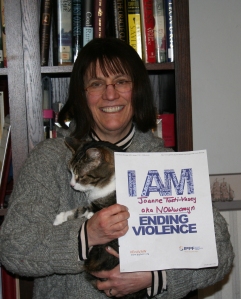
Picture of Joanne Tosti-Vasey standing with sign that says "I AM Ending Violence"

Joanne Tosti-Vasey “Refusing to be Silent” and calling for an end to all forms of violence, including domestic violence

Additional Info After Posting This Blog

After I posted this blog, I had a phone and email conversation with Doug Shields.

He is the former President of Pittsburgh City Council who sponsored of the 2007 ordinance on police-perpetrated domestic violence.  He asked if I would continue spreading the word about what’s going down in Pittsburgh regarding domestic violence protections.  Here is a copy of his email call for action:

“As you know, we all fought hard and long to enact an Ordinance that began to address issues related to police officers and domestic violence.  This came about due to the Mayor’s promotion of three officers who had significant issues related to domestic violence.

Over the past few months, a task force, formed to shape legislation that addresses the lack of clear protocols in responding to a domestic violence call, worked to provide an appropriate response.  As a result, the Council was about to enact the so-called “Maryland Protocol” this week.

Numerous people who had worked hard to get this legislation to the Council table were shocked to find upon introduction, the sponsor, Councilman Burgess, had without notice, took the opportunity to delete the entire section of the Ordinance that was enacted in December of 2011.

When the bill passed finally in 2007, I had tears in my eyes.  It was the only time that ever occurred.

Now this.  Blog by Joanne Tosti-Vasey (See: https://civilrightsadvocacy.net/2013/05/03/pittsburgh-no-dv-backtracking/)

I write to ask you for help to have a strong presence at next Tuesday’s and Wednesday’s Council meeting to utilize the public comment portion of the meeting to condemn this action by Councilman Burgess and to show strong support for the law we need and fought so hard to get.  

Unfortunately, your voice is needed again to defend that which we all worked on for so long.

The members who defended the bill were:  Bill Peduto, Patrick Dowd, Corey O’Connor, Natalia Rudiak and Bruce Kraus.

Those who joined with Mr. Burgess were, President Darlene Harris, Daniel Lavelle, and Theresa Kail-Smith.

Well worth watching this Council meeting, which repeats on air Sunday at 10:00 and 7:00 (Comcast City Channel 13), and which will soon be posted on line at the City’s Legislative Information Center.

Those who cannot be there on Tuesday or Wednesday at 10 AM are encouraged to  email or call the Council to convey their support for the Ordinance.  

Here is the link:    http://pittsburghpa.gov/council/

Here are the contacts for those who were ready to repeal the Ordinance.

Thank you for your anticipated cooperation in this matter.  Please also share this missive with others who would be interested in this issue.

Douglas Shields

Former President of Pittsburgh City Council

Prime sponsor of the Police & Domestic Violence Ordinance”

Pennsylvania General Assembly Again Attacking Women’s Reproductive Health

Keep Abortion Legal NOW Round

Keep Abortion Legal Safe, Legal and Accessible (http://www.now.org/issues/abortion/)

It’s 2013 and the Pennsylvania General Assembly continues to attack women’s access to reproductive health. According to WeveHadEnoughPA.org, the Pennsylvania legislature has launched and maintained a 2+ year attack on women’s health. There have been numerous bills introduced and in some cases passed that restrict women’s vital access to reproductive health.  Since January 2011, there have been at least 55 votes in the Pennsylvania General Assembly to restrict access from birth control to safe, legal abortions.

The most recent attack is happening this month.  On April 10, the Pennsylvania Senate Insurance and Banking Committee heard and passed out SB 3 by an 8-5 vote; a floor vote could occur any time this month.  This coming Monday, April 15th, the Pennsylvania House Health Committee will be hearing and voting on HB 818, the companion bill to SB 3.

The Additional Burdens on Women Seeking Abortion Care in These Bills

Both of these bills would prohibit insurance companies who provide health care coverage from including abortion coverage within the new healthcare Exchange crafted by the Affordable Care Act (aka Obamacare). The only exceptions to this proposed ban are for women who become pregnant because of rape or incest if they personally report the sexual assault to law enforcement officials and for women who will die without immediate access to abortion services. If a woman doesn’t meet one of these two exceptions, she must completely pay for the abortion totally out of her own pocket, unlike any other medical care she would receive under her health insurance plan.

Currently, about 80% of private insurance companies provide coverage for abortion services. This is important because these very same plans will be offered to people purchasing insurance through the Exchange. As part of the federal law, however, all plans that offer abortion coverage in the Exchange must have a separate payment for that portion of the coverage. This bill would deny women the right to make this separate payment and deny them what is currently available to most people covered by the current private health insurance system. While women would still be able to have abortions in this circumstance, they would be forced to fully pay out-of-pocket all cost for these procedures; their insurance company would be prohibited from paying any portion of this treatment.

This proposed ban places an undue burden on victims of rape and incest and on those women whose lives are in danger health-wise by adding unnecessary barriers to receiving the critical medical attention they need. The two exceptions allowed are extremely limited. These bills require woman who are victims of rape or incest to notify the police and identify the perpetrator prior to seeking abortion treatment.  It also limits women with health issues that complicate their medical treatment to those that are in immediate danger of dying and requires additional medical certification by second, non-attending physician.

This bill places these restrictions on access to health insurance not by mentioning rape or incest or the death aversion clause, but by referring to and expanding Pennsylvania’s version of the Hyde Amendment.  This language is embedded in 18 Pa.C.S. § 3215(c) and would expand restrictions on public funds to all privately paid insurance plans purchased within the Exchange. The law (18 Pa.C.S. § 3215(c))as currently written is a prohibition of the state spending of public funds but not personal funds provided by the person herself for her own health insurance coverage.

The Rape and Incest Exception

Women and minors who are raped would be denied access to abortion services unless they formally report and identify their rapist to the police or child protective services.  Most sexual assaults are not reported to the police. This is even truer when the perpetrator is a family member or acquaintance. According to the Pennsylvania Coalition Against Rape, sexual assault occurs at a much higher rate than is actually reported.

Reasons for not reporting include an initial denial that they have been raped; fear that you won’t be believed or are ashamed for having been raped; or having an ongoing relationship (such as a spouse or parent) with the perpetrator. In order to be safe from further violence by the perpetrator, women and girls may decide not to report the attack to the authorities.  And if you are in denial you are also unlikely to report your rape or the incest of your child to authorities as required in this proposed legislation.

So that means if this bill becomes law and you become pregnant from rape or incest, you are further burdened with the additional costs of fully paying for the abortion. If this bill were not to go into effect, then following the restrictions placed on abortion care under federal law, you would have the abortion services covered based on the insurance rider you purchased in the exchange and you wouldn’t be forced to file a complaint with the police.  This is just one reason why this bill should be voted down.

The “Avert” Death Exception and Need for Expanded Health Exception

In addition, under this proposed law, women who are near death could receive an abortion.  However, say a woman develops cancer or an infection during her pregnancy that will not immediately kill her but would complicate her medical treatment should she continue with the pregnancy.

This health threat/complication is not included in the current bill’s health exception as that exception allows abortions only to “avert” the woman’s death. Any woman with a medical condition that is complicated by the pregnancy but doesn’t immediately place her in danger of death would be forced to bear the additional burden of the full cost of an abortion in addition to the increased threats to her health as well as the additional medical bills for the remaining part of her care.  The medical community, advocates and some legislators are very concerned about this limited exception and have proposed an amendment to both the House and Senate bill to expand this exception from “averting” her death to coverage of the abortion for any pregnancy that poses a substantial risk to the woman’s physical health.

But even if the health exception is expanded to include threats to women’s physical health and care, this bill continues to attack women’s health and lives and should be voted down.

Why this Bill Should be Voted Down

The question of whether abortion will be covered in federally subsidized insurance exchanges has already been settled.  In response to concerns raised by US Senator Ben Nelson, a staunch opponent of abortion, women who want to use their own money to purchase a health insurance plan that covers abortion services must send a separate payment so the funding for abortion coverage is completely separate and paid entirely by the individual. This bill denies women their right to make this separate payment.  And with an estimated 80% of private insurance plans currently covering abortion care, banning abortion coverage in the state exchange would leave women worse off than they were before health care reform began.

Abortion care is a legally authorized and fundamental component of women’s basic health care.  Women should not be denied access to safe, legal, and critical care as part of health care reform implementation.

If abortion coverage is available to some, it should be available to all.  Politicians should not discriminate against women participating in the health insurance exchange.  All women deserve the same peace of mind that they can obtain the health care they need, regardless of where their insurance comes from.

The decision to have an abortion is a private decision between a patient and her physician. It should not be denied by politicians interfering with an insurance company and the policies they offer to the consumer for this procedure.

Banning abortion coverage in transactions between a private company and an individual is governmental activism of the worst kind.  With all of the heated rhetoric over healthcare reform, one would assume that lawmakers would be sensitive about taking any action that suggests government intervention in private healthcare decisions.

Finally, instead of denying Pennsylvania women access to fundamental reproductive health care services, politicians should be working to protect and advance women’s health.

Action Needed

Contact your Pennsylvania Senator and Representative today (find their contact information here).  Tell her/him to support the expanded health exception amendment to both SB 3 and HB 818 and to oppose the entire bill regardless of the inclusion of the amendment.

CNN’s Steubenville rape trial coverage is patriarchal. Rape is a Human Rights violation. All of these media outlets need to apologize.

This is a link to a petition that you can sign and send to CNN to demand that they apologize for their patriarchal coverage of the rape verdict.

If I find other petitions dealing with other media outlets, I’ll post them as well.

trp2011's avatarNel's New Day

Imagine a segment of Law and Order that begins with the scene of an unconscious drugged 16-year-old girl being dragged from one house to another over several hours while large football players stopped to sexually assault her, urinate on her, and spray their semen on her. No one intervened; they just called themselves the “rape crew” and joked while they took videos. The girl woke up the next morning, naked without jewelry and cellphone, in an unfamiliar house.

On this fantasy program, the police would identify the perpetrators, discover that this is a part of the male’s behavior, and then bring justice to the girl. Courts would try the male teenagers as adults and force them to serve actual time in prison. But I did mention that this program is a fantasy.

The first scene actually took place in Steubenville (OH); the rest of the events failed the raped girl…

View original post 1,279 more words

Powerful UN CSW57 Document on Ending Gender-Based Violence Created

On March 14, I wrote a blog entitled “The “Unholy Alliance” that May Defeat Comprehensive UN Call to End Gender-Based Violence.” I talked about an alliance between the Vatican, Iran, Russia and a couple of other countries that were attempting to eviscerate the comprehensive plan being created at the 57th session of the United Nations Commission on the Status of Women (CSW57) to end gender-based violence and fully comply with all of the universally agreed-upon agreements (treaties, resolutions, and statements). These previous agreements include the Women’s Rights Treaty (commonly known as CEDAW or the Convention on the Elimination of Discrimination Against Women (1993)) as well as the Beijing Platform for Action (1995), and UN Security Council Resolution 1325 (2000).

I am happy to say that this didn’t happen.  Thanks to the bloggers, news media, Tweeters, NGO’s attending CSW57, and several official Member States, the amendments to the document were voted down on Friday during the final day of the 2-week convention.

Iran was the only country that voted against the final, comprehensive document. The Vatican did not get to vote because of its status as a “Permanent Observer State” rather than as a voting “Member State”. And Russia backed down and voted for the final document along with all of the remaining UN Member States.

People around the world heard about these attempts to deny women and girls safety from all forms of violence.  We spoke out and acted.

As a result, unlike last year, we FINALLY have a strong document that

“condemns in the strongest terms the pervasive violence against women and girls, and calls for increased attention and accelerated action for prevention and response.” (Source)

This document has a strong prevention focus since the best way to end violence against women and children is to stop it BEFORE it happens.  It also addresses inequalities in the political, economic, and social spheres that engender violence. And it takes action to provide services and justice for victims of violence around the world.

Ms. Michelle Bachelet, United Nations Under-Secretary-General and Executive Director of UN Women summarized the comprehensive coverage of this powerful statement to end this type of human rights violation in her closing statement of the conference:

During the past two weeks, discussions centred on matters of urgency to people around the world — eliminating all forms of violence against women and girls, ending impunity for perpetrators, fully engaging men and boys, and advancing women’s empowerment and gender equality to prevent and end these human rights violations….

Important and timely matters were addressed — ending child and early forced marriage, protecting the rights of persons with disabilities, and providing justice and critical services for survivors of violence.

There were debates on ending sexual violence in conflict, tackling human trafficking, protecting sexual and reproductive rights, and on the role of culture, religion and the family.

You had many intense late-night negotiations, going over every single word and paragraph, debating long and hard in order to come to [this] strong agreement.

UN Secretary-General Ban Ki-moon, immediately after CSW57, released a statement showing the commitment of the United Nations to fully implement this new document. It says, in part:

Violence against women is a heinous human rights violation, global menace, a public health threat and a moral outrage.  No matter where she lives, no matter what her culture, no matter what her society, every woman and girl is entitled to live free of fear.  She has the universal human right to be free from all forms of violence so as to fulfill her full potential and dreams for the future.

States have a corresponding responsibility to turn that right into reality.  The Secretary-General hopes that all the partners who came together at this historic session and others around the world will now translate this agreement into concrete action to prevent and end violence against women and girls.  The United Nations system is fully committed to leading this global effort.

So now I say, THANK YOU! Thank you for creating this statement. It is one more step  towards realizing the rights, dignity, and humanity of girls and women throughout the world.

Picture of Joanne Tosti-Vasey standing with sign that says "I AM Ending Violence"

Joanne Tosti-Vasey “Refusing to be Silent” and calling for an end to gender-based violence

The “Unholy Alliance” that May Defeat Comprehensive UN Call to End Gender-Based Violence

Last week, on International Women’s Day (March 8), I participated in the 24-hour Global Tweet-a-Thon to end gender-based violence.  This event was held in conjunction with the 57th session of the United Nations Commission on the Status of Women (CSW57) that is being held in New York City.  The theme of this year’s session is the “Elimination and prevention of all forms of violence against women and girls.”

I participated as a host for one hour of this event to facilitate the global conversation between people around the world and those attending the unofficial Non-Governmental Organization (NGO) programs at the UN as well as to send a message to the official UN delegation. Our message was that advocates around the world are looking for a strong draft statement calling for the full elimination and prevention of all forms of violence against women and girls as directed by the theme of this two-week conference.

Here are a few of the many tweets I sent out that either addresses the situation of violence in countries around the world OR that calls on governments, including the UN, to create best practices to end gender-based violence:

@JoeBiden “40% of all mass shootings started with the murderer targeting their girlfriend, or their wife, or their ex-wife.” #EndVAW #CSW57 #IWD2013

The first sexual experience for 24% of women in rural Peru was forced. #EndVAW #CSW57 #IWD2013

In Latin America & the Caribbean, abused women reported higher incidents of miscarriage and induced abortion. #EndVAW #CSW57 #IWD2013 (Source)

In South Africa, women who were abused by their partners are 48% more likely to be infected with HIV than those who were not. #EndVAW #CSW57 #IWD2013

To #EndVAW, governments must enact legislation that addresses violence based on sexual orientation and gender identity. #CSW57 #IWD2013

To #EndVAW governments must fully fund health services for survivors of violence, including #HIV screening & emergency contraception. #CSW57 #IWD2013

To #EndVAW, governments must ensure girls and women have access to abortion in cases of rape and incest. #CSW57 #IWD2013

Providing young people with human rights-based, comprehensive sexual and reproductive health services and information helps #EndVAW. #CSW57 #IWD2013

Respecting, protecting, and fulfilling girls’ and women’s sexual rights can minimize the violence they face. #EndVAW #CSW57 #IWD2013

Promoting girls’ and women’s sexual rights is a key tool to #EndVAW, address women’s inequality, and achieve sustainable development. #CSW57 #IWD2013

Domestic laws to #EndVAW should align with international best practice and reinforce the protections found in #humanrights treaties. #CSW57 #IWD2013

And

There is no country where women and men are equal in all spheres of life. You have the power to can change that! #EndVAW #CSW57 #IWD2013

That last tweet is a call for individuals, organizations, countries, and the United Nations to pull together to create and execute a comprehensive plan to end gender-based violence and fully comply with all of the universally agreed-upon agreements (treaties, resolutions, and statements), including the Women’s Rights Treaty (commonly known as CEDAW or the Convention on the Elimination of Discrimination Against Women (1993)) as well as the Beijing Platform for Action (1995), and UN Security Council Resolution 1325 (2000)

I had hoped the draft document that is supposed to be finalized and signed on March 15 – the final day of the two-week deliberation – would help strengthen these treaties.  Instead on Tuesday, March 12, 2013, I received an email from two NGOs – the Center for Women’s Global Leadership (CWGL) at Rutger’s University and International Women’s Rights Action Watch Asia Pacific (IWRAW Asia Pacific)—indicating that

“the United Nations Commission on the Status of Women (CSW) is wavering in its commitment to advance women’s human rights as demonstrated in the constant negotiation of the language in the outcome document.”

The next morning, I saw a New York Times editorial called “Unholy Alliance.”  This article clearly lays out what was going on in the official deliberations.  Apparently, the Vatican (which, btw, is a “Permanent Observer,” not a “Member State”), Iran, Russia, and a few other Member States have spent the their entire time at CSW57 trying to eliminate language in the draft communiqué to “duck” their obligations – and thus the obligations agreed to by most of the world – to eliminate all gender-based violence.

Their excuses?  Religion. Custom. Tradition.

What are they objecting to specifically?  Any reference to abortions or contraception.  Any mention of reproductive or sexual health. Any reference to forced sex as rape by either a spouse or other intimate partner.  And even any reference to women’s rights in general from the aforementioned international agreements; in this case, they claim that either religious or cultural traditions must take precedence over ending any form of gender-based violence.

These “reservations,” by the way, are the same reservations raised by essentially the same countries at the 56th session of the CSW conference in 2012.  As a result, that session ended without any agreement and women, once again, were left without a comprehensive UN plan to help improve their lives.

I am appalled. Gender-based violence is a crime against humanity.  Whether that crime is perpetrated by a government (for example, when military units carry out gang rapes and other gender-based war crimes for ethnic intimidation, ethnic cleansing and terrorizing a community).  Or when that crime of violence is perpetrated by individuals.

After learning all of this, I contacted the National Organization for Women (NOW) chapters in Pennsylvania.  Within 24 hours, Pennsylvania NOW along with South Hills NOW (Pittsburgh area), East End NOW (part of Allegheny County just east of Pittsburgh), Northeast Williamsport NOW, Ni-Ta-Nee NOW (my chapter here in Centre County), and Montgomery County NOW all co-signed the letter created by CWGL and IWRAW Asia Pacific.

This letter was signed by 281 organizations from 57 countries and 129 people from around the world and delivered to the conference on March 14.  FYI, since some of the organizations do not include the country of origin in their names, there may be — and probably are — more than 57 countries represented on this letter.

Here’s the letter that we signed.

IWD Statement on Concerns of Women’s Organizations Over Negotiations on CSW 57 Outcome Document 3-14-13

I along with all of these organizations and individuals want to see a comprehensive UN program to end violence against women and girls.  We want to strong enforcement of all international agreements.

Patriarchy has no right to quash human rights.  Let’s hope that the official delegates hear our voice and stop this “unholy alliance.” If allowed, the result will be more, not less gender-based violence.

If not, then I believe that like last year there should be no UN document signed by the United States or any other Member State participating in the 57th CSW conference.  Going forward with a strong plan to end all forms of violence is the best plan.  Going backwards is appalling and should not be condoned.  Better nothing than something that moves us backwards.

Let’s just hope they hear our voice and “do the right thing.”

How Can Research be a Catalyst for Change to End Gender-Based Violence (in English y españoles)

From March 4-15, advocates are gathering at the 57th session of the Commission on the Status of Women (CSW) in New York City to urge governments to fulfill commitments to eliminate violence against women and girls.

Over the next week and a half, advocates are supporting this conference via the use of social media—including blogs, tweets, Facebook, LinkedIn, and Pinterest to name a few—to spread the word about both the CSW meeting and to call for an end to gender-based violence.

Since today is International Women’s Day, thousands, if not millions of people are participating in this call to eliminate global gender-based violence by participating in a global Tweet-a-Thon.

Advocates who are Tweeting and who are participating at the 57th CSW session are documenting the incidence and impact of all forms of violence against women and children to [bear] witness to the human rights abuses that far too many women experience daily worldwide,…”  This documentation “also helps to understand the prevalence, nature, and root causes of such abuses so that [countries, advocates, and service providers] may be more effective in stemming [all forms of violence] through laws, policies, and prevention and response programs.

Blogs are also focusing on this issue. One of them, originally published by IPPF/Western Hemisphere Region, states that documentation and research on violence is all its forms  can then be a catalyst for change.

As a policy analyst and advocate for civil and women’s rights with a research background in work and family issues I fully agree.  So I thought you, my reader, would like to see what Jimena Valades, Program Officer – Safe Abortion at IPPF/WHR has to say.

In an effort to make this as accessible as possible, I am presenting this blog in both English and Spanish.  First, here’s the reblog of the English version:

How Can Research be a Catalyst for Change?

Jimena Valades, Program Officer – Safe Abortion

If an act of violence is perpetrated, but is never reported or documented, did it happen at all?

Of course the answer is a resounding ‘yes’. There are many reasons why survivors may not report incidents of violence, including fear of retaliation, stigma, or disillusion with law enforcement. Surveys from Costa Rica, Paraguay, and Peru show that up to 20% of women experience sexual assault, yet few to none report it to police. Many of the survivors who do report incidents of violence are met with ineffective judicial systems that parlay impunity or data monitoring systems that act like black holes, swallowing up the evidence of the tragedy they have endured. Either way, we know that whatever statistics we do have about gender-based violence reflect just a fraction of its harsh reality.

Yet, the larger point remains: there is critical importance in documenting acts of violence against women and girls – systematically, carefully, and over time. Collecting data on the issue not only bears witness to the human rights abuses that far too many women experience daily worldwide, but also helps to understand the prevalence, nature, and root causes of such abuses so that we may be more effective in stemming it through laws, policies, and prevention and response programs.

While numerous country-level studies on gender-based violence in Latin America and the Caribbean exist, there is a need for more current and comprehensive national prevalence data, as well as qualitative research into causes, and risk and protection factors. In short, we need to do a better job uncovering the full picture of gender-based violence in order to most effectively address it. Further, a persistent lack of comparability between national studies in the region has hampered the ability to draw broader, meaningful conclusions.

How do we zoom out to the bigger picture to understand violence regionally? How can we share successful prevention and response strategies across countries and globally?

A new study released in January by the Pan American Health Organization (PAHO) attempts to answer these questions by re-analyzing studies from 12 countries in the region. For the first time, data reveals a broader and more in-depth picture of both the prevalence and nature of violence region-wide.

While globally it is estimated that one in three women will experience physical, sexual, or psychological violence in her lifetime, this rate is both higher and lower across different areas of Latin America and the Caribbean. For instance, more than half of women who have been married in Bolivia reported having experienced some type of violence by their intimate partner during their lifetime. This rate of intimate partner violence reported was lower, just 17%, in the Dominican Republic. Emotional abuse of women by intimate partners is also common in the region, and is closely linked to the incidence physically abuse. Nearly half of women in Nicaragua reported experiencing emotional abuse by a partner in their lifetime.

While more information is needed, we are just now beginning to uncover a picture of the complex root causes and risk factors for violence against women in the region. After controlling for a number of factors, PAHO researchers found that the risk factors most closely associated with violence by a partner include being divorced or separated, having a high number of children, and if a woman’s father was abusive to her mother. This seems like an odd grouping, but it’s a key finding because it can help direct our attention father up the causal chain of violence, to focus our programming efforts on critical risk factors.

Documenting the stories of women who experience various forms of violence, qualitatively, is also important. Last year, the Nobel Women’s Initiative led a fact-finding mission to Mexico, Honduras, and Guatemala to document violence against women – in particular sexual violence perpetrated by the state and the mining industry against women’s human rights defenders. Women from these countries stepped forward courageously to provide testimony, oftentimes at their own peril, of their experiences of violence – with their sisters bearing witness – enabling new nuanced documentation of this epidemic.

There have also been other efforts across Latin America to support increased reporting of violence among survivors, such as through the increased establishment of all-women police forces and courts specialized to address violence against women issues.

There are many reasons to be hopeful that increased data can help catalyze meaningful change, though there are reality checks left and right. While 97% of countries in the region have laws on domestic violence, fewer than half include explicit references to marital rape. In November, after decades of advocacy, the Law Against Violence Against Women was passed in Nicaragua. Yet, the country recorded 85 femicides in 2012, and new instances of sexual violence across the region make the news every day.

Despite the persistence of these abuses, the importance of documenting violence against women and collecting sound data remains. As data collection improves and more studies are done about this epidemic at the country and regional level, we may actually see something that seems like an uptick in violence against women. This may or may not actually be the case. Since gender-based violence is so hidden and often under-reported, the more we dig, the more we will find. An accurate picture is essential and pivotal to the achievement of our end goal: eliminating all forms of violence against women and girls in Latin America and the Caribbean.

********************************************************************************************************

A partir de marzo 4-15, defensores se reúnen en la 57 sesión de la Comisión de la Condición Jurídica y Social de la Mujer (CSW) en Nueva York para instar a los gobiernos a cumplir los compromisos de eliminar la violencia contra las mujeres y las niñas.

Durante la siguiente semana y media, los defensores están apoyando esta conferencia a través del uso de medios sociales, incluyendo blogs, tweets, Facebook, LinkedIn y Pinterest para nombrar unos pocos, para difundir la palabra acerca tanto a la reunión de la CSW y para pedir el poner fin a la violencia de género.

Como hoy es el Día Internacional de la Mujer, miles, si no millones de personas están participando en esta convocatoria mundial para eliminar la violencia de género mediante la participación en un mundial Tweet-a-Thon.

Los defensores que son Tweeting y que están participando en la 57 ª sesión de la CSW se documenta la incidencia y el impacto de todas las formas de violencia contra las mujeres y los niños “testigos ante los abusos de derechos humanos que demasiadas mujeres experimentan en el mundo todos los días, sino también para entender la prevalencia, naturaleza y raíces de estos abusos para poder lograr una mayor efectividad en detenerlos – a través de leyes y políticas y a través de la prevención y programas de respuesta.”.

Los blogs también se centra en el tema. Uno de ellos, publicado por la IPPF / Región del Hemisferio Occidental, afirma que la documentación y la investigación sobre la violencia en todas sus formas es entonces puede ser un catalizador para el cambio.

Como analista político y defensor de los derechos civiles y los derechos de las mujeres con antecedentes de investigación en el trabajo y la familia estoy totalmente de acuerdo. Así que usted cree, querido lector, le gusta ver lo que Jimena Valadés, Oficial de Programas – Aborto Seguro en la IPPF / RHO tiene que decir.

En un esfuerzo para hacer esto lo más accesible posible, les presento este blog en Inglés y Español. La siguiente es la versión en español de este blog.

¿Cómo puede la investigación ser un catalizador para el cambio?

Jimena Valades, Oficial de Programas – Aborto Seguro

Si un acto de violencia es perpetrado pero nunca reportado ni documentado, ¿pasó en realidad?

Desde luego que la respuesta es sí. Hay muchas razones por las cuales los sobrevivientes pueden no reportar incidentes de violencia, incluyendo el miedo a las represalias, estigma, o desilusión con los agentes del orden. Encuestas de Costa Rica, Paraguay y Perú muestran que hasta el 20% de mujeres han sufrido un ataque de índole sexual, pero pocas a ninguna lo reporta a la policía. Y muchos sobrevivientes que reportan incidentes de violencia, se enfrentan con sistemas judiciales ineficaces que apuestan a la impunidad o sistemas de monitoreo de datos que actúan como agujeros negros, tragándose la evidencia de la tragedia sucedida. De todas maneras, sabemos que las estadísticas con las que contamos en términos de violencia basada en género representa solo una fracción de la dura realidad.

Aun así el punto más importante sigue vigente: hay una importancia crítica en documentar los actos de violencia contra las mujeres –sistemáticamente, con cuidado, y con continuidad en el tiempo. Esto es necesario no solo para actuar como testigos ante los abusos de derechos humanos que demasiadas mujeres experimentan en el mundo todos los días, sino también para entender la prevalencia, naturaleza y raíces de estos abusos para poder lograr una mayor efectividad en detenerlos – a través de leyes y políticas y a través de la prevención y programas de respuesta.

A pesar de que existen numerosos estudios sobre VBG a nivel país en Latinoamérica y el Caribe, hay una necesidad de obtener datos más actuales y de prevalencia nacional, así como investigaciones cualitativas en las causas, los riesgos y los factores de protección. En suma, necesitamos hacer un mejor trabajo para tener un panorama más claro y amplio de la VBG para poder responder mejor ante ella. A su vez, la falta persistente de comparabilidad entre estudios nacionales en la región ha disminuido la capacidad de sacar conclusiones más amplias y significativas. ¿Cómo alejamos el zoom para poder ver todo el panorama completo y entender la violencia a nivel regional –sus causas, lo que ha sido efectivo en prevenirla, sus costos, etc.? ¿Cómo compartimos estrategias de prevención y respuesta entre países?

Un nuevo estudio publicado este mes por la Organización Panamericana de Salud (PAHO) ha intentado re analizar investigaciones de 12 países de la región, y, por primera vez, revela un panorama más amplio y profundo sobre la prevalencia y naturaleza de la violencia en esa parte del mundo.

Globalmente se estima que una de tres mujeres experimentará violencia física, sexual o psicológica en su vida, pero este número es –al mismo tiempo- alto y bajo en las diferentes áreas de Latinoamérica y el Caribe. Por ejemplo, más de la mitad de mujeres que nunca contrajeron matrimonio en Bolivia reportaron haber experimentado algún tipo de violencia de parte de sus parejas en el curso de sus vidas. Este mismo índice es más bajo, un 17%, en la República Dominicana. El abuso emocional por parte de la pareja es endémico en la región y está estrechamente vinculado con el abuso físico. Casi la mitad de las mujeres en Nicaragua han reportado abuso emocional de parte de sus parejas durante sus vidas.

Aunque es necesaria más información al respecto, recién ahora estamos desentrañando un marco de las raíces y los factores de riesgo de violencia contra las mujeres en la región. Después de controlar un número de factores en la región, investigadores de PAHO encontraron que los factores que se asocian a la violencia de parte de una pareja incluye estar divorciado o separado, tener muchos hijos, o si el padre de la mujer era abusivo con su madre. Esto puede parecer como una mezcla rara de factores, pero es un hallazgo clave porque nos ayuda a dirigir nuestra atención más arriba en la cadena de causales de violencia, y enfocar nuestros esfuerzos programáticos en los factores de riesgo críticos.

Es también importante el documentar las historias de las mujeres que experimentan las varias formas de violencia de manera cualitativa. El año pasado, la Iniciativa Nobel de Mujeres lideró una investigación en México, Honduras y Guatemala para documentar la violencia contra las mujeres y en particular la violencia sexual perpetrada por el Estado y la industria minera en contra de las defensoras de los derechos de las mujeres. Mujeres provenientes de estos países se acercaron con mucho coraje a dar su testimonio – la mayoría de las veces bajo riesgo de vida- de sus experiencias de violencia, con sus hermanas como testigos, desarrollando nueva documentación sobre esta epidemia.

Ha habido otros esfuerzos en América Latina para apoyar el incremento de reporte de violencia entre sobrevivientes, a través de un aumento de fuerzas de policía exclusivamente compuestas por mujeres y cortes especializadas para atender los temas de violencia contra las mujeres.

Hay varias razones para mantener la esperanza que al incrementar los datos estadísticos podamos ayudar a catalizar un cambio significativo, aunque seguimos teniendo chequeos de realidad en todos lados. Mientras que 97% de los países de la región tienen leyes contra la violencia doméstica, menos de la mitad hace referencia explícita a la violación dentro del matrimonio. En noviembre, luego de décadas de trabajo de incidencia, la Ley de Violencia contra las Mujeres fue promulgada en Nicaragua. Sin embargo, el país mantiene un record de 85 femicidios en 2012, y nuevas instancias de violencia sexual salen en las noticias de la región todos los días.

A pesar de la persistencia de estos abusos, sigue siendo de vital importancia el documentar la violencia contra las mujeres y compilar datos de solidez estadística. A medida que la recolección de datos mejora y se incrementa el número de investigaciones que documentan esta epidemia a nivel nacional y regional, podríamos suponer el estar frente a un aumento de la violencia contra las mujeres. Esto puede, o no, ser así. Como la VBG es usualmente escondida y con bajo nivel de reporte, cuanto más escarbemos más vamos a encontrar. Pero el tener un panorama completo es esencial y crucial para llegar a nuestro objetivo final: prevenir y eliminar todas las formas de violencia contra las mujeres y niñas en Latinoamérica y el Caribe.