NOW Public Censure Statement re: G. Todd Baugh

Today at 1:00 p.m. MDT, the Montana Supreme Court held G. Todd Baugh’s public censure hearing in Helena Montana. Here’s a video of the entire hearing, courtesy of the Billings Gazette.


We were one of the complainants who filed a Judicial Conduct complaint against Baugh last fall. We were in court  today to tell Baugh, the Supreme Court, and the country why we filed the complaint and what we thought of Baugh’s actions as a sitting judge who was supposed to fairly mete out justice for all.

Unfortunately Montana NOW and Pennsylvania NOW were not allowed to speak about our concerns before the Court. We had expected to deliver these comments publicly. Since we were unable to speak them, we sent our statement directly to Baugh.  We have also let the press know that this statement is available on this blog.

The following is our official statement:

Stop Violence Against Women NOW diamond

Stop Violence Against Women NOW

Mr. Baugh:

We are Marian Bradley and Joanne Tosti-Vasey, representing, respectively Montana NOW and Pennsylvania NOW, state chapters of the National Organization for Women. We are one of the eight sets of complainants that filed an ethics violation complaint against you, Mr. Baugh.  We believe you mishandled this rape case and as a result you impugned the judiciary.  Your statements blaming the victim and your failure to follow state law in sentencing Stacey Rambold were outrageous and unconscionable.

We filed this complaint on behalf of men, women, and children in Montana as well as men, women, and children across the country.  We believe that it is long past time for Montana’s authorities to protect the right-thinking citizens of and visitors to Montana from sexual predators rather than freeing those predators so that they can rape again.

We represent the more than 250,000 people around the world who called for your resignation or removal and the 350 sexual assault survivors who signed a letter calling for your removal. When we filed our complaint to the Judicial Standards Commission on September 24, we included copies of the petitioners’ names, the sexual assault survivor letter and copies of two news articles condemning your actions.

On Monday, August 26, 2013, you sentenced confessed child rapist Stacey Rambold to only 31 days in jail for that offense.  You justified that slap-on-the-wrist sentence by commenting, incredibly, that the 14-year-old child victim – two years under the legal age of consent – was “as much in control” of the rape as her 49-year-old teacher because, according to you, she was “older than her chronological age.” You then attempted to justify this sentence by telling the press that this rape “was not a violent, forcible, beat-the-victim rape, like you see in the movies.”

Mr. Baugh, your victim-blaming, rape-trivializing, rapist-protecting comments and actions come less than a year after the United States Department of Justice was called in to address civil rights violations and rape victim-blaming by the University of Montana, Missoula County and Missoula City authorities over many years.

Our complaint raised three ethical issues that we believed you violated.  The issues we raised were:

That you did NOT act at all times in a manner that promoted public confidence in the independence, integrity, and impartiality of the judiciary, and that you did not avoid impropriety and the appearance of impropriety (Rule 1.2);

That you did NOT uphold and apply the law, nor did you perform all duties of your judicial office fairly and impartially (Rule 2.2); and

That you in the performance of your judicial duties, by your words as well as your conduct, showed manifest bias or prejudice against the victim based upon her race, sex, gender, age, and socioeconomic status (Rule 2.3).

The Judicial Standards Commission found that you violated the ethical issue of impropriety. The Montana Supreme Court in overturning your 31-day sentence of Rambold on April 30 essentially found that you violated the second ethical issue by failing to uphold and apply the law. And when the Montana Supreme Court overturned this sentence, they ordered this case to be reassigned to a new judge because your statement at trial evidenced bias against the victim.  That essentially means you also violated our third complaint of showing bias against the victim – a young, Hispanic, lower-income girl.

You used three different rape myths to justify your actions. By doing so, you used a form of gender bias that destroyed the integrity of the judicial process and contravened Montana law. Rape myths are forms of gender bias that have no place in a justice system that strives to provide an impartial forum for all participants.  As the Honorable Justice Sandra Day O’Connor said in 1994, “When people perceive gender bias in a legal system, whether they suffer from it or not, they lose respect for that system, as well as for the law.”

What did you do?  You blamed the victim for the rape. You invoked the belief that this wasn’t “real” rape because it did not involve physical violence. And you invoked the myth of girl provocateur, also known as the Lolita Effect, to deny the power and control a teacher has over his student.

You relied on these rape myths to impose your sentence against Rambold. You trivialized the act of rape by stating that the crime was not a “forcible, beat-up rape.” By doing so you downplayed the fact that a teacher took advantage of and sexually assaulted a girl under his power and control. You blamed the victim by claiming she had control over the rape.

This young girl, Cherice Moralez, experienced such psychological and emotional damage that she ultimately died by suicide even before the case came to trial.  Your statements about the victim being as much in control of the situation as Rambold and then giving a slap-on-the-wrist sentence to Rambold is insupportable as a matter of fact and law, given her age and vulnerability.

Children and adolescents are vulnerable to coercion and social pressure by adults and figures of power. Your use of these rape myths diminished and made invisible a young vulnerable girl. Your statements result in a chilling effect on other victims of sexual assault. It also places a chilling effect on the public and others within the judicial system. If we are unable to trust and rely on the justice system to properly weigh the relevant factors in addressing sexual assaults, we all lose confidence in the integrity of the judicial process.

We would have preferred that the Montana Judicial Standards Commission and the Montana Supreme Court had immediately removed you from the bench so that you could no longer impugn the integrity of the court and return the court in Yellowstone County to a full sense of fairness for women, children, and other victims of domestic and sexual violence.  Instead they chose to give you a similar 31-day “sentence” that you gave to Stacey Rambold.  In his case, it was 31 days in jail with one day suspended; in your case it’s 31 days without pay. We accept that decision. However we are concerned that as long as you remain seated on the bench that the public in Montana, around the country and throughout the world will continue to question the fairness and integrity of the judicial system in Montana.

We therefore suggest that not only do you fully accept today’s censure and the suspension, but that you also apologize for your actions to Cherice’s mother and all victims of sexual and domestic violence and that you immediately either step down or recuse yourself from all future cases handed to you. Enough is enough. Your actions in our opinion require these responses from you.

The 2014 quest to get single women to the polls

This article originally appeared in the Los Angeles Times at  http://www.latimes.com/nation/politics/politicsnow/la-pn-democrat-quest-to-turn-out-single-women-20140716-story.html on July 17, 2014. It was written by Maeve Reston.  She is a political reporter at the paper. She’s been covering presidential election since 2004, first in Pittsburgh PA, then Austin TX, and now in Los Angeles.  She can be reached through Twitter at @MaeveReston.

If you’d like to learn more about unmarried-women voters, you can check out the research that was conducted by the Voter Participation Center and Lake Research Partners.

Please read this great article. Review the research. And help get-out-the-vote. You can help by talking to your unmarried female friends and family  members and helping them to register to vote. And the remind them to vote on November 4, 2014.


ALICE, Throw ALEC Out

ALICE- The American Legislative and Issue Campaign Exchange – is an alternative to ALEC. It’s new, but may help push back against the conservative business backlash. Let’s hope so.

trp2011's avatarNel's New Day

The corporate-funded American Legislative Exchange Council (ALEC) has been active for over four decades. Businesses pay for conservative federal and state legislators to take copy-ready bills to Congress and state legislatures. ALEC has been responsible for lax gun regulations—including the infamous “stand your ground” laws—as well as laws that roll back civil rights, pollution regulations, unions while privatizing public services which costs taxpayers far more money. Thanks to ALEC, schools, prisons, public transportation, and social and welfare services have been taken over by for-profit businesses that only help the private owners.

Since  I learned about ALEC, I have longed for a way to fight back. Lo and behold, there is one! Meet ALICE, The American Legislative and Issue Campaign Exchange, that also provides “model bills,” ones free to state and national legislatures.

During the Occupy Movement about two years ago, New York City Councilman Brad Lander met with Seattle Councilman Nick…

View original post 780 more words

It’s a Black and White Issue

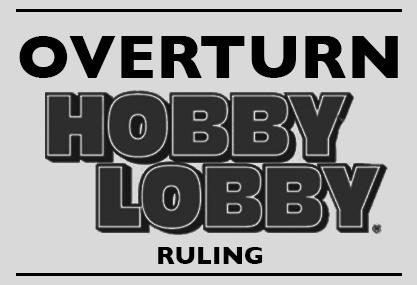
overturn_hobbylobby_ruling_now.jpg

Show your support for overturning the Hobby Lobby Ruling

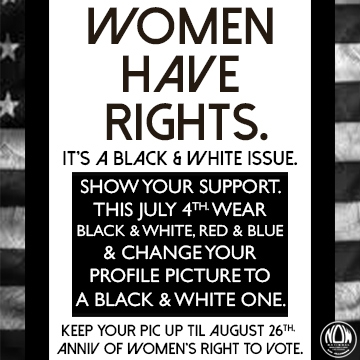
Women have rights. It is a black and white issue. Show your support for overturning the Hobby Lobby decision by the US Supreme Court

Rally near your nearest Hobby Lobby protesting this decision. Here’s a link to the Hobby Lobby’s “Store Locator.” Your local NOW chapter may also be participating in a local action. 

Wear Black and White on July 5.

Women Have Rights. It's black and white issue.. Show your support this July 4th. Wear black and white or red and blue.  Change your profil picture to a black and white one. Keep your pic up until August 26.

Women Have Rights. It’s a black and white issue.

And turn your profile picture or banner on all of your social media sites black and white through August 26; this is the anniversary of women’s right to vote being placed into the US Constitution.

Thanks for your support of this action continuing to oppose the War on Women.

Repeal the RFRA and Ratify the ERA

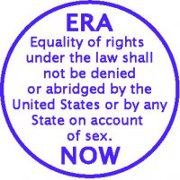
ERA words buttonCorporations should not have more religious rights than woman.  With the US Supreme Court’s (SCOTUS) Hobby Lobby decision, women’s personally “sincerely held” beliefs now mean nothing.

The Hobby Lobby decision is not based on the US Constitution.  Instead it’s based on a bill known as the Religious Freedom Restoration Act or RFRA combined with the recent Supreme Court’s Citizens United decision that granted personhood status to companies. Since there is no constitutional equality for women and therefore no strict scrutiny review for women’s religious and civil rights, this decision eliminating women personal religious beliefs and access to reproductive health coverage occurred.

The RFRA, when combined with this SCOTUS decision, makes women non-persons.

Therefore in order to place women back on equal footing with men (and the “personhood” of corporations as this activist Court has mandated), we need to do two things:

    1. Ratify the ERA — the Equal Rights Amendment — and put women into the US Constitution so that women WILL be equally treated as people and not as objects to be pushed around by the will of corporations and by gender bigots.
    2. Repeal the RFRA  –  The Freedom From Religion Foundation placed an ad in the New York Times entitled Dogma Should NOT trump Civil Liberties that in part states:

In Citizens United, the Supreme Court ruled that corporations are people. Now, the Supreme Court asserts that corporations have “religious rights” that surpass those of women.In the words of Justice John Paul Stevens, “Corporations have no consciences, no beliefs, no feelings,no thoughts, no desires” — but real women do. Allowing employers to decide what kind of birth control an employee can use is not,as the Supreme Court ruled, an “exercise of religion.” It is an exercise of tyranny.

I agree.  Repeal the RFRA and put women into the US Constitution.

The repeal of the RFRA would require an act of Congress. That means we need to elect new members to Congress who respect and will stand up for women. So we all need to register to vote and then vote.

We only need three more states to ratify the ERA to make it the 28th amendment to the US Constitution. Illinois is halfway there; their Senate ratified it and we’re now awaiting the vote in the state House.  Just two more states and then we can proudly say:

Equality of rights under the law shall not be denied or abridged by the United States or by any state on account of sex.


Pennsylvania Agenda for Women’s Health: Phase Two

Logo for the Pennsylvania Agenda for Women's Health

Logo for the Pennsylvania Agenda for Women’s Health

On June 3, I gave an update on the second roll-out of bills associated with the Pennsylvania Agenda for Women’s Health. At the time, I did not have the bill numbers associated with each of these new bills nor did I have the information on where they were sent to. Now I do. Here’s that information.

Phase Two

Curbing Political Interference in Providers’ Medical Decisions:

H.B. 2303 will soon be introduced by Rep. Dan Frankel (D—Allegheny) to protect the doctor-patient relationship from directives to practice care in a manner that is not in accordance with standards of care. Senator Mike Stack (D—Philadelphia) has agreed to introduce the Senate version of this bill

Identifying gaps in health care for women veterans:

S.R. 262 has been introduced by Senator LeAnna Washington (D—Philadelphia and Montgomery) establishing a 17-member Task Force on Women Veterans’ Health Care that will study health care issues unique to women veterans, along with the quality of and access to care for women veterans. It is currently in the Senate VETERANS AFFAIRS AND EMERGENCY PREPAREDNESS Committee. The House version is sponsored by Representatives Pam DeLissio (D—Philadelphia an Montgomery) and Kevin Schreiber (D-York); their co-sponsorship memo is currently being circulated, but no bill number has yet been assigned.

Fighting deep poverty among women with children:

There are three different bills designed to address this issue.

    1. S.R. 62 has been introduced by Senator Chuck McIIhinney (R—Bucks). This resolution “directs the Legislative Budget and Finance Committee (LBFC) to study approaches to family work support programs which will increase income, keep families working and mitigate the circumstance referred to as the cliff effect.  This effect occurs when working parents receive a minor increase in their income that makes them ineligible for various programs that allow them to work such as child care assistance, transportation, food stamps and free and reduced school lunches.  The phenomenon often creates disincentives for poor families to achieve self-sufficiency.” It was sent to the Senate Aging and Youth Committee for review. On June 10, this committee unanimously voted in support of the bill and the bill is now waiting for the next review by the full Senate.
    2. H.B. 2305 will soon be introduced by Rep. Madeleine Dean (D—Montgomery). It will increase the monthly Temporary Assistance to Needy Families (TANF) benefits for women in need. This bill will increase the maximum TANF grant amount to 50% of the Federal Poverty Level and would allow annual adjustments to be made based on revisions to this index of poverty.
    3. H.B. 2306 will soon be introduced by Rep. Michelle Brownlee (D—Philadelphia). It will increase in the TANF Earned Income Disregard from 50% to 75% to encourage individuals to work by acknowledging that working families have unique expenses that take up a large percentage of their take home pay. This increase would help offset the additional taxes, transportation, clothing, and child care co-pays associate with working. The current disregard level is not enough to offset these additional costs.  A Senate version to be introduced by Senator Judy Schwank (D—Berks) is circulating a co-sponsorship memo to introduce this same legislation in the Senate; a bill number has yet to be assigned.

Ensuring widows of state and municipal employees get fair pensions:

There are two different bills designed to address this issue. These bills require that a public employee select a retirement plan payment structure that provides no less than a fifty percent (50%) survivor annuity to the employee’s surviving spouse. These bills would bring spouses of public employees the same survivor protections that all other employees currently have. This is necessary since the federal Retirement Equity Act of 1984 does not cover employees of the state, local municipalities, or public schools. These bills mirror the spousal protections provided in federal law. Rep. Steve Santarsiero (D—Bucks) is circulating the co-sponsorship memo in the House for H.B. 2307 and H.B.2308. Senator Vincent Hughes (D—Montgomery and Philadelphia) is circulating the co-sponsorship memo in the Senate to introduce similar legislation in the chamber.

Protecting all employees against sexual harassment:

H.B. 2300 has been introduced by Rep. Michael Schlossberg (D-LeHigh) to amend the PA Human Relations Act to extend the prohibition on sexual harassment to all employers in the state. Currently law only affects employers with four or more employees. This bill is currently in the House LABOR AND INDUSTRY Committee.

Taking Action on the PA Agenda for Women’s Health

Ni-Ta-Nee NOW logo of a woman successfully scaling Nittany Mountain and working for equality

Ni-Ta-Nee NOW logo

And FYI, my local chapter of the National Organization for Women — Ni-Ta-Nee NOW — will be circulating a petition in support of this Agenda at the Central Pennsylvania Festival of the Arts in State College, PA on July 10-12, 2014. Our table will be located in front of Freeze Thaw Cycles, 109 S Allen St, State College, PA 16801 from 10 am to 8 pm each day. Please drop by, learn more about this Agenda, sign the petition, register to vote, and join NOW.

Health Care is a Human Right

Mike Stout has just created his newest song entitled Heath Care is a Human Right. Tim Murray made the video of this new anthem for universal single payer health care. Both premiered  on Saturday evening, June 7 in Pittsburgh at a fundraiser for Healthcare for All PA. The video was posted on Sunday on YouTube.

Here’s the video.

And here’s a link to Healthcare for All PA, where you can obtain more information on Single Payer healthcare, how it improves upon the Affordable Care Act (ACA), what’s happening in the US and Pennsylvania to move us toward universal healthcare, and how you can join those of us who see and advocate for Healthcare as a Human Right.

Marriage Equality throughout the United States

Thank you Nel for a great summary of the current status on marriage equality in the US. Twenty states recognizing same-sex marriages. And the remaining thirty states with pending lawsuits. As you quote the misnamed National Organization for Marriage (NOM), all 50 states are likely to recognize same-sex marriages by the beginning of 2016.

trp2011's avatarNel's New Day

Oregon, my own state, is keeping its status as one of the 19 states legalizing marriage equality, according to a decision delivered today by U.S. Supreme Court Justice Anthony Kennedy. After a U.S. district judge ruled in favor of removing the state constitutional ban, the National Organization for Marriage (NOM) appealed to both the 9th Circuit Court of Appeals and the U.S. Supreme Court. Today, the Kennedy refused to give NOM any standing in the case. Since Judge Michael McShane issued his ruling on May 19, hundreds of same-sex couples have married in Oregon.

NOM’s case opposing McShane’s ruling is on behalf of three Oregonians: a county clerk, a wedding provider, and a person who voted to ban marriage equality in 2004. All the individuals, who refused to give their names, would not publicly explain how they would be harmed by legal same-sex marriage in the state. State officials are fighting NOM’s appeal in…

View original post 1,188 more words

Censure and Suspension of Judge Baugh

Stop Violence Against Women NOW diamond

Stop Violence Against Women NOW

The Montana Supreme Court has just handed down their decision on the ethics complaints filed against Judge G. Todd Baugh in his mishandling of the rape case against Stacey Rambold. This is the case where Judge Baugh sentenced ex-teacher Stacey Rambold to thirty days in jail for raping one of his 14-year-old students.

In explaining this slap-on-the-wrist sentence, Baugh used several rape myths that showed gender and racial bias against Cherise Morales—the 14 year old, Hispanic girl whom Rambold raped. During the sentencing hearing, Baugh stated that the girl was “as much in control of the situation” as her rapist and that she was “older than her chronological age.” There were a total of eight verified complaints submitted to the Montana Judicial Standards Commission as a result of Judge Baugh’s actions; one of these complaints was filed by Montana NOW and Pennsylvania NOW (see our complaint here and blog summarizing our complaint here).

On April 30, the Montana Supreme Court vacated Rambold’s minimal sentence, largely based on the amicus brief we filed with the court. They remanded the Rambold case back to Yellowstone County District Court. Yesterday they denied Rambold’s request to reconsider. The new sentence will be imposed by the District Court by the end of this month.

Meanwhile, the Court has now followed up on their intent to censure Judge Baugh. Their intent to censure was originally announced in the April 30 decision in the Rambold case. In that opinion, the Court said of Baugh’s behavior:

In the present case, Judge Baugh’s statements reflected an improper basis for his decision and cast serious doubt on the appearance of justice. The idea that C.M. could have “control” of the situation is directly at odds with the law, which holds that a youth is incapable of consent and, therefore, lacks any control over the situation whatsoever. That statement also disregards the serious power disparity that exists between an adult teacher and his minor pupil. In addition, there is no basis in the law for the court’s distinction between the victim’s “chronological age” and the court’s perception of her maturity. Judge Baugh’s comments have given rise to several complaints before the Judicial Standards Commission, which has recommended disciplinary action by this Court. Those complaints will be addressed in a separate proceeding.

In their 4-1 decision today censuring Baugh, the Court indicated that Judge Baugh violated the “Promoting Confidence in the Judiciary” canon.

Here’s a copy of the full decision. Judicial Standards Commission v Judge G Todd Baugh decision 6-4-2014

And here’s an excerpt from that decision:

Violation of Rule 1.2: Promoting public confidence in the independence, integrity, and impartiality of the judiciary and avoiding impropriety or the appearance of impropriety

Baugh’s comments in open court in this case disregarded longstanding Montana law that a person under the age of 16 is legally incapable of consenting to sexual intercourse. His assertion that the victim was “older than her chronological age” is inconsistent with Montana law categorizing child victims of sexual offenses based on their chronological age     alone, rather than on subjective perceptions of physical maturity and situational control. In addition, Judge Baugh’s later attempt to retract his sentence and rationale was inconsistent with Montana law. Finally, Judge Baugh made additional inappropriate public statements attempting to justify his actions. Through his unlawful sentence, inappropriate rationale, and subsequent public comments, Judge Baugh has eroded public confidence in the judiciary and created an appearance of impropriety, therefore violating the Montana Code of Judicial Conduct….

There is no place in the Montana judiciary for perpetuating the stereotype that women and girls are responsible for sexual crimes committed against them [emphasis added].

Censure and Suspension

The Court has given Judge Baugh until June 19 to respond to their proposed suspension since he only agreed to public censure on violating this rule. If he does not withdraw his consent to discipline by that date, he will be required to appear before the Montana Supreme Court at 9:30 am on Monday July 1, 2014 for the delivery of public censure by the Court. Then on December 1, 2014, he will be given a 31-day suspension without pay from the bench, thus losing the last month’s pay of his salary before he retires. If he does withdraw his consent for censure, the case will be returned to the Montana Judicial Standards Commission for a formal proceeding.

I suspect that Judge Baugh will accept the censure and suspension. Rumor has it that Judge Baugh is considering stepping down from the bench on July 1 due to the general belief that he cannot fairly rule from the bench because of the public censure. If true, the only effect of the 31-day suspension will be a loss of one month’s salary based on his earlier announcement that he would retire from the bench on December 31.

And as a final food for thought… this 31-day suspension / “sentence” seems to me to be very similar to the 31-day sentence imposed by Judge Baugh on Stacey Rambold for raping a 14-year old. Did the Court have this in mind when they decided on the length of the suspension? Is this Tit for Tat for his use of rape myths? Who knows?

Pennsylvania for Women’s Health Agenda Update

Logo for the Pennsylvania Agenda for Women's Health

Logo for the Pennsylvania Agenda for Women’s Health

Last September, a bicameral, bipartisan caucus was created in the Pennsylvania General Assembly to review, discuss, and propose legislation to improve the health of women in the Commonwealth by addressing the genuine needs and concerns of women in the state. The Pennsylvania Agenda for Women’s Health was created as a comprehensive plan to address the real-life stories and concerns of women in terms of protecting and expanding women’s reproductive health, improving women’s economic security, and improving safety in their lives.

The First Set of Bills

On December 11, the first five bills were presented and introduced into both the House of Representatives and the Senate. The first set of bills addressed a variety of concerns for women by:

  • Making sure that women receive pregnancy accommodations in their workplace;
  • Creating a 15-foot buffer zone around entrances to health to make sure women seeking reproductive healthcare are able to access it in an orderly and safe manner;
  • Addressing “pay secrecy” and the “factor other than sex” loophole will help to end practices that have enabled employers to pay women less than men for the same work;
  • Expanding access to cervical cancer treatment. This bill is a state Pay Equity bill similar to the federal Paycheck Fairness Act;
  • Eliminating local ordinances that penalize landlords and/or tenants who call the police or emergency services “too frequently;” and
  • Outlawing “revenge porn,” a form of digital intimate-partner violence.

Of the first six set of bills, four have had some movement since my first detailed look at the bills on January 22.

Pregnant Workers’ Fairness Act

The House version of the Pennsylvania Pregnant Workers’ Fairness Act (HB 1892) was formally introduced and referred to the House Labor and Industry Committee where it is still awaiting a hearing. The companion Senate bill (SB 1209) was introduced on March 31 and was referred to the Senate Labor and Industry Committee; it too is awaiting its first hearing.

Pay Equity

The Pay Equity Bill basically hasn’t moved since being introduced. The House version (HB 1890) was introduced and referred to House Labor and Industry Committee on February 19. The Senate version (SB 1209) was introduced and referred to Senate Labor and Industry Committee on March 31; it has not moved since its introduction. However, the House sponsors of HB 1890 have filed a “Resolution to discharge committee from further consideration.” This was filed on April 7. This type of resolution is a rarely used tactic to force debate on a bill when the chair of the committee the bill is assigned to refuses to hold hearings on the bill. We are now waiting to see how the full House will respond to this resolution.

Victims of Crime

The bill protecting victims of crime by eliminating local ordinances that penalize landlords and/or tenants who call the police or emergency services “too frequently” (HB 1796) was introduced on October 22. After its introduction, the House Local Government Committee amended the bill to clarify that bill only applies to cases that involve victims of violence, abuse, or “individuals in an emergency” if the person making the call had a reasonable belief that police intervention or emergency assistance was needed. It unanimously passed House January 14, 2014. It was then referred to Senate Local Government Committee. January 21, 2014. Unfortunately, on March 11 the Senate Local Government Committee was tacked on an ALEC bill as an amendment, turning this good bill into a bad bill. This local ordinance sick-leave preemption bill undermines the safety of domestic violence victims. Under the amendment, local governments would lose their authority to require employers to offer paid or unpaid leave to victims of domestic violence and sexual assault. Leave from employment is often critical to a victim’s survival in both the short- and long-term. This amendment adds another purpose and intent to HB 1796 that conflicts with its original commitment to protect victims. Advocates, including but not limited to the Pennsylvania Coalition Against Domestic Violence, the Women’s Law Project, and Pennsylvania NOW, are urging the legislature to support the version of HB 1796 that was passed by the House of Representatives and to remove the problematic language that was adopted in Senate Local Government Committee. We still support the portion of HB 1796 that would eliminate local nuisance ordinances that penalize a victim for seeking help from emergency services. As a result of our subsequent lobbying to remove this amendment, the Senate has temporarily tabled the bill.

Revenge Porn Prohibition

The “Revenge Porn” bill is the most successful of this first round of bills. The Senate version (SB 1167) was amended in Senate Judiciary Committee January 14, 2014 and sent to the floor for 1st consideration. It unanimously passed the Senate on January 28, 2014 and is now residing in the House Judiciary Committee alongside HB 1901.

The Second Set of Bills

Today, the Women’s Health Agenda Caucus announced the second package of bills to be introduced. They include five bills intended to:

  • Curb political interference in providers’ medical decisions. This bill protects the doctor-patient relationship from directives to practice care in a manner that is not in accordance with standards of care;
  • Identify gaps in health care for women veterans by establishing the Task Force on Women Veterans’ Health Care to study health issues facing women veterans;
  • Fight deep poverty among women with children. This bill Includes a study of family work support programs in the Commonwealth, increases the monthly Temporary Assistance to Needy Families (TANF) benefits for women in need; and increases in the TANF Earned Income Disregard;
  • Ensure that widows of state and municipal employees get fair pensions by requiring public employees to obtain spousal consent for benefit payment structures that do not provide at least a 50% survivor benefit; and
  • Protect all employees against sexual harassment by extending the prohibition on sexual harassment to all employers in the state.

Pennsylvania NOW is one of the organizations supporting this full agenda to improve women’s health. I am their lobbyist. At the press conference this morning, I handed out our statement of support. In that statement, I supported each of these bills, saying, “It’s high time that doctors were supported in their right to refuse to provide medically inaccurate information. The increases to TANF cash assistance grant levels and the eligibility asset limit will encourage saving and financial independence. We’re also glad to see sexual harassment protections extended to all workers, and see that female veteran’s health concerns finally get the attention it deserves.”

As advocates for women’s health and equity we are pleased to see the legislature taking a pro-active stance to help improve the lives of women here in Pennsylvania. As Caryn Hunt said in the Pennsylvania NOW press release, ““The women of Pennsylvania need – and now finally have – champions in the legislature who recognize that government must work for all of the people, women included.” We are pleased and “strongly support this Agenda that puts the health and well-being of women and their families first.”

(note: The bill numbers associated with each of these bills will be announced on this blog as soon as I know what they are or will be.)