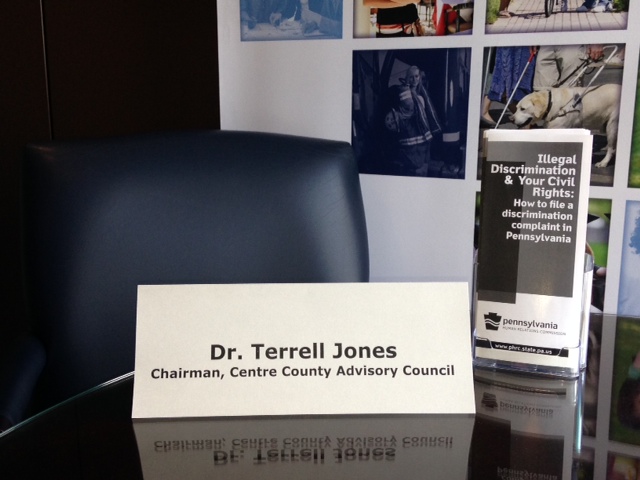
picture of an empty seat at the table for Dr. Jones

An Empty Seat at the Table: In Memory of W. Terrell Jones

On Tuesday, August 19, I received a forwarded email from PSU Executive Vice President and Provost Nicholas P. Jones:

It is with deep sorrow that I’m writing to inform you that our colleague and friend, Dr. Terrell Jones, Vice Provost for Educational Equity passed away this morning.  Terrell had been on medical leave the last few months.  He will be greatly missed across the University not only for the impact of his contributions to Penn State, but also for simply the wonderful person that he was.  We will share with you the details regarding funeral arrangements as they become available.  Please keep Carla [Roser-Jones] and Terrell’s children in your thoughts and prayers.

This short note brought tears to my eyes and a great sense of loss. W. Terrell Jones was a civil rights advocate par excellence both in and out of work. He brought humor and caring to everything he did.
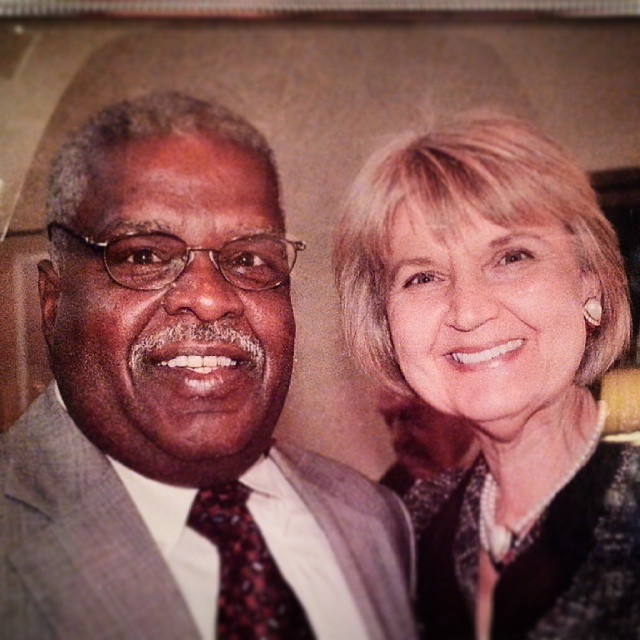
picture of Terrell Jones & Carla Roser-Jones

W. Terrell Jones (pictured with his wife Carla Roser-Jones). A Civil Rights advocate in and out of work.

I first met Terrell in the early 1990’s when I attended a meeting of the Centre County Advisory Council to the Pennsylvania Human Relations Commission (PHRC). Soon after that, I was appointed to this Council and served with Terrell up until his death. Until March of 2013, Terrell chaired the monthly meeting of the Advisory Council. His passion for low-income students of color, concern for community diversity and acceptance, and a love of knowledge was quite apparent.

He was a teacher, a counselor, a fountain of trivia on people and ethnicities across the country and around the world. And did his work—both paid and unpaid with a sense of humor and dignity. Here’s a sampling of his ability to teach with humor in the classroom; this is one of the many classes on race relations and cultural diversity that he taught over his 35 years of work at the Pennsylvania State University and one year at Lock Haven University.

On Thursday, August 21, I attended the bimonthly meeting of the Inter Agency Task Force on Community Activities and Relations in Harrisburg. According to the PHRC,

The task force is made up of [the] PHRC, the PA Attorney General’s Office and the PA State Police, working in conjunction with other state and federal agencies, community organizations, advocacy groups, local government and law enforcement agencies.  The primary function of the group is to quickly and appropriately address civil tension when conflicts occur, and to promote positive community relations among various groups in order to prevent tension.

The meeting was opened at 10:30 am by Tameka Hatcher, Program Analyst for the PHRC. We usually open these meetings by going around the table and introducing ourselves. This morning was slightly different. Tameka held up Terrell’s name plate and announced that he had passed after a four-month battle with cancer. She asked for a moment of silence and then asked Martin Kearney, Investigative Supervisor at the PHRC and me to say a few words about Terrell. We then placed the name plate at the table to honor our missing comrade.

picture of an empty seat at the table for Dr. Jones

An Empty Seat at the Table: In Memory of Dr. W. Terrell Jones

Here’s some of the accomplishments we talked about:

Local Ordinances

Terrell helped organize a community public forum on discrimination in housing and employment based on sexual orientation and gender identity about 8-9 years ago. Based on the feedback from that forum, the State College Borough decided to review their Fair Housing Ordinance that had passed in 1994 and decided to expand it as well as create an employment anti-discrimination ordinance in 2008. Working with the Centre County Advisory Council, Terrell and I worked with the town council to help craft the new ordinances that now contain the broadest anti-discrimination protections in the state. The employment ordinance includes marital status, familial status, family responsibilities, gender identity, and sexual orientation in addition to the state-level protections found in the Pennsylvania Human Relations Act. The public accommodations and fair housing ordinance includes marital status, familial status, gender identity, sexual orientation, and source of income in addition to the state-level protections of the Pennsylvania Human Relations Act.

Tension and Hate

Calming down communities when tensions rise due to religious, racial, gender, or LGBTQIA intolerance, vandalism, and/or hate speech was a forte for Terrell. He created trainings on racial equality, worked with groups to figure out how structurally and organically they could improve their communities to be more accepting and tolerant. He did this for the entire Penn State University community at all of the campuses, within Centre County and across the state. Working with Unity groups, the PHRC, and coalitions, he helped bring together people.

Statewide Leadership

At Penn State University

Seen as an expert on race relations and diversity, Terrell was often called upon to lead programs and organizations dealing with these types of issues. When he started his position as Vice Provost of Educational Equity in 1998, he created “A Framework to Foster Diversity.” According to the Centre Daily Times, this document is a regularly updated plan outlining Penn State University’s diversity and equity goals. As part of his leadership in this position, Terrell oversaw many different offices and commissions to achieve his vision of “an inclusive and welcoming environment for all.” These offices and commissions include:

Units and Programs

College Assistance Migrant Program
Educational Opportunity Center (Philadelphia)
Multicultural Resource Center
Office for Disability Services
Office of Veterans Programs
Student Support Services Program
Talent Search
Talent Search York
Upward Bound
Upward Bound Math and Science Program
Upward Bound Migrant

Commissions and Committees

Equal Opportunity Planning Committee
President’s Equity Commissions
Commission on Lesbian, Gay, Bisexual, and Transgender Equity
Commission on Racial/Ethnic Diversity
Commission for Women

And according to the PSU Office of the President, Terrell led other programs and events throughout his tenure at the University: “He served on the University’s Forum on Black Affairs for many years, and was its president from 1986-87. He also was chair of the Equal Opportunity Planning Committee from 1989-96 and Penn State’s Representative for the Global Sullivan Principles from 2000-2005.”

Community Leadership

As I previously stated, Terrell was appointed to and later led the Centre County Advisory Council to the PA Human Relations Commission for over 20 years. We met 10 out of the 12 months of each year and then held a family picnic for members every August. Our meetings brought together members of the community who act as the “eyes and ears” of diversity in the community. We gathered each month to discuss concerns about injustice and joys of acceptance of people of all backgrounds within Centre County.

Both of us also handled the Blue Pages phone hot line answering questions about unfair treatment and potential discrimination.  As appropriate we gave these individuals information on how to contact the PHRC to file a complaint and/or provided on other resources to assist them in resolving their issues.

Over the years, several different representatives from the Pennsylvania Human Relations Commission would attend these meetings so that we could pass on the news – both good and bad – to help the state monitor issues of inclusion and tension throughout the state.

We also had a good time, always looking forward to Terrell’s “main dish” offerings at our picnics. He fed us with fried turkeys, roasted pork, and tons of catfish over the years – all his own handiwork!

Terrell was also active in his local church – the Jacob Albright-Mary McLeod Bethune United Methodist Church. I understand that he was one of the leaders of this church, having served from 1990 until his death as a member of its Administrative Council. At the funeral, Reverend Kathleen Danley described his leadership by telling about her arrival at the church this past January. She said that members of the church seemed very tense or sad about their former preacher’s departure. Until Terrell arrived. She said with his arrival, the tension left the room and everyone felt better and got to work. Having that kind of presence is rare.

Leadership across the Commonwealth

Terrell also brought his wisdom and expertise to all corners of the Commonwealth. I asked Martin Kearney, the Investigative Supervisor for the Harrisburg Regional Office of the Pennsylvania Human Relations Commission to put this part of Terrell’s leadership into perspective. Here’s the email he wrote in response:

You asked me about Terrell’s work with PHRC.  I have had the pleasure to have worked with Terrell for nearly a decade when he was Chair of the PHRC Advisory Council for Centre County.  Other colleagues, such as Homer Floyd, Kaaba Brunson, and Ann Van Dyke have known and worked with Dr. Jones for three decades or more.  I am grateful I had the opportunity to learn from him and his work.

Essentially, from the state standpoint, Terrell was key in helping make PSU a more welcoming place for persons of all protected classes, particularly but not exclusively students of color, in his career.  He kept the PHRC apprised of these efforts, especially in regard to academic achievement and safe learning environment for these students.  His work in the vineyard has borne fruit, but as we know, more labors need to be made to make education more accessible and affordable for students in need.

Terrell was active with the Pennsylvania Black Conference on Higher Education (PBCOHE) [he served as its President from 2008-2010], which attempted to get all universities in the Commonwealth, public as well as private, achieve equal education opportunity for students of color.  Our Commission was very active in this initiative as well and Terrell’s work helped to increase the numbers of students of color going to college and successfully graduate.  He was also key in helping to investigate and resolve tension situations related to race and ethnicity not only at PSU but on other campuses as well.  For instance, he led an investigation in 2007 at Bloomsburg University campus involving allegations of excessive force and misconduct by campus police toward African American students.  He conducted this investigation with skill, transparency and thoroughness, recommending better communication between students and police and cultural competency training for campus police.

Terrell’s presence in Centre County was well known, especially in his and the Advisory Council’s efforts in State College Borough’s consideration and passage of the Fair Housing (1994) and Human Relations Ordinances (in 2008), efforts of which you know so well (since you were so key in both of these), which had expansive protections beyond Commonwealth law for sexual orientation, marital status and family responsibilities.  Through the work of Terrell and the Council, relationships were built, to create a constituency that supported these ordinances.  It is notable that when the Fair Housing Ordinance was passed, there was [a large and very] vocal opposition to it.  The opposition to the expanded Human Relations Ordinance over a decade later was not only much smaller but much less vocal.  It was consciousness raising of our growing notions of equality, led by Terrell and the Council, that helped to foster this change.

Finally, Terrell not only knew issues of diversity and equality, he knew this state very well.  He pored over the bias reports that the Commission created, reported incidents of which he knew, but also added a historical perspective of these incidents for our state and nation.  In my dealings with him, I always walked away having learned something of value, lessons I carry in my work to this day and which our Commission carries on as well.

A place at the table for our Commission’s Inter-Agency Task Force is missing.  While none of us can fill this space that he leaves, his spirit and the knowledge he passed on will continue for decades to come.

The Farewell Tribute

At Terrell’s funeral on Saturday, August 23, the love for Terrell showed throughout the church. It was overflowing with people. The vestry was full. The room across the hall from the vestry was full. And those who couldn’t find seats in either of these rooms went downstairs to the reception hall. Fortunately all of us got to see the service since the church provided video access to the full service. I think the “Affirmation of Faith” affirms Terrell’s life-long passion for equity and justice. In part, here’s what was proclaimed

Affirmation of Faith by Canaan Banana (edited by Rev. Grey)

I believe in an almighty God

Maker of all people of every color and hue,

Who does not rank people according to their color or gender,…

Who provide[s] abundant resources for

Equitable distribution among all people….

[Who] overturns the iron rule of injustice.

From henceforth He shall continue to judge hatred, racism, sexism,

And every manner of dehumanizing exclusiveness and arrogance.

I believe in the properly placed spirit of reconciliation,…

The Power that overcomes the poverty, abject ghetto life,

Abject rural life, drug and alcohol addiction,

women and children abuse, and pimping, prostitution, and pushing in all of their forms.

And I believe in the … Resurrection of personhood

And equalizing justice, and equality…

Amen


Terrell, we’ll miss you at the table of equality and justice for all. You will be missed greatly. Rest in peace my friend.


Addendum: According to the obituary that appeared in the Centre Daily Times on August 21, the family has requested that in lieu of flowers, memorial contributions may be made to the Albright-Bethune United Methodist Church, P.O. Box 153, State College, PA 16804 or to the Dr. W. Terrell Jones Scholarship Memorial Fund at the Pennsylvania State University, by visiting www.GIveNow.psu.edu/TerrellJonesMemorial.

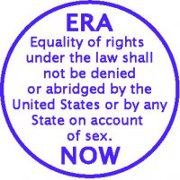
Repeal the RFRA and Ratify the ERA

ERA words buttonCorporations should not have more religious rights than woman.  With the US Supreme Court’s (SCOTUS) Hobby Lobby decision, women’s personally “sincerely held” beliefs now mean nothing.

The Hobby Lobby decision is not based on the US Constitution.  Instead it’s based on a bill known as the Religious Freedom Restoration Act or RFRA combined with the recent Supreme Court’s Citizens United decision that granted personhood status to companies. Since there is no constitutional equality for women and therefore no strict scrutiny review for women’s religious and civil rights, this decision eliminating women personal religious beliefs and access to reproductive health coverage occurred.

The RFRA, when combined with this SCOTUS decision, makes women non-persons.

Therefore in order to place women back on equal footing with men (and the “personhood” of corporations as this activist Court has mandated), we need to do two things:

    1. Ratify the ERA — the Equal Rights Amendment — and put women into the US Constitution so that women WILL be equally treated as people and not as objects to be pushed around by the will of corporations and by gender bigots.
    2. Repeal the RFRA  –  The Freedom From Religion Foundation placed an ad in the New York Times entitled Dogma Should NOT trump Civil Liberties that in part states:

In Citizens United, the Supreme Court ruled that corporations are people. Now, the Supreme Court asserts that corporations have “religious rights” that surpass those of women.In the words of Justice John Paul Stevens, “Corporations have no consciences, no beliefs, no feelings,no thoughts, no desires” — but real women do. Allowing employers to decide what kind of birth control an employee can use is not,as the Supreme Court ruled, an “exercise of religion.” It is an exercise of tyranny.

I agree.  Repeal the RFRA and put women into the US Constitution.

The repeal of the RFRA would require an act of Congress. That means we need to elect new members to Congress who respect and will stand up for women. So we all need to register to vote and then vote.

We only need three more states to ratify the ERA to make it the 28th amendment to the US Constitution. Illinois is halfway there; their Senate ratified it and we’re now awaiting the vote in the state House.  Just two more states and then we can proudly say:

Equality of rights under the law shall not be denied or abridged by the United States or by any state on account of sex.


My Fortune Cookie

Graphic rendering of a fortune cookie

My Fortune Cookie

Have you ever opened a fortune cookie and read something that speaks to your soul?

I have. Twice.  The most recent one was a “fortune” I got over the weekend when my family went out to our local Chinese restaurant.  As a civil rights advocate, this struck home with me:

To love what you do and feel that it matters–how could anything be more fun?

Roe v Wade Anniversary: Pro-Active Legislative Agendas

Logo for the Pennsylvania Agenda for Women's Health

Logo for the Pennsylvania Agenda for Women’s Health

Today is the 41st anniversary of the Roe v. Wade decision by the US Supreme Court that says that women have a constitutional right of access to safe abortion services throughout the country.  Since 1973, the right-wing has been pushing back and chipping away at this right. These attacks over the decades have expanded beyond access to abortion and now include all areas of family planning and access to women’s health care. As a result, women’s rights and reproductive justice advocates have been on the defense in an attempt to ensure that all women of reproductive age have full access to all forms of reproductive health.

For a very long time, conservatively controlled legislatures have narrowly focused on restricting women’s access to abortion and reproductive health services. We need a pro-active legislative agenda at the national and state levels to counter this chipping away of our basic rights.  And this is starting to occur.

It’s something we need to focus on, spread the word about, and celebrate on this 41st anniversary of the Roe decision.

Advocates for reproductive justice have had some success in 2013 in their pushback on our back reproductive and healthcare rights.  For example, Texas Senator Wendy Davis, with the assistance of thousands of advocates crowding the capital successfully delayed the passage of an onerous anti-abortion law. And the city of Albuquerque voted down an anti-abortion referendum.

Legislatures too have started to pushback.  And that’s what I’d like to focus on today. Two states so far have decided to take a pro-active stance – New York and Pennsylvania.

New York

Last year, New York State decided to fight back with their “9 Point Plan for Women’s Equality.”  This plan, known as the Women’s Equality Act covers nine broad areas of concern:

  1. Safeguarding Reproductive Health by a) codifying the 1973 Roe v Wade decision, b) ensuring that women can obtain a safe, legal abortion during the first 24 weeks of pregnancy; c) ensuring that physicians won’t be prosecuted for providing this care; and d) retaining the provisions in current law that would prosecute those who harm women;
  2. Ending Pregnancy Discrimination by requiring employers to make reasonable accommodations for pregnant women in the workplace;
  3. Fighting Human Trafficking by a) creating an “affirmative” defense of being trafficked when a person is charged with prostitution, b) increasing penalties for both sex and labor trafficking, c) creating the ability for victims of trafficking to take civil action against their perpetrator, and d) creating some new criminal offenses in increasing level of severity for some forms of trafficking;
  4. Supporting Domestic Violence Victims by creating a pilot program to allow victims of domestic violence to testify remotely against the alleged perpetrator of violence when requesting a protection from abuse order;
  5. Creating Fair Access to Housing by adding source of income and status as a domestic violence victim to the state’s anti-discrimination law;
  6. Ending Familial Status Discrimination in Employment by adding protections in the state’s anti-discrimination law for employees who have children 18 years or younger residing in the home;
  7. Allowing Payment of Attorney Fees by granting litigants who win a sex discrimination case the ability to receive attorney fees as part of the settlement;
  8. Improving the Sexual Harassment Law by expanding the prohibition on sexual harassment in the workplace to employers with fewer than four employees so that all places of employment are covered; and
  9. Securing Equal Pay by a) closing a loophole in New York’s law that allows employers to justify lower wages for women, b) outlawing wage secrecy policies, and c) increasing damages to prevailing litigants for up to 300% of unpaid wages.

In June 2013, Governor Cuomo’s Women’s Equality Act was blocked in the NY State Senate because there were enough right-wing legislators who decided to quash the bill due to a provision in the package bolstering access to abortions. However, advocates have not given up. Governor Cuomo has renewed his commitment to passage of the Women’s Equality Act and advocates in New York State are gearing up for another run for successful passage of this bill.

Pennsylvania

Pennsylvania legislators recognized this positive effort from our sister state to the north.  In September 2013, a group of Senators and Representatives from both sides of the aisle formed a new legislative caucus to proactively focus on women’s health and equity.  It is called the Women’s Health Caucus. This bi-partisan caucus is co-chaired by Representative Dan Frankel, D-Allegheny and Senators Judy Schwank, D-Berks and Chuck McIlhinney, R-Bucks.

Rather than the narrow efforts commonly seen in Pennsylvania General Assembly to restrict women’s access to reproductive health programs, the Women’s Health Caucus was formed to redirect legislation towards a woman’s health equity agenda. This broad, proactive agenda covers reproductive health, women’s economic security, and women’s safety.

To celebrate the 41st anniversary of Roe v. Wade, I decided to summarize the bills that have both been introduced and those that are in the works for introduction later this year that focus on some portion of women’s reproductive health and focus on some of the other bills at a later date. This is a work in progress by the Women’s Health Caucus and as such, there may be more bills in process that I don’t yet know about.  The ones discussed here are the health-related bills that have been introduced or have been discussed as potential bills by the Caucus.

Bills in Pennsylvania Legislature to Honestly Address Women’s Needs

As I stated in a blog in September reporting on the first meeting of the Caucus, the Women’s Health Agenda package of bills can be divided into three groups—reproductive health issues, women’s safety, and economic sustainability.  The focus here today is on the bills associated with reproductive health.

On December 11, 2013, the Women’s Health Caucus introduced the first seven bills in the Pennsylvania Agenda for Women’s Health.  Four of the seven bills announced that day focus on some aspect of women and children’s health.  Three of these bills have been introduced and are currently in committee in at least one, if not both, Houses.  The fourth bill is still being circulated for co-sponsors in both the House and Senate.

Healthcare-Related Bills that Have Been Introduced and are in Committee

Sanitary conditions for nursing mothers

This legislation requires employers to provide a private, sanitary space for employees who need to express breast milk. It fixes two main loopholes that are present in federal law under the Affordable Care Act. It would apply to all employees, including those that are exempt from federal overtime provisions. It also requires employers to provide a private, sanitary space for mothers to express milk beyond one year after birth. This legislation mirrors the federal provision that exempts small employers from these requirements if these requirements present an undue hardship on the employer. Representative Mary Jo Daley is the prime sponsor of this bill in the House of Representatives.  It was officially introduced H.B. 1895 on December 12, 2013 with 22 co-sponsors and is awaiting first review in the House Labor and Industry Committee.  There is not a companion Senate bill yet.

Representative Daley describes this workplace need for nursing mothers:

“Study after study makes it abundantly clear – both mothers and children benefit from breast milk. For most babies, especially premature babies, breast milk is easier to digest than formula and helps fight against disease. According to the U.S. Department of Health and Human Services, the cells, hormones, and antibodies in breast milk help protect babies from illness. For mothers, breastfeeding is linked to a lower risk of health problems such as diabetes, breast and ovarian cancers, and postpartum depression. Moreover, breastfeeding mothers miss fewer days from work because their infants are sick less often.

Currently, approximately two dozen states have laws on the books relating to expressing milk in the workplace. Sadly, Pennsylvania does not. The only applicable law on breastfeeding that applies to employers in the Commonwealth is the Affordable Care Act’s amendment to the federal Fair Labor Standards Act. This federal law requires employers to provide a private, sanitary space for non-exempt employees to express milk for up to one year after the birth of a child. However, exempt employees include those that are on salary (exempt from federal overtime provisions), often in managerial positions.”

Ensuring access to health care facilities:

This legislation creates a 15-foot buffer zone around health care facilities where picketing, patrolling or demonstrating that blocks patients’ access to the facilities would be banned. H.B. 1891, sponsored by Representative Matt Bradford, D-Montgomery, was introduced into the House with 23 co-sponsors on December 12, 2013 and is currently awaiting review in the House Health Committee.  S.B. 1208, sponsored by Senator Larry Farnese, D-Philadelphia, was introduced into the Senate with 8 co-sponsors on January 16, 2014 and is currently awaiting review in the Senate Public Health and Welfare Committee.

Representative Bradford describes his bill this way:

“Safe and unfettered access to health care facilities should be the right of all Pennsylvania women seeking medical counseling and treatment.  Accordingly, I plan to introduce a bill prohibiting a person from interfering with a person’s right to seek medical services by knowingly patrolling, picketing, or demonstrating in a very limited zone extending fifteen feet from a health care facility, or driveway or parking facility.

Please know this legislation is not intended to limit the free speech rights of any individual.  Other states including Colorado and Massachusetts, and some municipalities such as Pittsburgh have instituted “buffer zone laws.”  These laws were not imposed on a whim; they were a response to increasing threats, confrontation and even deadly violence. It is important to note that buffer zones have been credited, in part, with toning down volatile instances and confrontations.”

Senator Farnese, using his own experience as a clinic escort, describes the legislation he has introduced:

“This legislation will provide safe access to essential health care services when patients are seeking family planning and reproductive health services.  Often, patients seeking services at a healthcare facility are verbally and physically harassed and intimidated.  Having had experience as an escort for women into health care facilities, I have seen first-hand the potential for violent confrontations between patients and demonstrators.

This legislation will be carefully crafted to ensure that patients have unimpeded access to medical services while still protecting First Amendment rights to communicate a message.  In order to ensure both parties’ rights and safety are maintained, this legislation will provide clear guidance regarding restricted entry zones around entrances and driveways of medical facilities.

Currently, Pennsylvania has no such statewide buffer zone.  Two municipalities, Harrisburg and Pittsburgh, have enacted buffer zone ordinances.  Providing for a content-neutral buffer zone at all medical facilities in Pennsylvania will promote the health and welfare of those who visit those facilities for services while maintaining protection for those individuals who would voice their constitutionally protected speech outside such a facility.”

Increased eligibility for breast and cervical cancer screenings:

This legislation allows women between ages of 30 and 65 to apply and qualify for the state Healthy Woman Program. H.B. 1900, sponsored by Rep. Maria Donatucci, D-Philadelphia/Delaware, was introduced on January 2, 2014 and is awaiting review in the House Human Services Committee.  There is not a companion Senate bill yet.

Representative Donatucci describes the need for greater access to breast and cervical cancer screening:

“The statistics surrounding breast and cervical cancers are truly alarming. According to the Centers for Disease Control and Prevention (CDC), in 2010, 206,966 women were diagnosed with breast cancer in the United States, and 40,996 women died from the disease.  Except for skin cancer, breast cancer is the most common cancer among American women and is one of the most deadly. While the risk of contracting breast cancer increases with age, large numbers of young women face the reality of this disease every year. With regards to cervical cancer, the disease is often not diagnosed because of missed opportunities for screening, early diagnosis, and treatment. All women are at risk for the disease, but it is most common in women over the age of 30. Each year, about 12,000 women in the United States get cervical cancer.

Act 74 established a program to support breast and cervical cancer screening services to low-income, underinsured, and uninsured women 40 to 49 years of age through DoH’s Healthy Woman Program. Before the implementation of Act 74, the program only had sufficient federal funding to provide these screening services to women ages 50 to 64. Today, the program is funded through a combination of department funds and through a grant DoH receives from CDC. My legislation will increase access to these important health screenings [by lowering the age of initial access to women.  This would] allow women between the ages of 30 and 65 to qualify for the Healthy Woman Program if they meet all other applicable requirements. The statistics show that these types of cancer are not confined to women of a particular age. As such, screening qualifications should be expanded in this state to reflect this reality. The money we spend on screening today saves thousands in treatment costs down the road.”

Co-Sponsorship Memo Being Circulated

Workplace accommodations for pregnant women:

This legislation requires an employer to make reasonable accommodations related to pregnancy, childbirth or related medical conditions unless those accommodations would prove an undue hardship on the employer’s operations. Two bills, one in the House and one in the Senate were announced on December 11, 2013.  H.B. 1892 is sponsored by Representative Mark Painter, D-Montgomery; and S.B. 1209 is sponsored by Senator Matt Smith, D-Allegheny. Both bills are currently being circulated for co-sponsors.

Senator Smith’s co-sponsorship memo summarizes his bill (S.B. 1209) this way:

“Currently, federal law protects women from being fired or otherwise discriminated against due to pregnancy; however it does not require employers to provide pregnant women with certain necessary and temporary accommodations to ensure their health and safety during pregnancy. My legislation would bridge this gap.

Three-quarters of women entering the workforce will be pregnant and employed at the same time during their careers, and my legislation would ensure that they can balance each part of their life in a way that is safe and practical for all parties involved.”

Representative Painter has named his version of this legislation The Pennsylvania Pregnant Workers Fairness Act.  His co-sponsorship memo describes HB 1892 this way:

“This year marks the 35th anniversary of the federal Pregnancy Discrimination Act (PDA).  The PDA amended Title VII of the Civil Rights Act of 1964 to prohibit employment discrimination due to childbirth, pregnancy, or similar related medical conditions.

Today, unfortunately, pregnancy discrimination remains a persistent and growing problem.

In the majority of cases, the accommodations women need are minor, such as permission to sit periodically, the ability to carry a water bottle, or help lifting heavy objects.  Those women who continue working without having these medically-advised accommodations risk their health and increase the likelihood of pregnancy complications.

Pregnancy discrimination causes significant and long-term harm to women and their families well beyond pregnancy, to include the loss of health benefits, job seniority, and wages.  These losses also contribute to measurable long-term gender-based pay differences.

The Pennsylvania Pregnant Workers Fairness Act would make it unlawful for a covered entity to refuse reasonable accommodations related to pregnancy, childbirth or related medical conditions unless those accommodations would prove an undue hardship on the entity’s operations.”

Other Women’s Healthcare Bills in Pennsylvania that Are Being Discussed but Have Not Yet Been Introduced

As I mentioned in my blog at the end of September when the Women’s Health Agenda Caucus first met, there are a total of at least 24 bills that are/will be part of the “Agenda for Women’s Health.”  At least two of these bills are directly related to Reproductive Justice and Health. They were not part of the original roll-out, but are somewhere in the process of being written and/or circulated for co-sponsorship. I do not know when these bills will be introduced.

  • Inmate Shackling: Strengthen pregnant inmate shackling law (Act 45 of 2010) to cover the entire pregnancy and a reasonable postpartum period for mother-child bonding and to eliminate the tasering of any incarcerated woman known to be pregnant.
  • Medical Professional Conscientious Right to Refuse to Deliver Medically Inaccurate Information: Protect physician-patient relationships from political intrusion.

So on this 41st anniversary of Roe, I will celebrate this day by reiterating a statement I made on December 11, 2013:

“The ideas for change in this package of bills come from real-life stories of women. They include calls to service agencies, cries for help on hot lines, requests for advocacy, and lots of research to back up the anecdotal stories. As advocates, we realize there are other areas of concern, but believe the Women’s Health Caucuses’ agenda items are a great start.”

Thanks to everyone who is working for these two pro-active women’s health agendas. Thanks to the advocates across the country who have taken the momentum to stand up for our lives. And have a great Roe v. Wade Day as we go on the offense for women’s health and lives.

MLK Jr. and his “Family Planning — A Special and Urgent Concern” Speech

Access to Abortion Services is Part of Reproductive Justice and Civil Rights

Access to Abortion Services is Part of Reproductive Justice and Civil Rights (http://www.now.org/issues/abortion/)

This morning, the Greater Grand Rapids chapter of the National Organization posted a blog in honor of Martin Luther King’s birthday.  His birthday is actually on January 15.  But we celebrate it with a federal holiday on the Monday following January 15 each year. Their blog focuses on Dr. King’s strong support for reproductive justice as part of women’s basic civil rights.  Take a moment and read what they have to say. Meanwhile, here’s something you might not know about Dr. King.  Dr. King wrote a speech honoring Margaret Sanger in 1966. Sanger was the founder of Planned Parenthood Federation of America (PP).  Dr. King’s speech on reproductive justice was written in response to being awarded one of the four first Margaret Sanger Awards given by PP.  Since he was in jail at the time of the presentation, Coretta Scott King read his acceptance speech.  King entitled this speech,

Family Planning — A Special and Urgent Concern

Here’s what he said on family planning and its link to civil rights:

…. There is a striking kinship between our movement and Margaret Sanger’s early efforts. She, like we, saw the horrifying conditions of ghetto life. Like we, she knew that all of society is poisoned by cancerous slums. Like we, she was a direct actionist — a nonviolent resister. She was willing to accept scorn and abuse until the truth she saw was revealed to the millions. At the turn of the century she went into the slums and set up a birth control clinic, and for this deed she went to jail because she was violating an unjust law. Yet the years have justified her actions. She launched a movement which is obeying a higher law to preserve human life under humane conditions. Margaret Sanger had to commit what was then called a crime in order to enrich humanity, and today we honor her courage and vision; for without them there would have been no beginning. Our sure beginning in the struggle for equality by nonviolent direct action may not have been so resolute without the tradition established by Margaret Sanger and people like her. Negroes have no mere academic nor ordinary interest in family planning. They have a special and urgent concern….

[O]ne element in stabilizing his [sic] life would be an understanding of and easy access to the means to develop a family related in size to his community environment and to the income potential he can command.

This is not to suggest that the Negro will solve all his problems through Planned Parenthood. His problems are far more complex, encompassing economic security, education, freedom from discrimination, decent housing and access to culture. Yet if family planning is sensible it can facilitate or at least not be an obstacle to the solution of the many profound problems that plague him….

Some commentators point out that with present birth rates it will not be long before Negroes are a majority in many of the major cities of the nation. As a consequence, they can be expected to take political control, and many people are apprehensive at this prospect. Negroes do not seek political control by this means. They seek only what they are entitled to and do not wish for domination purchased at the cost of human misery. Negroes were once bred by slave owners to be sold as merchandise. They do not welcome any solution which involves population breeding as a weapon. They are instinctively sympathetic to all who offer methods that will improve their lives and offer them fair opportunity to develop and advance as all other people in our society.

For these reasons we are natural allies of those who seek to inject any form of planning in our society that enriches life and guarantees the right to exist in freedom and dignity….

Pennsylvania Agenda for Women’s Health Initial Roll-Out

Logo for the Pennsylvania Agenda for Women's Health

Logo for the Pennsylvania Agenda for Women’s Health

On December 11, the Pennsylvania General Assembly’s Health Agenda Caucuses rolled out the first set of bills that are part of the Pennsylvania Women’s Health Agenda.  The Agenda was spearheaded by Representative Dan Frankel (D-Allegheny), Senator Judy Schwank (D-Berks) and Senator Chuck McIlhinney (R-Bucks and Montgomery). These legislators were assisted by several of their colleagues, including  Representatives Mary Jo Daley (D-Montgomery), Tina Davis (D-Bucks), Maria Donatucci (D-Delaware and Philadelphia), Erin Molchany (D-Allegheny), Mark Painter (D-Montgomery), and Brian Sims (D-Philadelphia) made the announcement of the roll-out. They announced that this first set of bills would soon be going to committee.

Video Statements

During the media advisory session, several of the Representatives were videotaped by the Pennsylvania House.  Here are those videos:

Representative Dan Frankel Announcing the Roll-Out of the Pennsylvania Agenda for Women’s Health

Representative Brian Sims and Erin Molchany Introducing the Pay Equity Bill

Representative Sims spoke first:

Then Representative Molchany followed up with additional information:

Representative Tina Davis Introducing Digital Intimate Partner Violence Bill.

This bill would “make revenge acts that include pictures of partners who are naked or involved in sexual acts illegal.”

Representative Mark Painter Introducing Employment Discrimination Protections for Pregnant Women Bill

Representative Mary Jo Daley Introducing Bill to Require Sanitary Conditions in the Workplace for Breastfeeding Women

Representative Maria Donatucci Introducing Bill to Expand Access to Cervical Cancer Screenings

Advocates Support the Pennsylvania Agenda for Women’s Health

Standing next to the legislators were representatives of many different advocacy groups who stood in support of this agenda.  The Women’s Law Project was the lead organization in working with the legislators to help create this agenda.  Pennsylvania NOW was also there.  None of the organizations present spoke at the press conference but did deliver their Statements of Support to the media.  Here are the statements from these two organizations.

Women’s Law Project

This statement is currently posted on the Women’s Law Project Legislative Action page and is repeated here just in case the URL is moved:

Women’s Law Project Commends Groundbreaking State Legislative Initiative
To Improve Women’s Health

Harrisburg, PA – The Women’s Law Project and its civic engagement action arm, WomenVote PA, commend the Women’s Health Caucus, a bipartisan, bicameral caucus of the Pennsylvania General Assembly, as it unveils the first phase of a comprehensive Pennsylvania Agenda for Women’s Health. Led by Representative Dan Frankel and Senators Judy Schwank and Chuck McIlhinney, the Caucus is taking a proactive, positive approach to helping women by addressing a wide range of legal and policy barriers to women’s health and equality.

Each component of the Pennsylvania Agenda for Women’s Health arises out of the struggles of real women in Pennsylvania. The first phase of the agenda includes legislation protecting pregnant women in the workplace, filling gaps in protection for nursing mothers at work, ensuring that women’s health centers are safe and accessible, prohibiting wage secrecy, extending health screenings to more women, stopping intimate partner harassment, and ensuring that domestic violence victims are not punished for contacting law enforcement.

“Although we’ve made progress over the years, it’s a well-documented fact that women’s health and well-being are still not a priority in Pennsylvania,” said Carol Tracy, Executive Director of the Women’s Law Project. “This legislation will address real problems that real women have every day, solutions as simple as enabling a pregnant woman to carry a water bottle during her shift and ensuring that women earn the same amount as a man doing the same job. This legislation is the beginning of a full-scale effort by the Pennsylvania Women’s Health Caucus focused on leveling that playing field for good.”

“This new legislative focus on real women’s real health needs is long overdue,” said Sue Frietsche, Senior Staff Attorney with the Women’s Law Project’s Western Pennsylvania office. “For far too long, the Pennsylvania legislature has obsessively focused on restricting women’s access to reproductive health care. That is not what women want or need. We want sensible laws that improve the lives of women, not more roadblocks to women’s health.”

Kate Michelman, renowned feminist and co-chair of WomenVote PA, stated, “Rather than helping women achieve the equality they deserve, the Pennsylvania legislature has spent unprecedented time and energy on creating barriers to contraception and abortion.” She continued, “We can’t afford to continue to be one of the worst states in the nation for women,” citing a recent report assigning Pennsylvania a “C-” grade, and ranking the Commonwealth 28th out of the 50 states in its treatment of women. “The Pennsylvania Agenda for Women’s Health has the potential to change that, and it deserves the support of every person in this state.”

For more details on the proposed legislation, please visit our web site in the coming weeks for updates, as well as visiting the WomenVote PA web site.

WomenVote PA is the non-partisan action arm of the Women’s Law Project. For more information go to www.womenvotepa.org

Pennsylvania NOW

This statement was crafted by Caryn Hunt, President-Elect; Susan Woodland, Secretary-Elect and current  At-Large Member of the Executive Committee, and myself.

Pennsylvania NOW Supports the Pennsylvania Agenda for Women’s Health

HARRISBURG, December 11, 2013—The Pennsylvania state chapter of the National Organization for Women (PA NOW) applauds the work of the House and Senate Women’s Health Caucuses as they roll out a comprehensive plan to address the real issues affecting Pennsylvania women today. Spearheaded by Representative Dan Frankel, Senator Judy Schwank and Senator Chuck McIlhinney in conjunction with the Women’s Law Project, and then developed by a broad coalition of Pennsylvania advocacy organizations that work on behalf of women every day, it is based on years of experience about what women want and need to stay healthy. This Agenda goes a long way to redressing entrenched inequities for women in Pennsylvania.

“Pennsylvania Republicans, like their counterparts in other state legislatures, have obsessed about women’s reproductive rights and have waged a non-stop campaign to control them from the capital, rolling back not just access to safe, legal abortion, but also the sense that women are full citizens entitled to a government and society that also works for them,” said Pennsylvania NOW President-Elect Caryn Hunt. “This agenda provides an antidote to the shallow, rhetorical policy-making of those in the General Assembly who have led the calls for women’s restrictions and called it concern for women’s health. It’s refreshing to see so many bills introduced that will genuinely help women, and that together provide a much truer portrait of the needs women want their representatives to address.”

These first bills address a variety of concerns for women: pregnancy accommodation is a common sense step to ensure that pregnant women are treated not as liabilities, but as persons with a temporary need for reasonable accommodations in the workplace; the bill to provide at 15-foot buffer zone around entrances to health clinics is a necessity in our state to make sure women seeking reproductive healthcare are able to access it in an orderly and safe manner; bills targeting “pay secrecy” and the “factor other than sex” loophole will help to end practices that for too long have enabled employers to pay women less than men for the same work. Other bills fill gaps in existing protections for nursing mothers, victims of intimate partner harassment and of domestic violence.

“The ideas for change in this package of bills come from real-life stories of women,” added Joanne Tosti-Vasey, President Emerita and Lobbyist for Pennsylvania NOW. “They include calls to service agencies, cries for help on hot lines, requests for advocacy, and lots of research to back up the anecdotal stories. As advocates, we realize there are other areas of concern, but believe the Women’s Health Caucuses’ agenda items are a great start.”

Pennsylvania NOW has high hopes for the Women’s Health Agenda. Finally, the concerns and needs of Pennsylvania are being honestly addressed by their representatives, rather than attacked and abridged.

I will report on more of these bills as they are announced.

Pennsylvania’s Proposed Women’s Health Agenda

Kate Michelman

Kate Michelman discussing strategy with women’s health care advocates and members of the General Assembly Health Care Agenda Caucus.

Yesterday (Monday, September 30, 2013), I attended a two-hour meeting with Pennsylvania’s House and Senate members of the joint Women’s Health Agenda Caucus led by Representative Dan Frankel of Pittsburgh. Some of the advocacy groups attending the meeting included the Women’s Law Project (WLP), Women Vote PA, and members of the Pennsylvanians for Choice coalition including Pennsylvania NOW whom I represented.

For a very long time Pennsylvania has focused on restricting women’s access to abortion services – currently accounting for over 1270 pages of legislation and regulations in the state.  This wrong-headed approach to health assumes that women’s sole need is to protect them from safe, legal access to decent abortion care services.  In other words, the state has wrong-headedly been crafting laws and regulations to deny access to abortion, sending more and more women to the back alleys similar to the Gosnell clinic and ignoring the broader issues of women’s health equity.

Women’s concerns about their health are broadly based in bias based on gender. Terry L. Fromson, Amal Bass, Carol E. Tracy, Susan Frietsche of the Women’s Law Project  created a report entitled Through the Lens of Equality: Eliminating Sex Bias to Improve the Health of Pennsylvania’s Women in 2012.  The WLP is Pennsylvania’s feminist legal organization that engages in litigation, advocacy, and education to ensure women’s equality and treatment in Pennsylvania. This report set the context for yesterday’s meeting.  The WLP framed the health care agenda as follows in this report and in the meeting this morning:

The legal and social status of American women has changed dramatically in the last fifty years. Half a century ago, it was legal to segregate jobs by sex, to refuse to hire or promote on the basis of a person’s sex, to fire women who became pregnant, and to limit the number of women admitted to professional schools such as law and medicine. Sexual and domestic violence were hidden from public view and public policy. Abortion was illegal and the birth control pill was not yet on the market. Today, women have taken their place in the working world and educational opportunities for women have expanded exponentially. Sexual and domestic violence are recognized as crimes and some resources are available to its victims. Abortion is legal and birth control is available.

Despite these advances, deeply embedded cultural biases and stereotypes about women’s place in society continue to impede women’s equal participation in society. In our homes and communities women are subjected to violence, poverty, and the burden of care taking responsibilities. In the workplace, women are paid less than men for the same work, remain concentrated in stereotypically female low-paying occupations, are subjected to sexual harassment and discrimination on the basis of pregnancy and care giving, and are denied advancement to managerial and higher paying positions. In school, young women are denied their fair share of sports opportunities and are sexually harassed and violated. Women are denied essential reproductive health care and subjected to discrimination in access to insurance coverage. Women pay more than men for the same coverage, and pregnancy is a preexisting condition that often denies pregnant women access to insurance coverage and therefore maternity care.  Access to abortion has been limited by burdensome legislative requirements, and providers and patients have been terrorized by an increasingly violent opposition. Attacks on access to contraceptive services have grown.

While many laws have been adopted to eliminate sex discrimination at work and at school, gaps persist that must be filled and enforcement needs to be strengthened. This is particularly true in Pennsylvania. While some Pennsylvania cities have outlawed employment discrimination on the basis of care-giving responsibilities and provide other accommodations for women who work, the Pennsylvania legislature has failed to adopt a statewide prohibition on discrimination on the basis of caregiver status or to provide family leave for caregivers. In Pennsylvania, the law permits insurers to price the cost of health insurance higher for women than for men, resulting in women paying more for individual health insurance policies and small employers paying more for health insurance for a predominantly female workforce. Pennsylvania’s sexual assault laws have for the most part eliminated discriminatory provisions, but the myths and stereotypes that continue to infect the criminal justice system hinder the investigation and prosecution of these crimes. The health care perspective on domestic violence and sexual assault is far too limited. Sexual assault is treated as a health care matter primarily in the immediate aftermath of a rape, even though the physical and emotional health consequences can be long lasting. Although a number of health care providers recognize that domestic violence is also a health issue, screening for domestic violence in health care settings is not universal. Poverty, which disproportionately impacts women, exacerbates the impact of sex bias in all of these realms….

Pennsylvania, with 6.5 million women, has consistently been found deficient in national studies on women’s health care measures. In their 2010 health report card, the National Women’s Law Center and Oregon Health & Science University placed Pennsylvania 32 among the 50 states and graded it unsatisfactory with respect to the status of women’s health….

To alleviate women’s health problems, it is necessary to eliminate adverse experiences — discrimination and bias — early in life and throughout life — and to improve access to health care, with an emphasis on care essential to women (pp. x-xii).

Representative Frankel heard this call to refocus the legislature from attacking women’s reproductive health to focusing — just like New York state’s “10 Point Plan for Women’s Equality” — on redirecting legislation in the General Assembly towards a women’s health equity agenda. So yesterday, almost 20 legislators from both houses attended a meeting with advocates seeking to improve women’s lives and health through a broad review and revision of Pennsylvania law.  The agenda covers reproductive health, women’s economic security, and women’s safety.

The ideas for change come from real-life stories of women in the state.  Calls to service agencies. Cries for help on hot lines. Requests for advocacy. And of course lots of research to back up the anecdotal stories.  The 24 suggested changes to Pennsylvania law that were presented are in areas where either no legislation has been introduced or where legislation to improve the bias are lagging or need to be revisited.  We, as advocates, understand that there are other areas of concern, but believe these health care agenda items are a good start.

Some of these ideas are conceptual at this point. Some have some preliminary model wording for new legislation, and some are already in the works.  Here’s the agenda:

Protect and Expand Women’s Reproductive Health Rights

  1. Pregnancy Accommodations:  Require employers to provide accommodations to pregnant employees with temporary pregnancy-related conditions to allow workers to remain employed throughout their pregnancies while imposing minimal burdens on employers.
  2. Support for Breastfeeding Mothers in the Workplace: Require all employers to provide compensated break time and a private, sanitary (not a bathroom) for all employees who need to express milk.
  3. Buffer Zones:  Enact a statewide reproductive health care clinic buffer zone statute to protect safe access to essential health care.
  4. Inmate Shackling: Strengthen pregnant inmate shackling law (Act 45 of 2010) to cover the entire pregnancy and a reasonable post-partum period for mother-child bonding and to eliminate the tasering of any woman known to be pregnant.
  5. Medical Professional Conscientious Right to Refuse to Deliver Medically Inaccurate Information: Protect physician-patient relationships from political intrusion.

    Improve Women’s Economic Security

  6. TANF (Temporary Assistance to Needy Families) Grant Amount: Increase TANF cash assistance grant levels.
  7. TANF Asset Limit: Increase the TANF eligibility asset limit to encourage saving and financial independence.
  8. Earned Income Disregard: Increase the earned income disregard and apply it to applicants as well as recipients.  FYI, the earned income disregard allows very-low income workers to continue receiving TANF, food stamps, and Medicaid if they make 50% or less of the poverty level.  This proposed legislation would raise this “disregard” level to 75% and would apply to applicants as well as recipients.
  9. Childcare Works Waiting List: Eliminate the childcare works waiting list.
  10. TANF Pre-Application Job Search: Eliminate or modify the TANF pre-application job search requirements.
  11. Minimum Wage: Increase Pennsylvania’s minimum wage from $7.25 to $9.00/hour.
  12. Gender Wage Gap: Strengthen Pennsylvania law to eliminate the 24% gender wage gap by prohibiting retaliation against employees for discussing wages (“pay secrecy”) and closing the “factor other than sex” defense to apply only to bona fide business-related factors.
  13. Family Responsibilities Employment Discrimination: Prohibit family responsibilities discrimination in employment by amending the Pennsylvania Human Relations Act to prohibit family status discrimination in employment pursuant to an expanded definition of familial status to encompass the true scope of familial responsibilities shouldered by employees.
  14. Paid Family and Sick Leave: Require all employers to provide employees with paid family and sick leave
  15. Spousal Pension Benefits: Require spousal consent when a retiring state employee chooses how his or her pension benefits should be paid consistent with federal law protecting each spouse from his or her spouse’s selection of a pension benefit in all privately-sponsored pension plans and laws adopted by other states.
  16. Domestic Worker Protection: Amend Pennsylvania anti-discrimination laws to provide domestic workers protection from employment discrimination
  17. Sexual Harassment: Extend the prohibition on sexual harassment in employment to all employers, even small employers.

    Protect Women’s Personal Safety

  18. Paid Leave for Domestic Violence, Sexual Violence, and Stalking Victims: Require employers to provide paid leave to obtain assistance for and pursue legal protection against domestic and sexual violence and stalking.
  19. Housing Discrimination: Prohibit private and public housing discrimination against domestic violence victims.
  20. Civil Orders of Protection for Sexual Violence and Stalking Victims: Authorize courts to issue civil orders of protection for sex crime and stalking victims.
  21. Absolute Privilege for Student Victims: Protect victims/witnesses of sexual assault who testify in school grievance proceedings from being sued by their harassers.
  22. Human Trafficking: Strengthen Pennsylvania’s criminal statute on human trafficking.
  23. Veterans’ Real Estate Tax Exemption: Amend Pennsylvania law to provide veterans real estate tax exemption for veterans suffering from PTSD (Post-Traumatic Stress Disorder) due to sexual victimization during service and appoint women representatives to the House and Senate Committees on Veteran Affairs and to the Pennsylvania State Veterans Commission.
  24. Voting Reform: Reform voting rules to provide online registration, same day in person registration, early voting, including early in person voting on weekends.

These ideas will be discussed in continuing meetings between members of the General Assembly’s Health Care Agenda Caucus and advocates for women’s equality.  I’ll post more on these issues as this legislative program becomes better defined.

March on Washington 50 in 140 Characters

Today I listened to the 50th Anniversary of the 1963 March on Washington speeches at the “Let Freedom Ring” program held on the steps of the Lincoln Memorial.  It was broadcast on C-SPAN.  Throughout the broadcast, I listened, tweeted, retweeted, and commented on what I was seeing and hearing.

Here is what I heard as well as my thoughts in a series of 140 characters.

Original Tweets:

@BarackObama Fathers, mothers, former prisoners, people of all colors, children, lgbt… They are all marching 4 Freedom & Justice #mow50

@BarackObama Medgar Evans, Cheney, #MLK didn’t die in vain. We still require vigilance. We will move forward 4 #CivilRts #jobs #Justice

@BarackObama the flame of justice never died despite the indignities placed on the disenfranchised. They marched. #letfreedomring 4 all #mow50 (Retweeted by @Penny_G during program plus one comment from Richard Punko:@tosti_vasey Amen! We must rekindle that fame and passion and March again. Tyranny of rich, powerful, bigoted conservatives must not prevail)

@BarackObama 5 decades ago today we came together to call for the full promise for all as written in our Declaration of Independence #MOW50

#LetFreedomRing bell from church in Birmingham that was burned in 60s just rung at Lincoln memorial w @BarackObama & King family #MOW50

We must keep justice & freedom alive. #LetFreedomRing for all. Gay straight, men women children, people of color. Rev Bernice King #mow50

Rev Bernice King praises inclusion of women and 3 current/former Presidents on #mow50. Didn’t happen 50 years ago.

@billclinton We need to stop complaining about Congress gridlock & (in summary) go for jobs, justice, peace, & environmental safety. #mow50@billclinton in the shadow of Lincoln’s statue, we still need to walk against the racial divide to change America to #LetFreedomRing #mow50

We know how #mlk would have reacted to recent cutting of #votingrights, #immigration, etc.

@JimmyCarter thanks #MLK 4 #civilrights. In 40′ & 50’s I saw black schools without building cause my community wouldn’t provide buses #mow50

@BarackObama, @JimmyCarter, @billclinton, & Michele Obama on #mow50 stage w #mlkfamily & Rep. Lewis Big leadership change from 50 yrs ago.

@Oprah as we reaffirm our support of #MLKDream, we too can be a “drum major” for #Justice. Bells will toll @ 3:00 to #LetFreedomRing forever

Lynda Johnson Robb: my father pushed 4 the 64 Civil Rights Act, 65 Voting Rights Act, & 67 Fair Housing Act he heart #civilrights #MOW50

@revalsharpton “we will beat the James Crow, Jr Esq” program of voter suppression, stand your ground, etc. #MOW50 #Racism

Sign seen @ #mow50 “We March for jobs, justice, & peace.” Still true 50 years after #MLKDream speech. Everyone join in!

Delores Huerta si se puede if you go back to your community and bring all to the fight for justice. #mow50 #Women #CivilRts #lgbt, etc.

Alan van Capalle “The ark of justice won’t bend for all without your work & help.” #MOW50

@repdonnaedwards we must raise our voices for voting rights, ending violence, etc. What rights & fights will u raise your voice? #mlkdream

Modified Tweets and Comments:

Right on! MT @civilrightsorg so says @BarackObama: “We were told that growing inequality is the cost of prosperity.” #mow50 #endpoverty

MT @blackvoices: “The men & women who gathered 50 years ago weren’t here seeking some abstract goal, they were seeking jobs” Obama Still are

#Jobs #Justice MT @HalfinTen Don’t Forget: Organizers of original #mow called 4 min. wage of > $13 in 2013 dollars #raisethewage #mlkdream50

We must fight back. RT @p_majority RT @repjohnlewis: To those who have said, “Be patient and wait,” we must say that we cannot be patient.  (Retweeted by @p_majority during program)

As part of #jobs, #justice & #peace… RT @NationalNOW We need a living wage! thinkprogress.org/economy/2013/0… Via @thinkprogress #MOW50

Absolutely! @repdonnaedwards u go girl! RT @NCJW “We must lift our voices for just wages” Rep Donna Edwards #mow50

Retweets:

RT @thecyclemsnbc The President reminds us: the measure of progress isn’t how many blacks join the ranks of millionaires, but how many join the middle class.

RT @Jenalenglish Pleased to hear Obama addressing poverty in the context of freedom. Because there is no liberty without livelihood. #MOW50

RT @LAKane H/T to @billclinton: “A great democracy does not make it harder to vote than to buy an assault weapon.” thkpr.gs/18liNa0 #dreamday (Retweeted by @JCWPolitics during program plus Comment after program ended by @LAKand: @JCWPolitics @tosti_vasey, thanks for the RT!)

RT @whitehouse President Obama: “Because they marched, a Civil Rights law was passed. Because they marched, a Voting Rights law was signed.” #MLKDream50

RT @EdgeofSports “Our only hope today lies in recapturing the revolutionary spirit declaring eternal hostility to poverty, racism, and militarism.” – MLK

RT @chucktodd The 3 presidents speaking, representing 3 generations/experiences on issue of race. Carter born in 20s, Clinton in the 40s, Obama in the 60s

RT @GabrielaRM “We may have come here in different ships, but we’re all in the same boat now,” Rep. John Lewis #AdvancingTheDream #MOW2013

RT @SDACLU 50 years later… those signs that say white and colored are gone… but there are still invisible signs. @repjohnlewis #endracialprofiling

RT @OccupyWallSt One of the goals of the March on Washington was a $2 minimum wage. In 2013 dollars, that would be $15.34 #MLKfb.me/1tmtAW09l

RT @NAACP Congressman @repjohnlewis: We have come a long way in 50 years, but we have a long way to go before we can fulfill King’s dream. #MOW50

RT @ply_25 “Justice delayed is justice denied”— THANK YOU, Ellie Smeal, @FemMajority! #herstorymow50

RT @MSNBC President Obama will deliver remarks at 2:45pmET at #MOW50. Tune into @msnbc for special coverage: onmsnbc.co/fweR3M #AdvancingTheDream (note: It was actually just after 3 pm when President Obama spoke)

RT @NAACP Caroline Kennedy: It is our turn to live up to the dreams of the last generation and work together for a better world. #MOW50

RT @feministteacher In 1963 there were 4 African Americans in Congress; today there are 44. #dreamday #MoW50

RT @politico Today in 1963, in preparation for the March on Washington, the Pentagon readied 19,000 troops in the suburbs. More: politi.co/15jjY82

RT @WomenInTheArts “We must ensure that the story of women in the movement is told” #MarchonWashington ow.ly/olE0L #linkatlunch @msmagazine

RT @civilrightsorg We are far from justice when an #LGBTQ person can be fired just for who they are! Support #ENDA – employment nondiscrimination act! #MOW50

RT @HalfinTen .@MartinLutherK True peace is not merely the absence of tension; it is the presence of justice #talkpoverty #action4thedream #MLKDream50

RT @jbouie If “race agitator” was the “race hustler” of the 1960s, I’m pretty sure every civil rights leader at the time would have been called one.

ALICE PAUL – CRUSADER FOR WOMEN – JANUARY 11 BIRTHDAY

In honor of Women’s Equality Day (August 26). Alice Paul spearheaded the final long-time nationwide effort to get the 19th amendment to the US Constitution passed. And once that occurred in 1920, she wrote the Equal Rights Amendment; yet, almost a century later, it has yet to become part of the US Constitution. It’s time for women to achieve full legal equality.

Change in Blog Title

I just wanted to send out a message to my followers. I decided to change the title of my blog from “Joanne Tosti-Vasey Blogging for Equality” to “Civil Rights Advocacy.”  So when you get an email in the future saying something like “New post on Civil Rights Advocacy,” you will know it was from me.

Meanwhile check out the archives of my blog since I started blogging on December 14, 2012.  The archive list is located on the right hand side of my home page.  My most frequent topic areas to date are:

Campus Violence, Children, Civil Rights, Discrimination,, Domestic Violence, Economic Justice, ERA (Equal Rights Amendment), Gay Marriage, Gender Equality, Health Care, LGBTQ Issues, Marriage and Marriage Equality, NOW Inc. (National Organization for Women), President Barack Obama, Racism, Rape, Reproductive Justice, Sexism, Sexual Assault, Stalking, US Constitution, US House of Representatives, US Senate, US Supreme Court, VAWA (Violence Against Women Act), Victims of Violence, and Women’s Equality.

I’d love to hear back from you on all of these blogs; comments are ALWAYS welcome!

Thanks